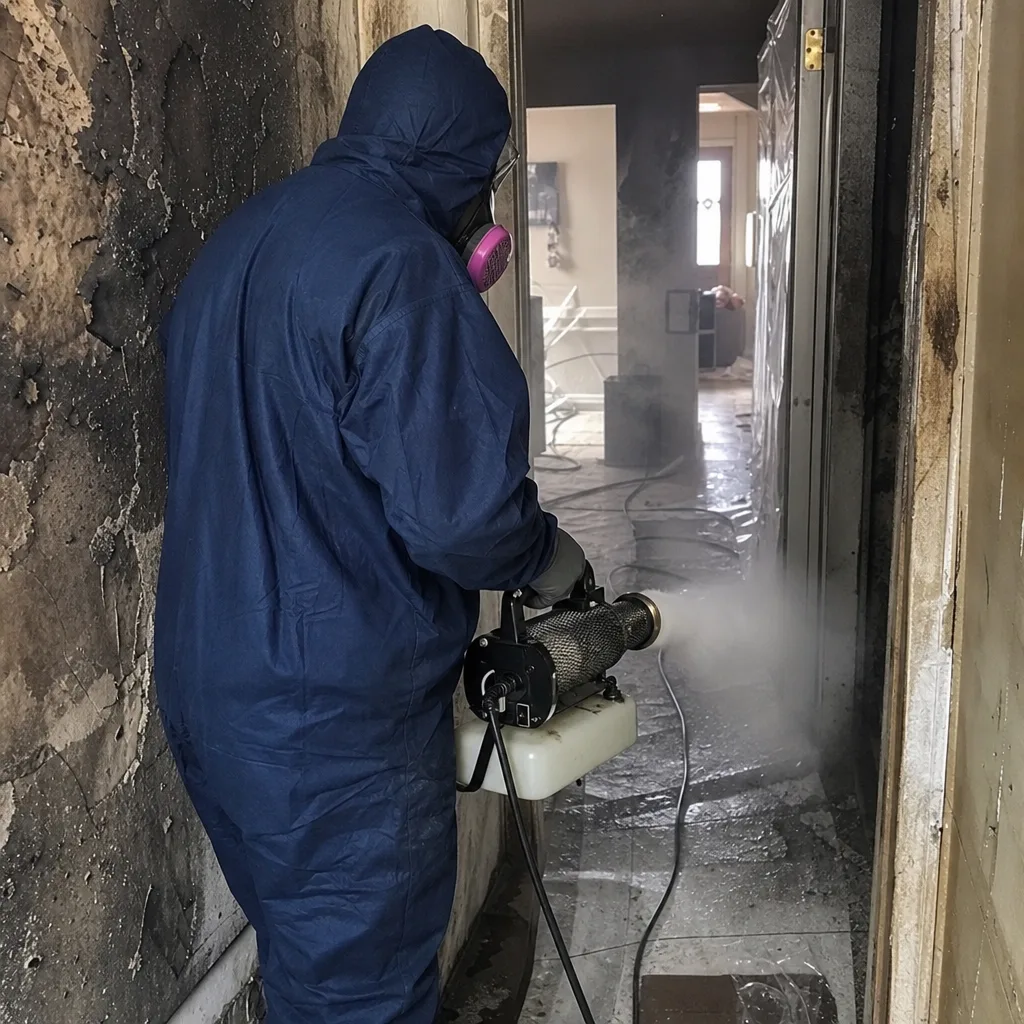
Free visual inspection and a written scope of work before any mitigation begins - photos, moisture readings, and drying logs go in your claim file
The scope we write is the scope we bill. Anything new gets shown to you, in writing, before we touch it.
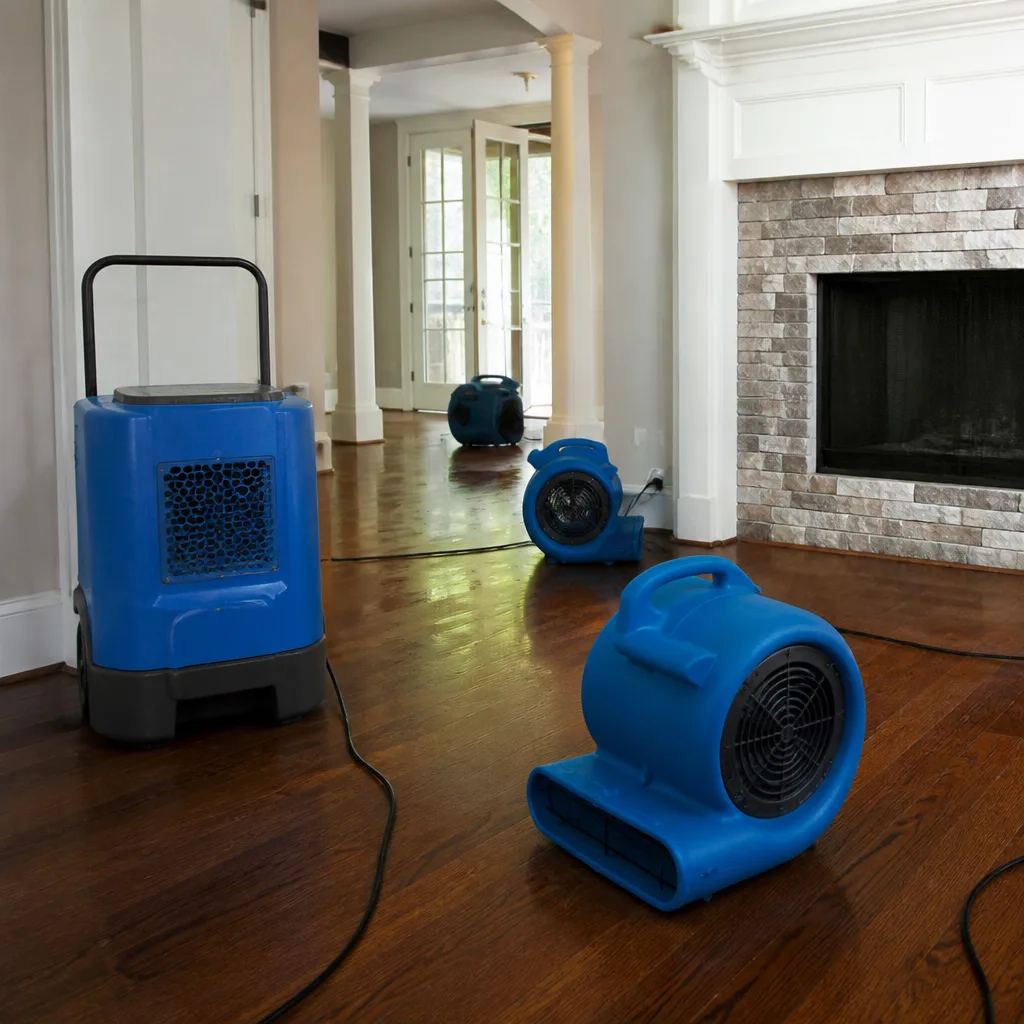
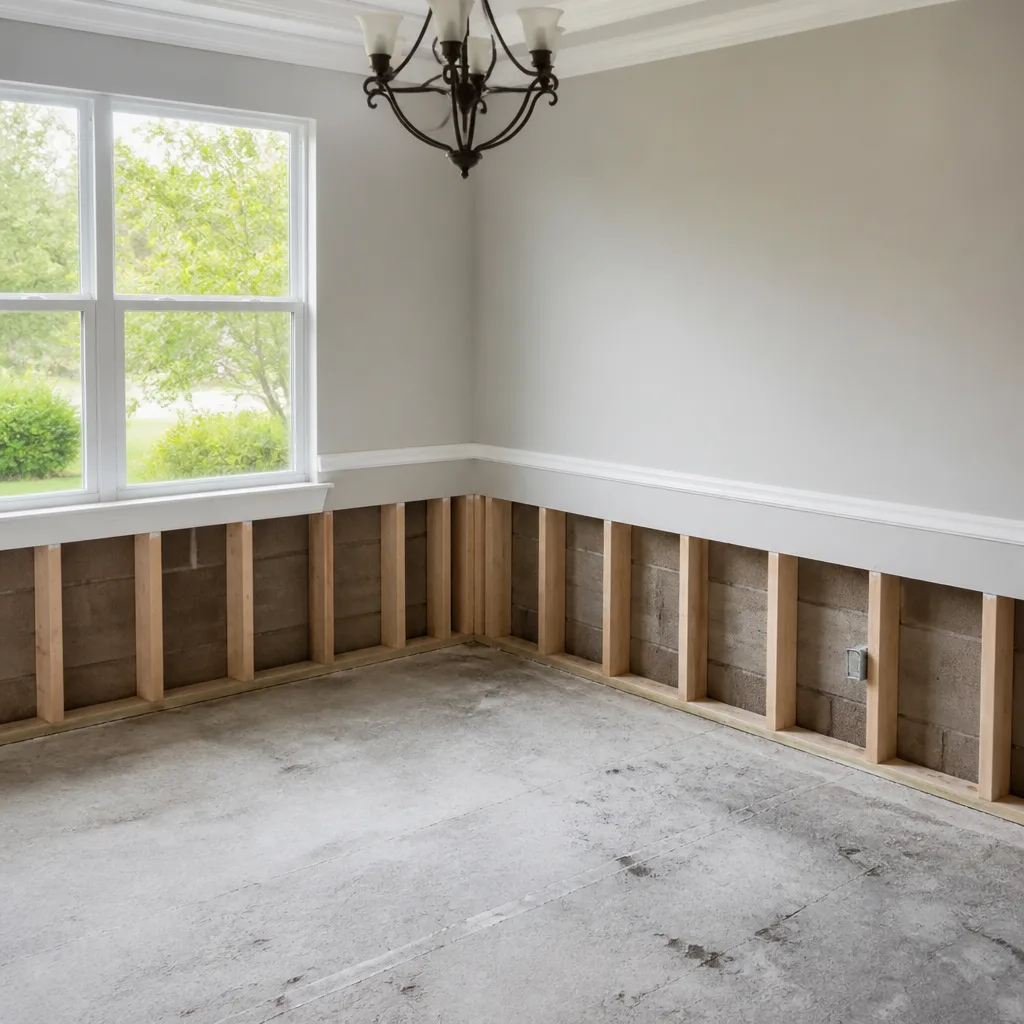
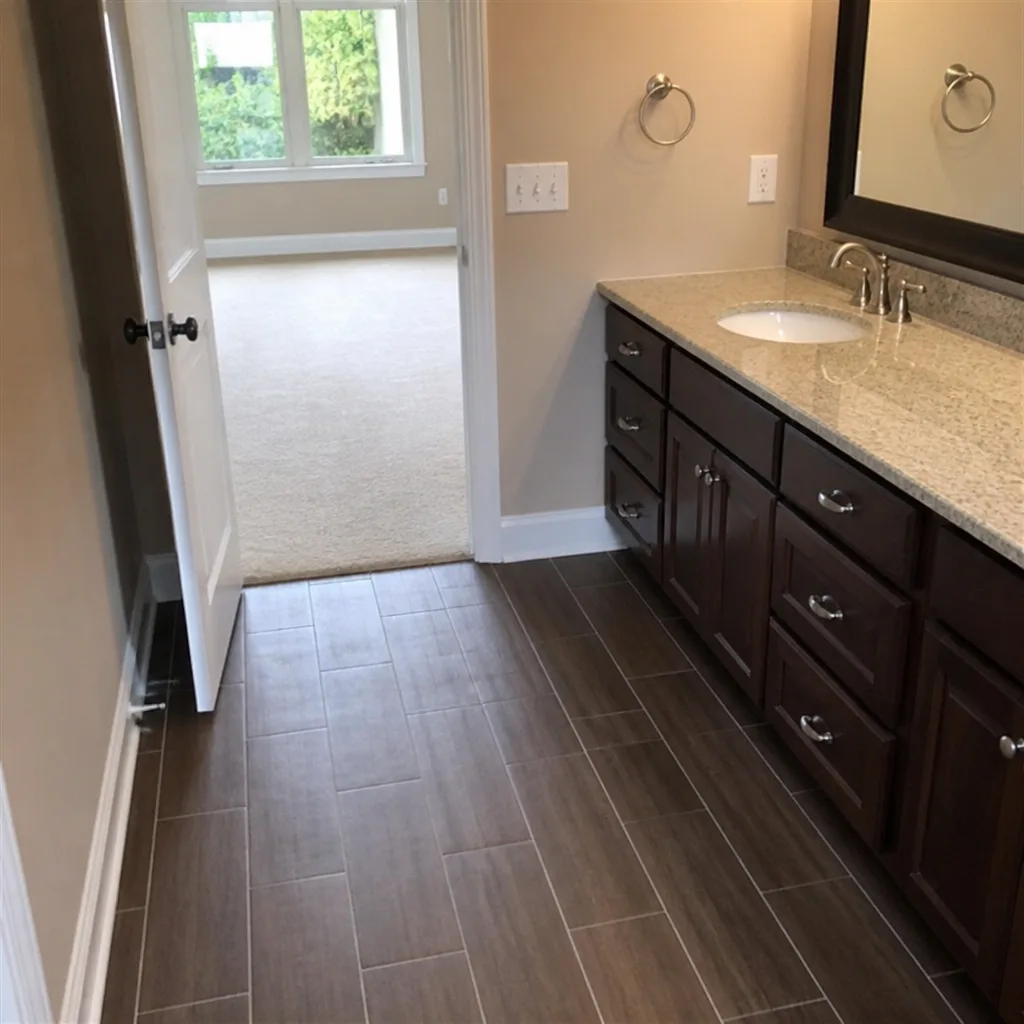
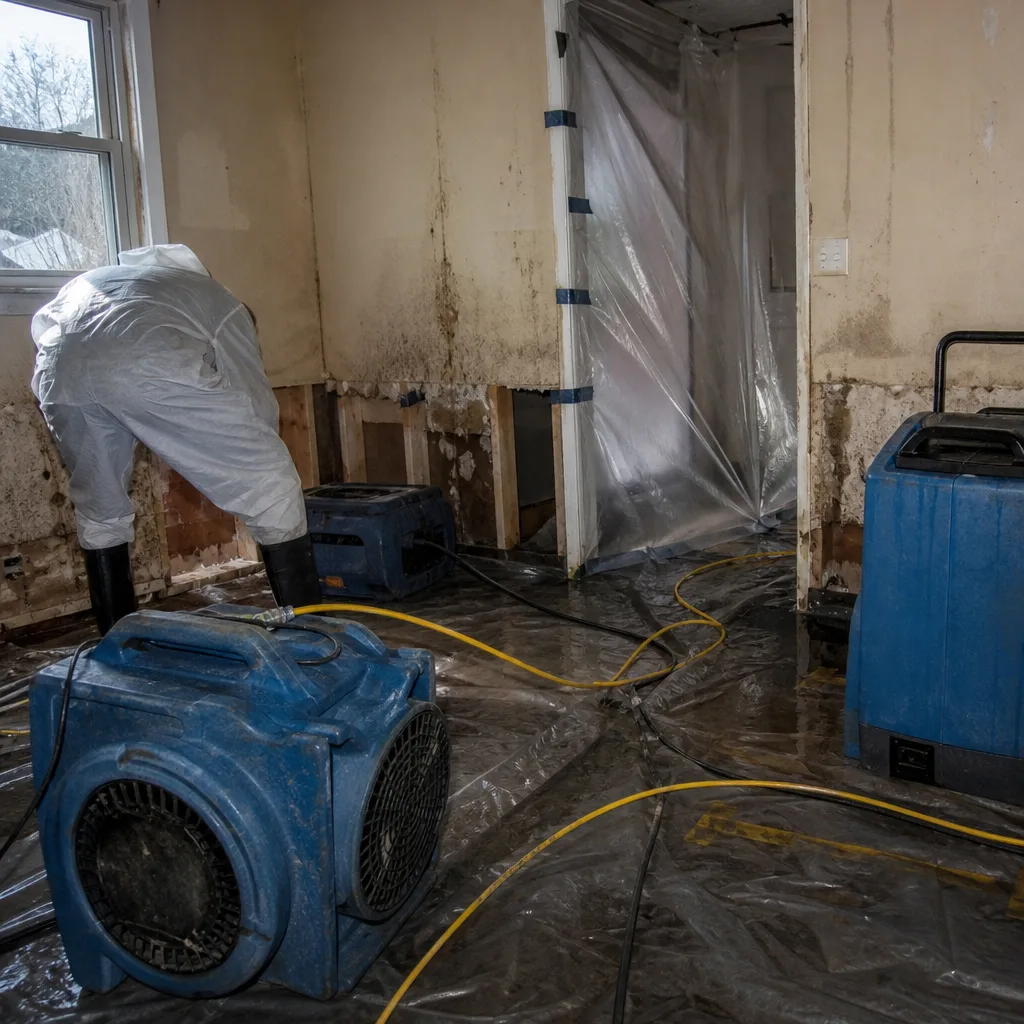 Before
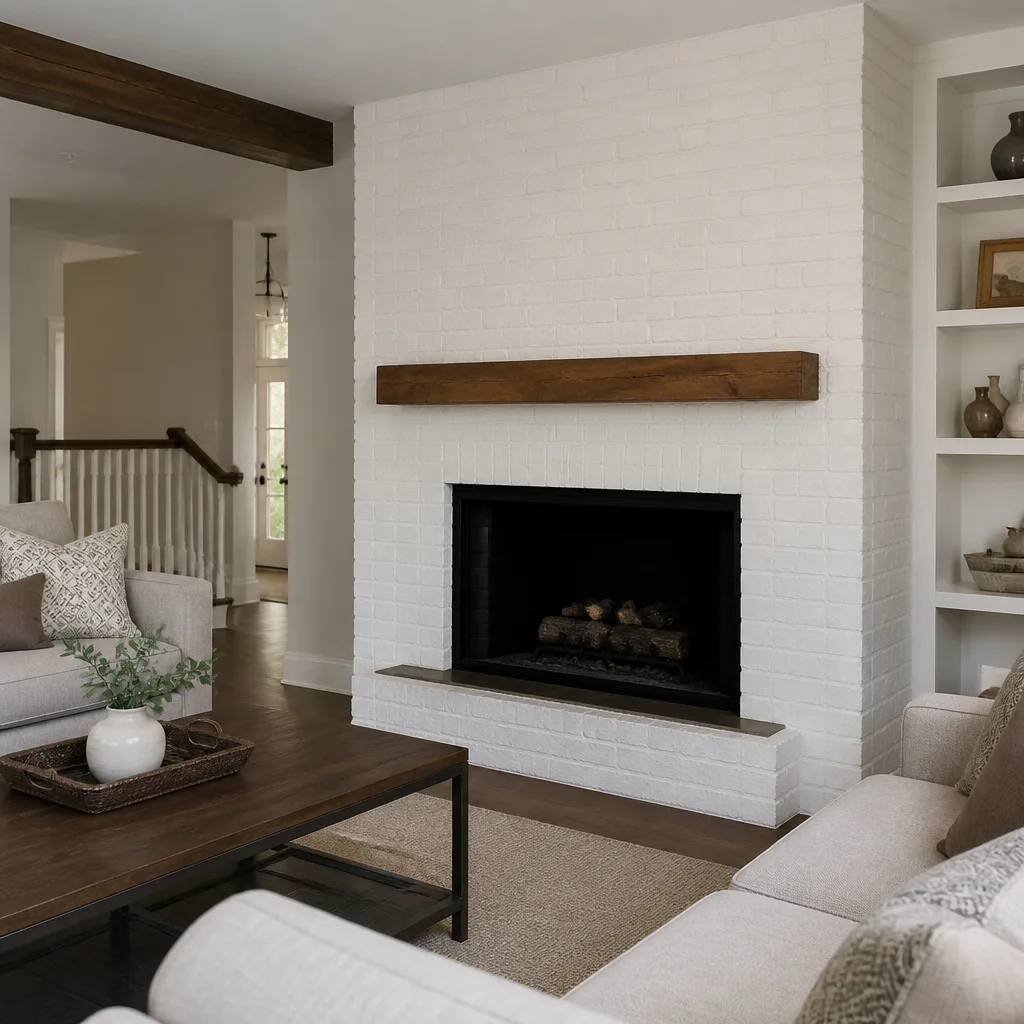
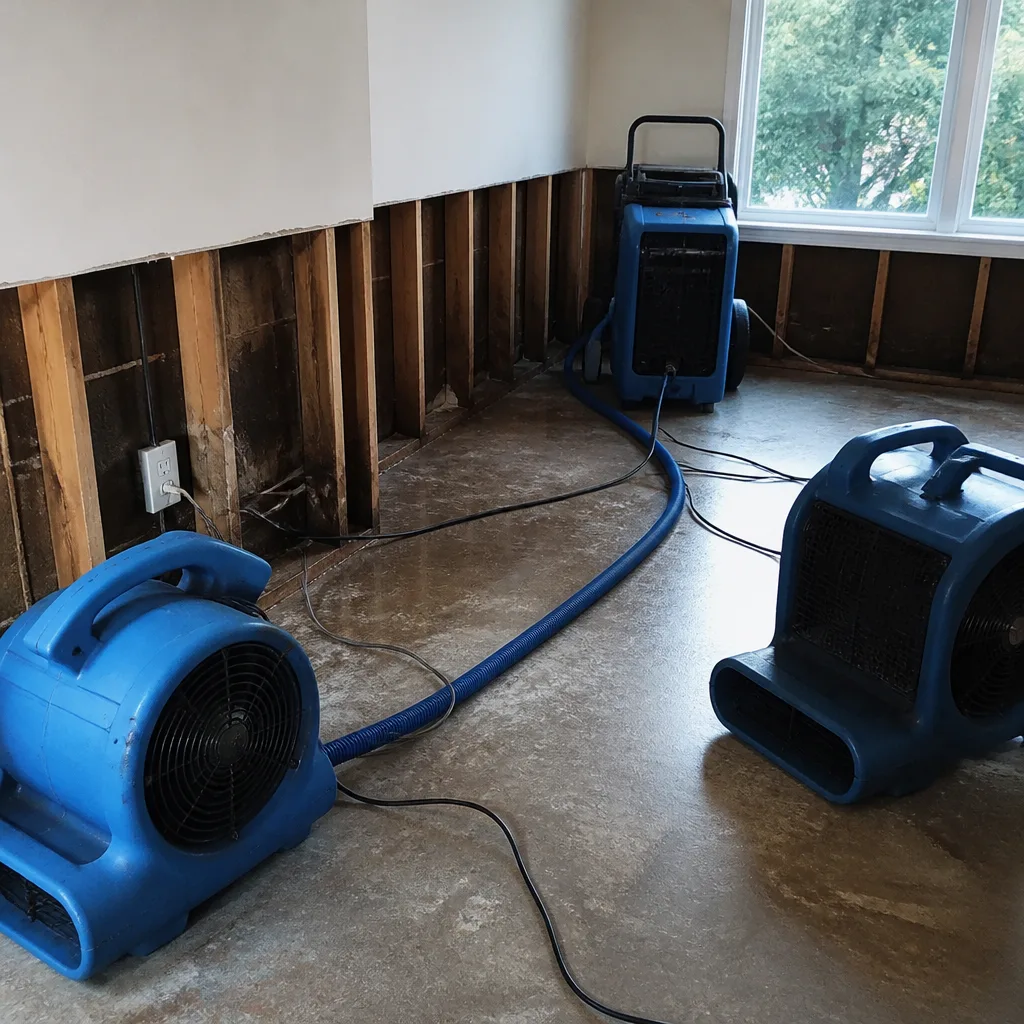 After
After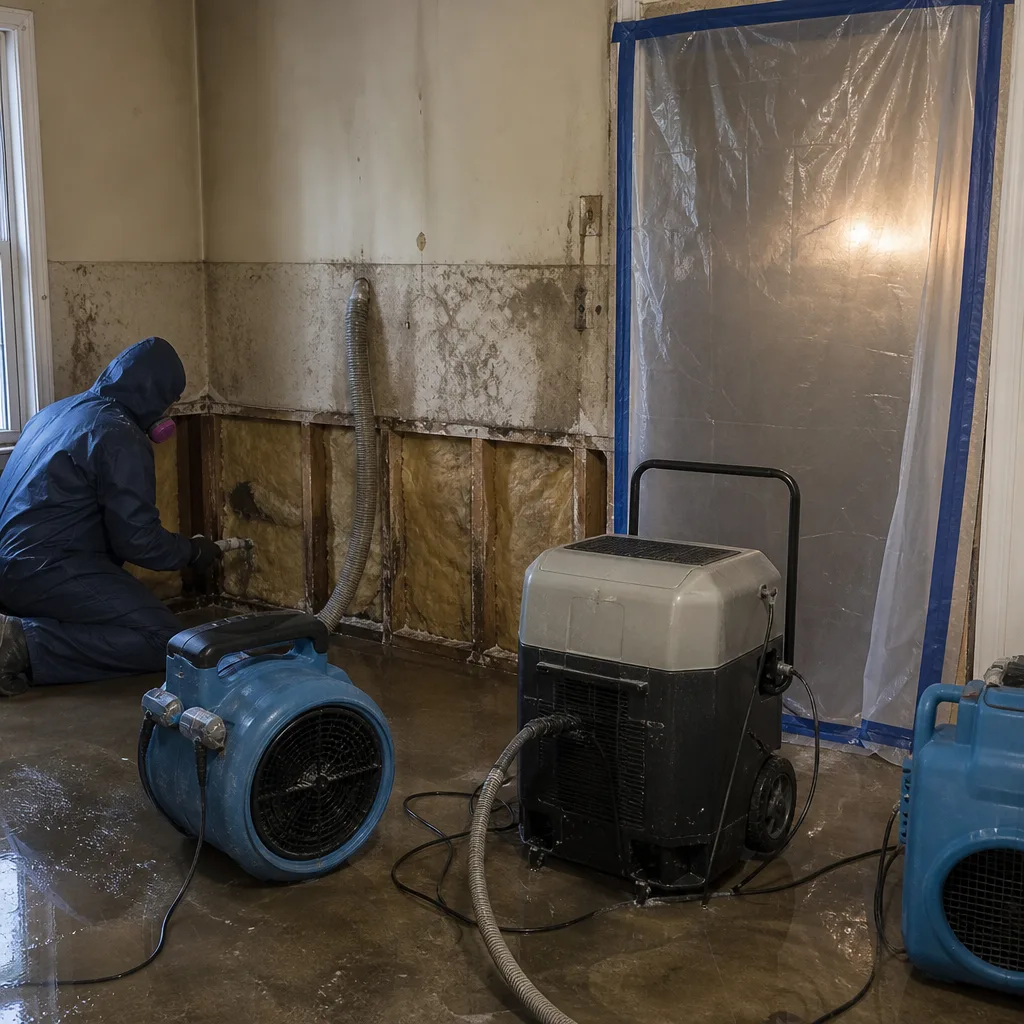 Before
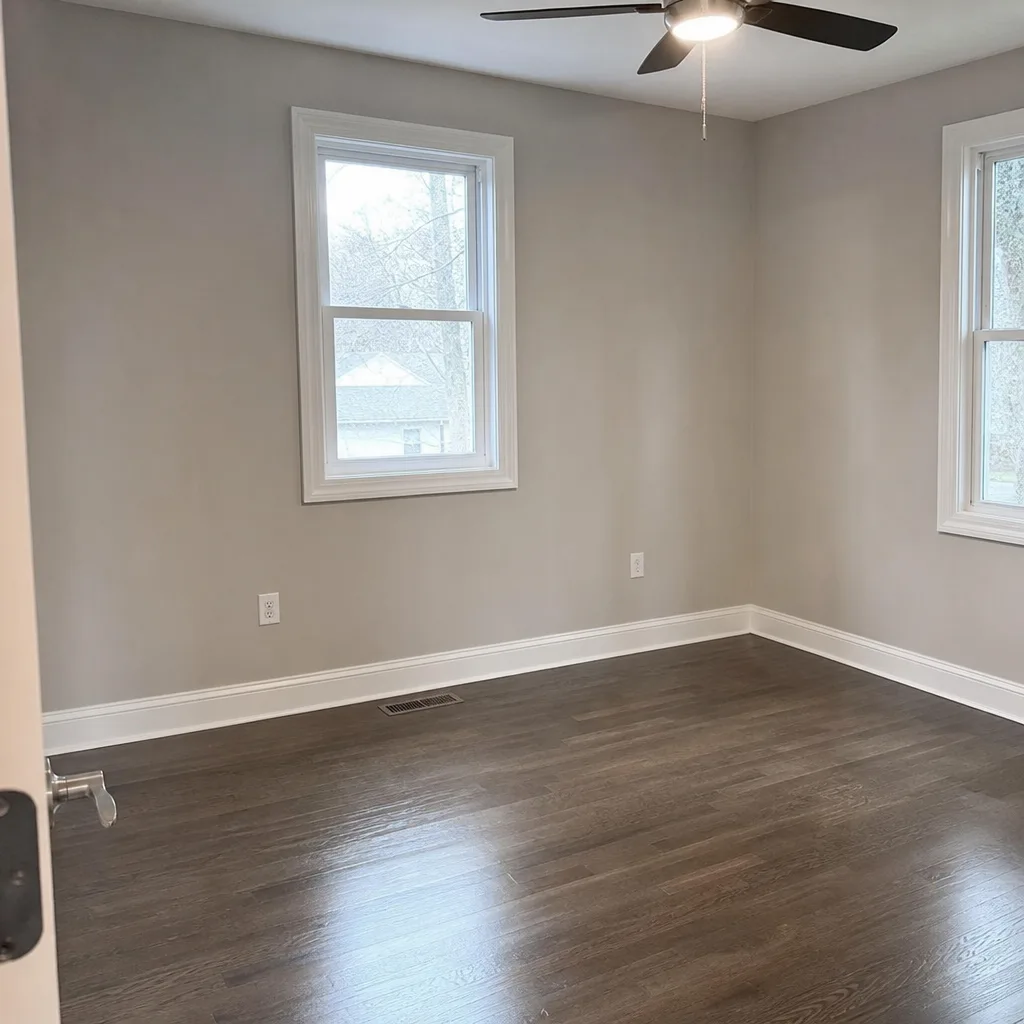 After
After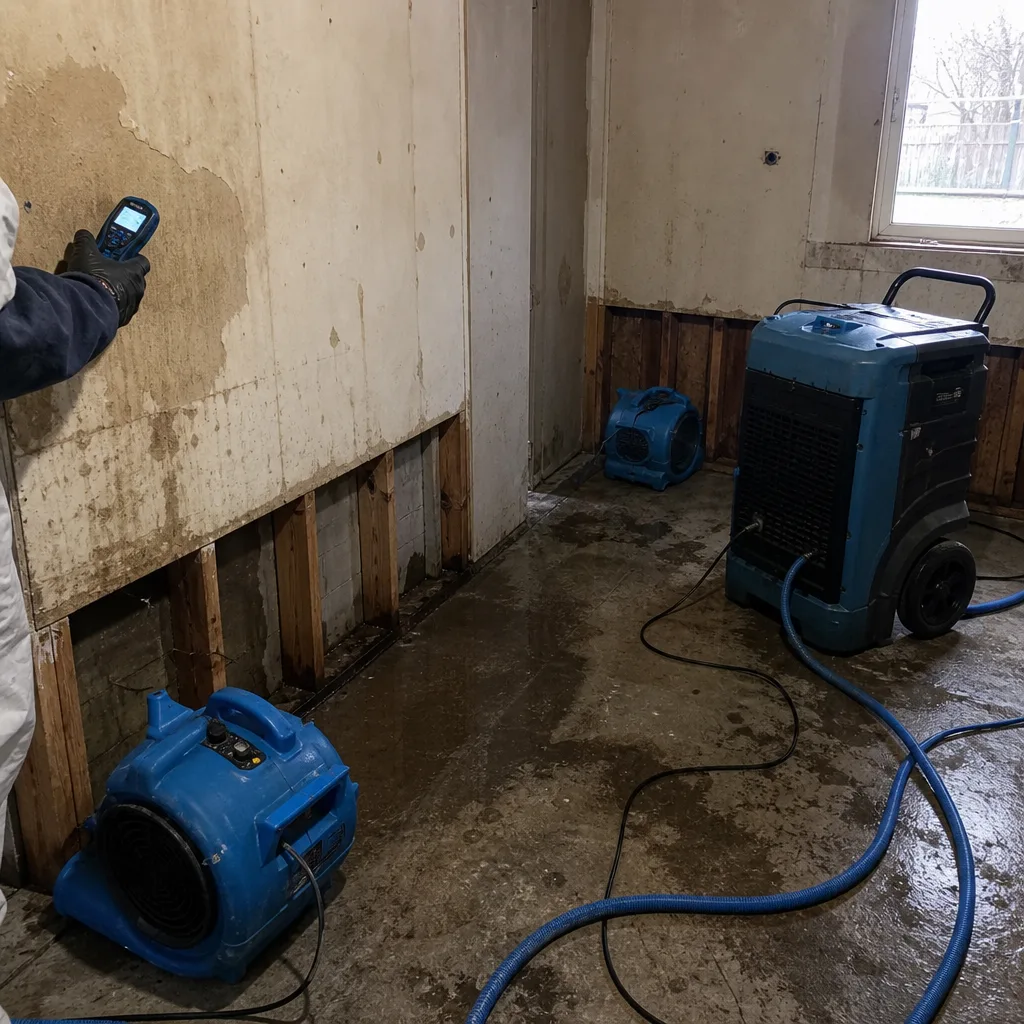 Before
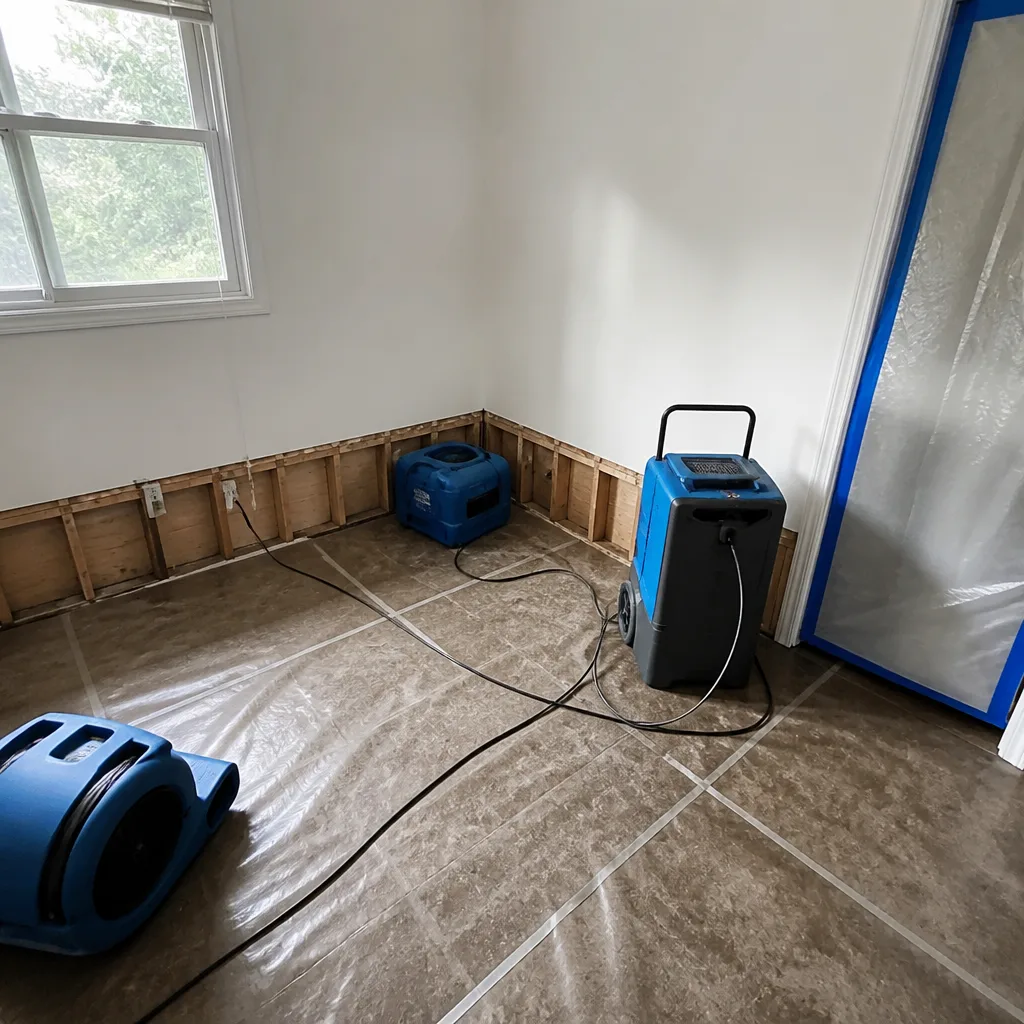 After
After24/7 Emergency Water Damage Restoration in Hasbrouck Heights
Water damage restoration in Hasbrouck Heights typically runs $2,800-$7,500 for a standard residential loss, with emergency extraction and stabilization starting at $1,200-$2,400. Most jobs require 3-5 days of structural drying before reconstruction can begin. Call (845) 875-4326 now - we answer live, 24 hours a day, and crews are dispatched from our New York City coordination office to Hasbrouck Heights properties within 45 minutes.
The first hour determines whether you’re looking at drying and paint or full gut restoration. Water moves fast through the shared walls and stacked floor plans common in Hasbrouck Heights’s two-family homes and narrow 50×100 lots. Our Water Damage Restoration team maps the migration with thermal imaging and moisture meters before a single piece of equipment gets plugged in. That documentation starts your claim file correctly from minute one.
Understanding Water Damage Restoration Severity in Hasbrouck Heights Properties
Water damage gets classified by what the water carries. Category 1 is clean supply-line water. Category 2 carries enough contaminant to require antimicrobial treatment. Category 3 is sewage or ground flooding, demanding full PPE, negative-air containment, and disposal as regulated waste. In Hasbrouck Heights, we see Category 1 turn to Category 2 fast when galvanized supply lines leak inside finished walls for weeks before detection.
Moisture mapping with thermal imaging and pinless meters shows us what walls are actually wet versus what just look stained. Structural drying uses psychrometric data - temperature, relative humidity, and vapor pressure differential - to force evaporation and then capture that moisture before it condenses elsewhere. On a typical Hasbrouck Heights Cape Cod, the low-slope roofline and minimal attic ventilation mean ceiling insulation stays wet longer than the drywall surface suggests, so we don’t pull equipment until the cavity readings confirm dry, not just the visible face.
The borough’s housing stock drives our inspection protocol. A 1950s colonial on Washington Place with original plaster and lath needs different drying targets than a 1970s ranch with drywall. And any pre-1978 structure triggers NJ DEP lead and asbestos assessment before tear-out, which adds a mandatory hold to the timeline that out-of-area contractors routinely miss.
Why Hasbrouck Heights Property Owners Choose DryMark Restoration Englewood
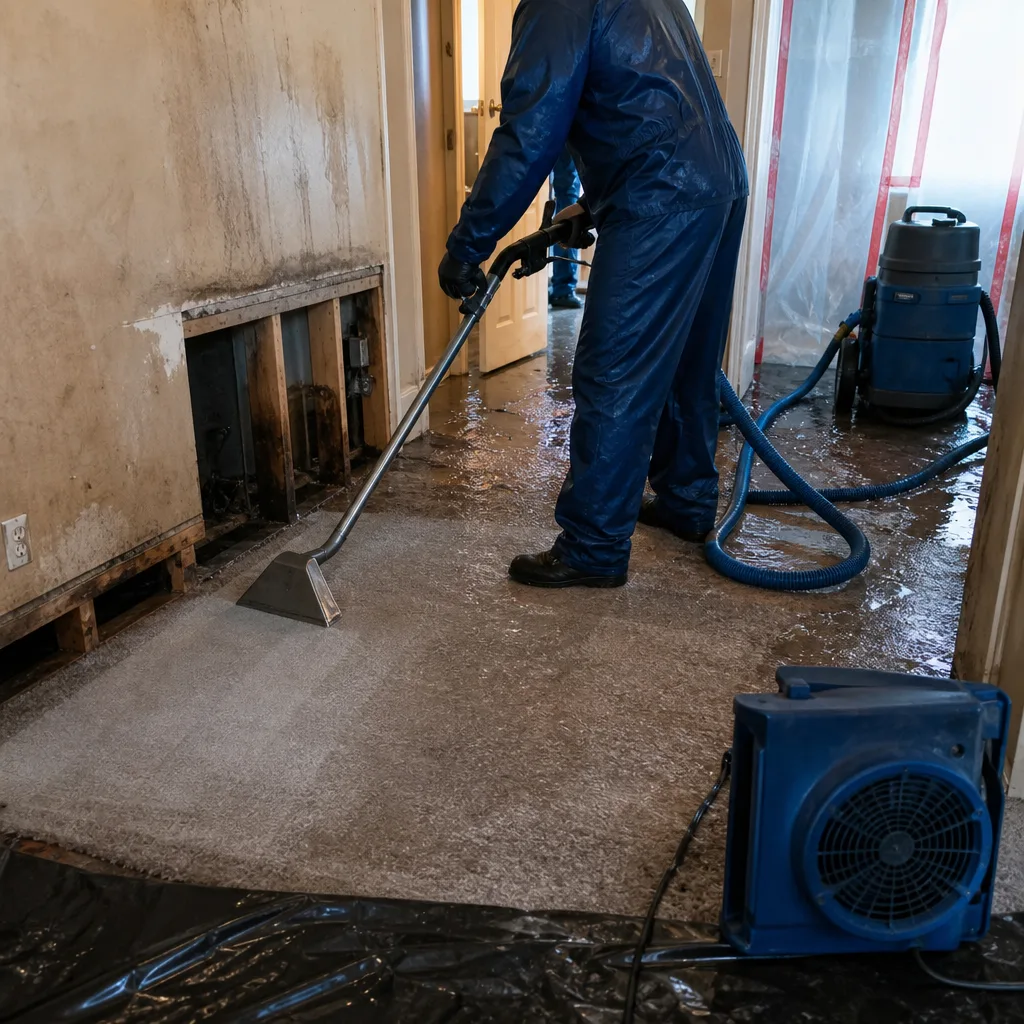
- 45-minute response commitment to Hasbrouck Heights properties, with crews staged for Bergen County dispatch from our New York City coordination office.
- 24/7 live answer - a real person picks up every call, never an automated system or voicemail tree, because water doesn’t wait for business hours.
- IICRC-certified crews holding WRT (Water Damage Restoration Technician), ASD (Applied Structural Drying), and AMRT (Applied Microbial Remediation Technician) credentials, with license numbers documented on every job file.
- Free visual inspection and moisture mapping before any equipment is deployed or any price is discussed.
- Direct insurance billing with photo-documented estimates formatted to carrier standards, plus direct adjuster coordination so you’re not chasing paperwork.
- One team from extraction through reconstruction - no handoffs to unknown subcontractors, no gaps in documentation between drying and rebuild.
BeforeAfterOur Water Damage Restoration Process
1. Inspection & Assessment
We arrive with thermal imaging cameras, pin and pinless moisture meters, and hygrometers to map the full extent of water migration. In Hasbrouck Heights’s older homes, we pay special attention to shared walls in two-family conversions and the cavities behind original plaster. Every reading gets logged with a photo, time stamp, and location note.
2. Extraction & Stabilization
Standing water comes out first - truck-mounted extractors for carpeted areas, weighted extraction wands for pad, and portable units for tight basement stairwells common on 50×100 lots. We move or block furniture, remove saturated carpet pad if salvage isn’t viable, and set containment if Category 2 or 3 conditions exist.
3. Drying & Dehumidification
We deploy Dri-Eaz and Phoenix dehumidifiers sized to the cubic footage of the affected space, paired with axial and centrifugal air movers positioned to create laminar airflow across wet surfaces. In Hasbrouck Heights’s concrete-block basements, we often add low-grain refrigerant dehumidifiers to pull moisture from masonry that standard units can’t reach. Daily moisture logs track progress to IICRC S500 standards.
4. Cleaning & Sanitization
Antimicrobial application on Category 2 and 3 losses, HEPA vacuuming of settled particles, and surface cleaning with restoration-grade products. We document every product by lot number and application location for your insurer’s file.
5. Lead & Asbestos Coordination
For pre-1978 Hasbrouck Heights homes, we coordinate certified lead and asbestos assessment before any wall or ceiling tear-out. This isn’t optional - it’s NJ DEP regulation, and skipping it stalls your job and your claim. We build this timeline and cost into your written scope from day one, not as a surprise add-on.
6. Repairs & Restoration
Once moisture readings confirm pre-loss equilibrium, we rebuild: drywall, insulation, trim, flooring, paint. Same crew, same documentation standard, same written price before work starts. Haven Standard, Clause 1, applies to reconstruction just as it does to emergency work.
Need Emergency Water Damage Restoration in Hasbrouck Heights Now?
Crews minutes away, answering live 24 hours a day. The sooner we start, the less it costs.
Working With Your Insurance Company
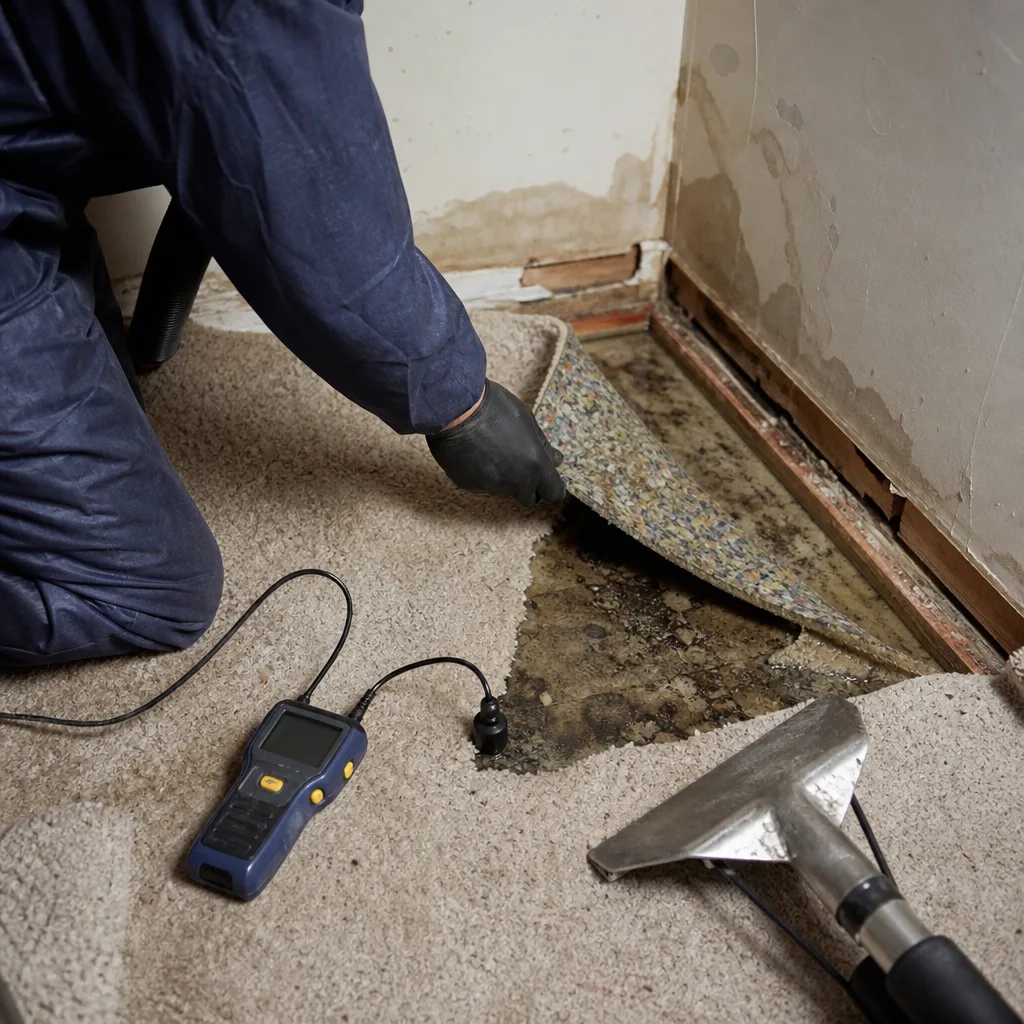
We document from the first hour because we’ve seen what incomplete files cost homeowners. Every photo, moisture reading, and drying log gets organized into a claim package formatted to your carrier’s standards. We speak adjuster language: line-item scopes, Xactimate pricing where required, and clear material classifications. When an out-of-area adjuster assumes your Hasbrouck Heights basement is poured concrete and approves drying only, we provide the hydrostatic infiltration documentation and block-wall photos that justify interior drain tile.
Direct billing is available with most major carriers. You pay your deductible; we handle the rest with your insurer. No balance billing, no surprise invoices after settlement.
What We Provide Your Insurer
- Thorough documentation of the loss
- Photos of all damage, room by room
- Moisture readings and drying logs
- A detailed, line-item scope of work
- Direct coordination with your carrier
Built for Hasbrouck Heights’s Loss Calendar
January deep freezes split copper supply lines in unheated crawl spaces and exterior wall cavities. The borough’s 1940s-1960s housing stock often lacks adequate insulation at rim joists, so a week of single-digit temperatures produces burst-pipe calls concentrated in Cape Cods and early colonials near the Boulevard and Terrace Avenue corridors.
Spring thaw brings a different pattern. Snow load on low-slope roofs melts, hits ice dams at the eaves, and backs up under shingles into attic sheathing. By March, we’re tracing ceiling stains back to compromised flashing and inadequate ventilation in ranches built during the 1950s building boom.
June through September delivers convective storms and microbursts funneled along the Bergen County ridge. Wind-driven rain finds gaps in aging roof systems and overwhelms gutter systems on homes where downspouts were never upgraded from original 2-inch leaders. Summer also means air conditioning condensate lines working overtime; clogged drains in second-floor units flood first-floor ceilings in two-family conversions.
Then the nor’easters return. Bergen County’s position on the ridge means Hasbrouck Heights catches heavy snow and ice-dam conditions that Moonachie and Little Ferry, down in the Meadowlands, rarely see at the same intensity. The shallow-pitched Capes and ranches suffer most.
Water Damage Restoration Across Hasbrouck Heights’s Neighborhoods
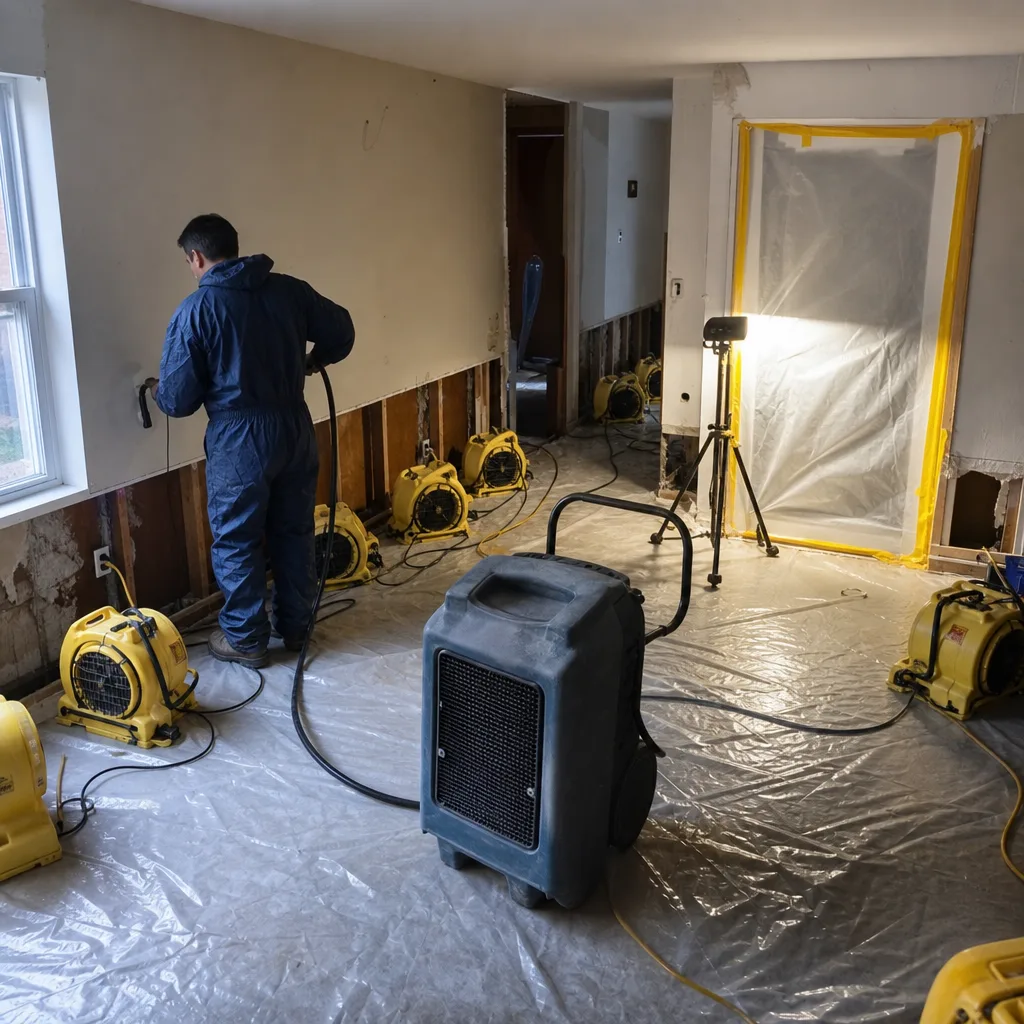
The Boulevard corridor runs the borough’s commercial spine, with mixed-use buildings and converted apartments above retail. Water losses here tend to be supply-line failures in aging utility chases, with migration across multiple units and business interruption concerns that demand fast containment and documented business-personal-property separation.
North of the Boulevard, the residential grid between Terrace Avenue and Washington Place is dense with two-family homes on 50×100 lots. Shared driveways mean our crews stage on the street and run hoses past neighboring units. We coordinate with adjacent owners before setting equipment, because drying runs 72 hours minimum and access can’t be interrupted. The 1940s-1950s Capes in this zone have the galvanized supply lines and cast-iron stacks that produce our most common hidden-leak calls.
South toward the Route 46 corridor, the housing stock shifts to 1960s ranches and split-levels on slightly larger parcels. Basements here are more likely to have been finished in the 1980s or 1990s, which means vinyl-over-drywall assemblies that trap moisture and delay detection. We see a lot of “musty basement” calls from this zone that turn out to be active hydrostatic infiltration through original concrete-block walls.
The area near the Hasbrouck Heights train station includes some of the borough’s oldest stock, 1920s-1930s colonials and Dutch-influenced homes with stone foundations and minimal subfloor ventilation. Drying these structures requires careful vapor-pressure management; too much airflow too fast drives moisture deeper into original timber framing.
Specialized Water Damage Restoration Services We Offer in Hasbrouck Heights
Emergency Water Extraction
Standing water comes out within hours of your call. Our truck-mounted extractors pull 25 gallons per minute from flooded basements and first-floor living spaces. On Hasbrouck Heights’s tight lots, we run discharge hoses to storm drains or tanker trucks, never onto neighboring properties. Typical extraction for a flooded basement here runs $1,200-$2,400.
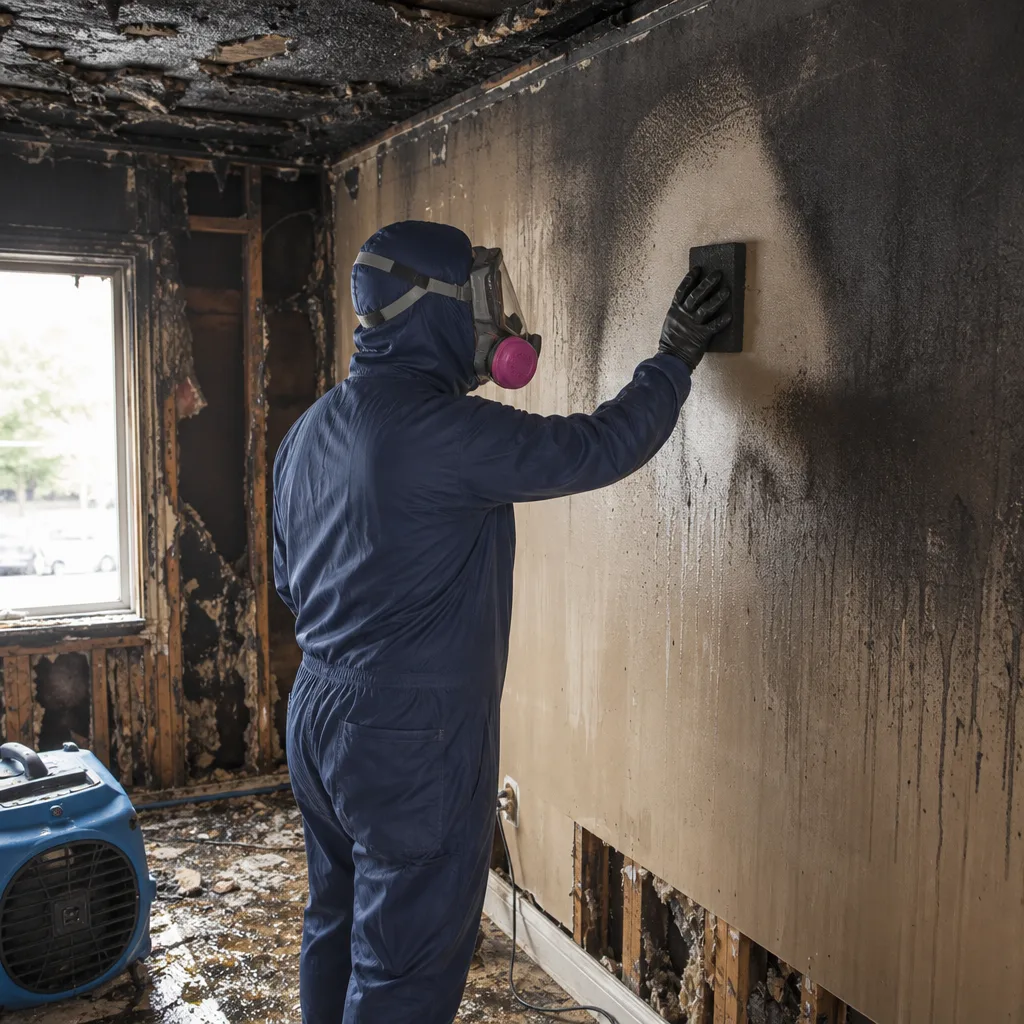
Structural Drying & Dehumidification
We size dehumidification to the space, not guess at it. A 1,200-square-foot Hasbrouck Heights Cape with wet plaster, insulation, and subfloor might need a Phoenix 200 HT dehumidifier plus four axial air movers for 72-96 hours, with daily moisture logs proving dry standard is met. Drying-only contracts typically range $2,800-$4,500.
Basement Water Removal
Hasbrouck Heights’s uncoated concrete-block foundations are a distinct local problem. Hydrostatic pressure pushes water through hairline cracks and mortar joints, producing chronic “musty basement” conditions that standard drying won’t fix. We map the infiltration pattern, install interior drain tile where indicated, and pair it with dedicated dehumidification. Full basement systems run $4,500-$8,500, but stop the cycle of recurring damage that costs more over time.
Flood Cleanup
Category 3 losses from ground flooding or sewer backup require full PPE, negative-air containment with HEPA scrubbers, and regulated waste disposal. We handle the NJ DEP notification and documentation that your insurer and local authorities require.
Burst Pipe Restoration
Winter freeze events in Hasbrouck Heights’s uninsulated exterior walls and crawl spaces split copper and PEX alike. We extract, dry, and document the full migration path, including hidden cavities behind kitchen cabinets and bathroom vanities where water travels along horizontal framing.
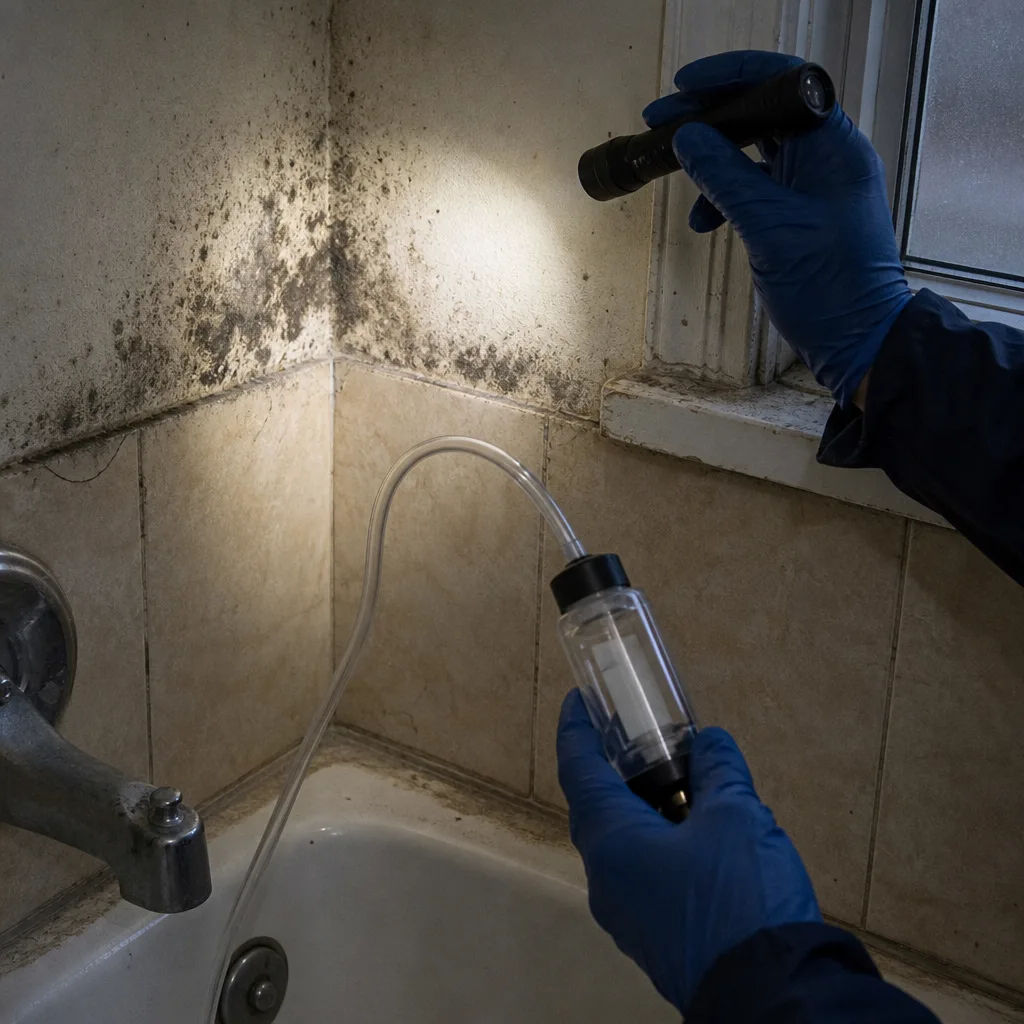
What happens when you call
- 1
A real person answersNo phone trees - you reach a local pro.
- 2
You get an upfront price rangeHonest numbers before anyone is dispatched.
- 3
A background-checked tech heads outLicensed & insured, dispatched right away.
- 4
You approve before work beginsNothing starts until you say go.
Water Damage Restoration Costs in Hasbrouck Heights, NJ
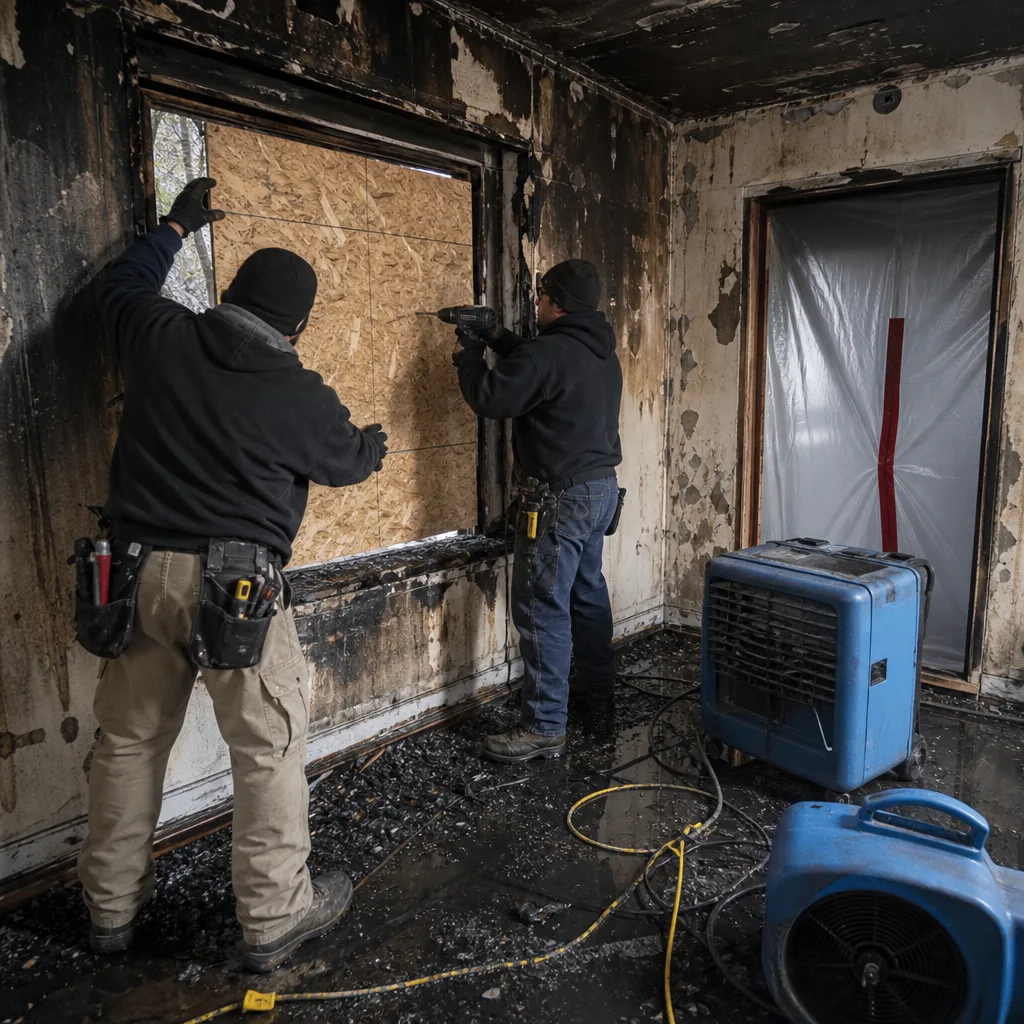
Here’s what we see in the Hasbrouck Heights market, based on 12,000+ jobs since 2011:
| Service | Typical Range |
|---|---|
| Emergency extraction (basement or first floor) | $1,200 - $2,400 |
| Structural drying (3-5 day standard residential) | $2,800 - $4,500 |
| Category 3 flood cleanup with containment | $4,500 - $8,500 |
| Basement water removal + drain tile | $4,500 - $8,500 |
| Full restoration with reconstruction | $7,500 - $18,000+ |
What moves the price: square footage affected, water category, whether lead/asbestos assessment is required (add $800-$1,500 on pre-1978 homes), and whether reconstruction is included. Insurance typically covers sudden and accidental losses; long-term leaks may be capped or excluded. We provide a written price before any work starts, Haven Standard, Clause 1, and a Free Second Opinion on any competitor’s written estimate.
We Also Serve Cities Near Hasbrouck Heights
Our crews respond throughout central Bergen County, including Hasbrouck Heights and neighboring Lodi, Little Ferry, Hackensack, and Bogota. Each municipality has distinct building ages, flood profiles, and code requirements; we scope accordingly.
Serving Hasbrouck Heights, NJ - Our Local Coverage Area
We’re based in the Hasbrouck Heights area and know this community well. Use the map below to see our service coverage - if you’re nearby, we can almost certainly help.
Hasbrouck Heights Water Damage Restoration Questions, Answered
Why does water damage in a Hasbrouck Heights Cape or colonial take longer to dry than in a newer house?
Plaster and lath hold roughly three times the moisture of modern drywall, and the borough’s postwar homes were built with minimal wall cavity ventilation.
When water gets into a 1950s Cape’s exterior wall, it saturates the plaster keys, the wood lath, and often the insulation behind it. Our Dri-Eaz and Phoenix equipment runs longer to pull that mass of moisture down to pre-loss equilibrium, and we verify with daily readings before we call it dry. A newer drywall assembly might hit standard in 48 hours; a Hasbrouck Heights plaster wall routinely needs 72-96. Rushing the timeline guarantees mold rebound and a failed claim inspection. Call (845) 875-4326 for a moisture map of your specific wall assembly.
My Hasbrouck Heights basement smells musty every spring - is that a water damage problem?
Probably, and it’s likely not a one-time event.
Hasbrouck Heights’s uncoated concrete-block foundations allow hydrostatic pressure to push water through hairline cracks and mortar joints continuously. What reads as “musty” is often active evaporation of infiltrating groundwater, with relative humidity sustained above 60% - the mold growth threshold. We see this constantly in ranches and Capes south of the Boulevard, where original construction never included perimeter drainage. Surface cleaning won’t fix it; interior drain tile and dedicated dehumidification will. Call (845) 875-4326 for a free inspection that distinguishes seasonal damp from active infiltration.
Do you have to test for lead and asbestos before restoring water damage in a pre-1978 Hasbrouck Heights home?
Yes, it’s mandatory under NJ DEP regulations, and any contractor who opens walls without it is exposing you to liability and your job to shutdown.
Nearly every gut-level restoration in Hasbrouck Heights triggers this requirement because the borough’s housing stock is overwhelmingly pre-1978. We build the $800-$1,500 assessment cost and 24-48 hour lab turnaround into your written scope from day one. Skipping it to “save time” means an inspector can halt work mid-job, and your insurer may deny coverage for work performed without required environmental clearance. Haven Standard, Clause 1: the written price includes everything required to do the job legally. Call (845) 875-4326 for a scope that accounts for your home’s age correctly.
A pipe burst behind a finished wall in our two-family - what does the water extraction and drying process actually look like?
We start with moisture mapping to trace the full migration path, including the shared wall cavity and any downward travel to the unit below.
For a typical Hasbrouck Heights two-family on a 50×100 lot, that means thermal imaging to locate the wet zone, pinless meters to check plaster or drywall without destructive probing, and then a written scope before any equipment runs. If the building is pre-1978, lead and asbestos assessment comes first. Then we set containment if needed, deploy air movers and dehumidifiers, and log daily moisture readings until the cavity confirms dry. Shared walls get extra attention because moisture can migrate laterally through framing connections for days. The process typically takes 3-5 days of active drying, plus assessment and reconstruction time. Call (845) 875-4326 for a timeline specific to your unit configuration.
How fast can you get to a water emergency in Hasbrouck Heights, and what should we do before you arrive?
We commit to 45 minutes from dispatch, and we answer live 24 hours a day.
Before we arrive: stop the source if you can do so safely at a shutoff valve, turn off electricity to affected areas if water is near outlets or switches, and remove small valuables from the wet zone. Don’t enter standing water if you can’t confirm the electrical is de-energized. Don’t start tearing out walls - we need to document the original condition for your insurer, and unpermitted demolition in a pre-1978 home creates regulatory problems. We’ll bring the extraction equipment, moisture meters, and documentation tools. Call (845) 875-4326 now; we’ll guide you through immediate safety steps while crews are en route.
Will my insurance cover water damage restoration in Hasbrouck Heights?
Sudden and accidental losses - burst pipes, appliance failures, storm intrusion - are typically covered, minus your deductible.
Long-term leaks, gradual seepage, and maintenance issues are often excluded or capped. The key is documentation: our photo record, moisture logs, and written scope establish that the loss was sudden and map the full extent so your adjuster can’t attribute damage to pre-existing conditions. We coordinate directly with carriers and format estimates to industry standards. If you’ve already got a denial or a lowball scope, our Free Second Opinion reviews any competitor’s written estimate at no charge. Call (845) 875-4326 to discuss your specific policy and loss circumstances.
How long does the drying process take for a typical Hasbrouck Heights home?
Most residential drying projects run 3-5 days of active equipment time.
Plaster walls, concrete-block basements, and hidden cavity moisture extend that timeline. We don’t pull equipment until daily moisture logs confirm the assembly has returned to pre-loss equilibrium - not when it “seems dry” or when a neighbor needs the parking space. Tight lots on 50×100-foot parcels mean we coordinate equipment placement with property access for the full duration. Rushing this step is the single biggest cause of mold callbacks and claim disputes. Call (845) 875-4326 for a drying timeline based on your home’s specific materials and moisture readings.
Can we stay in our Hasbrouck Heights home during water damage restoration?
Often yes for Category 1 losses limited to one room or a basement not used for living space.
Category 2 and 3 losses, or any job requiring containment for mold or lead/asbestos work, usually require temporary relocation of affected areas. In Hasbrouck Heights’s two-family homes, we also consider cross-unit migration and shared HVAC systems when making this recommendation. We discuss occupancy status in your written scope and can document the recommendation for your insurer if additional living expense coverage applies. Call (845) 875-4326 to review your specific layout and loss conditions.
Water damage in Hasbrouck Heights doesn’t follow a generic Bergen County pattern. The borough’s plateau elevation, postwar housing stock, and NJ DEP environmental requirements produce a distinct loss profile that demands local knowledge from the first inspection. We map that profile precisely, document every step, and put a written price in your hands before work starts. Haven Standard, Clause 1. Every time.
Call (845) 875-4326 for 24/7 live answer, free visual inspection, and a written estimate with no obligation.
Written by Alicia Brennan, Owner at Back to Dry Restoration, serving Hasbrouck Heights since 2011 under The Haven Standard.
Water Damage Restoration in Nearby Areas