Free visual inspection and a written scope of work before any mitigation begins - photos, moisture readings, and drying logs go in your claim file
The scope we write is the scope we bill. Anything new gets shown to you, in writing, before we touch it.

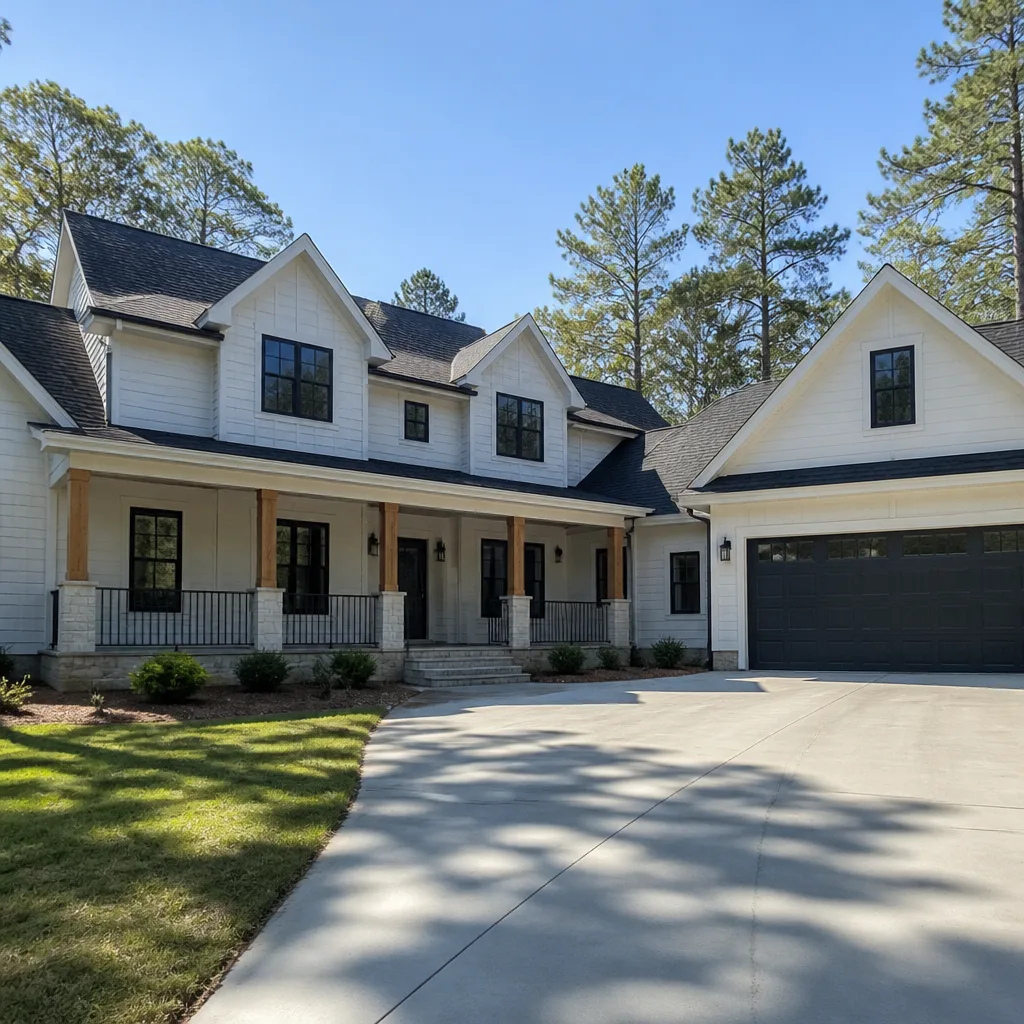
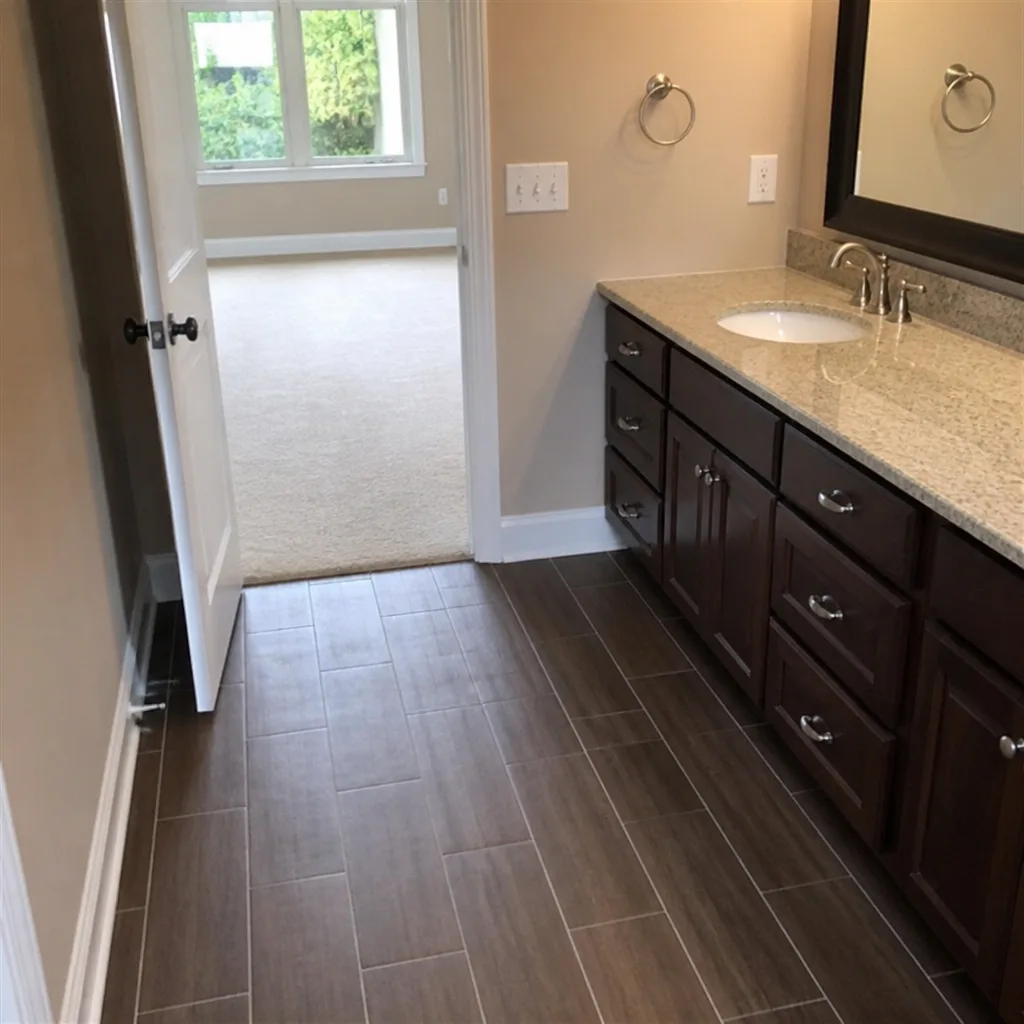
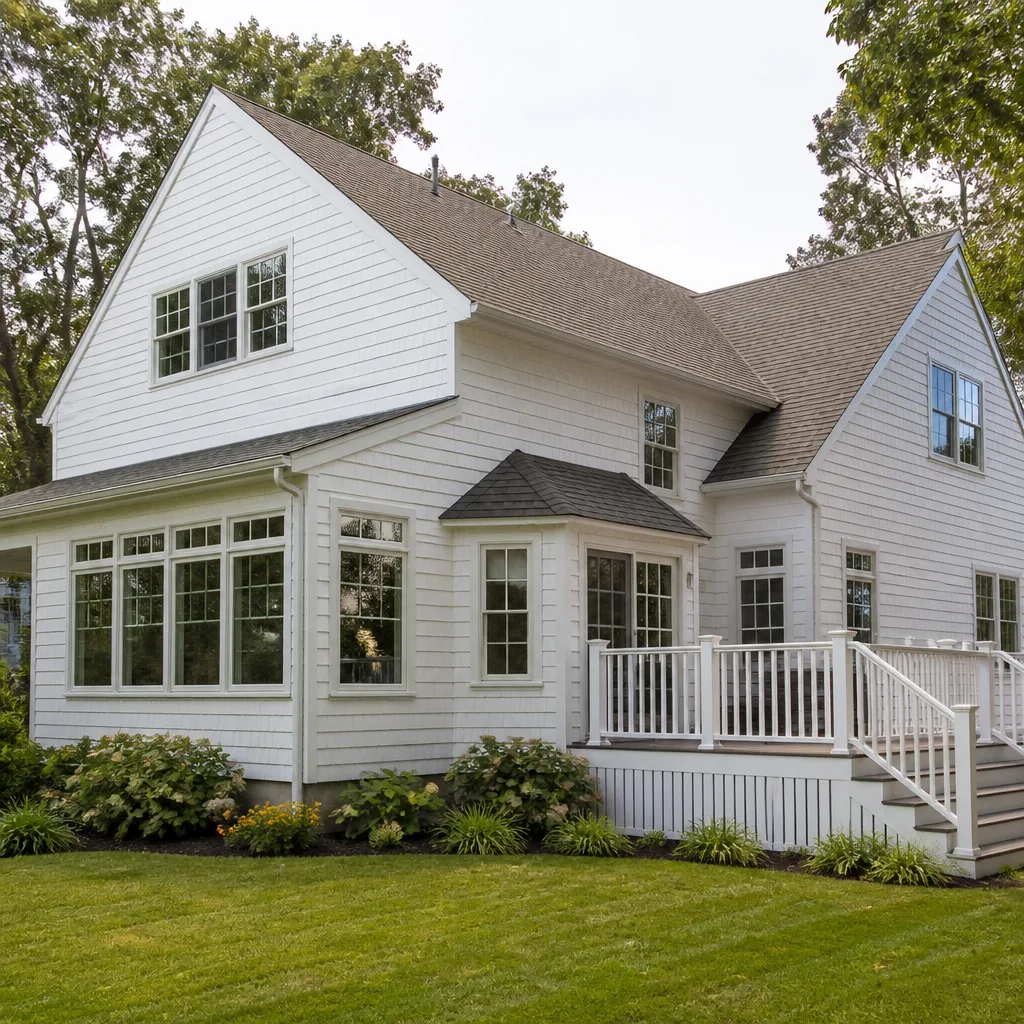
 Before
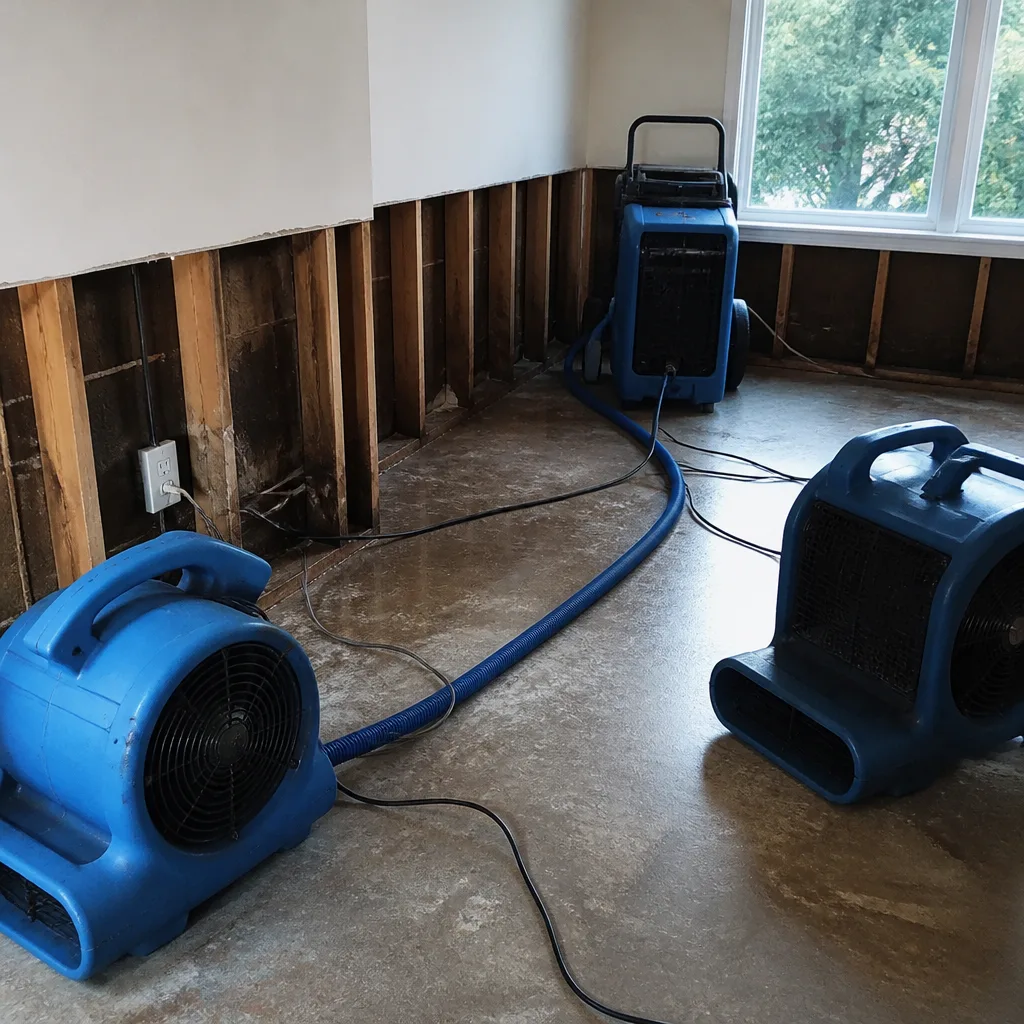 After
After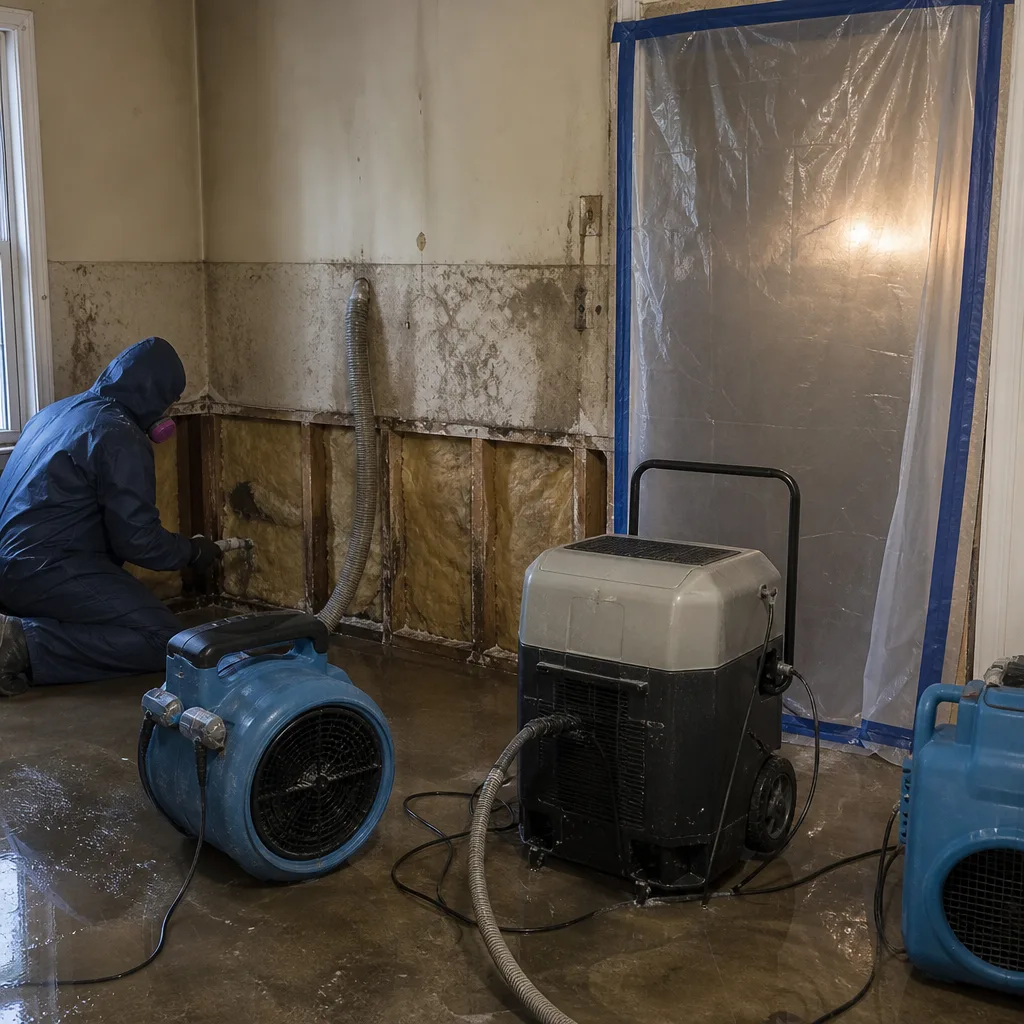 Before
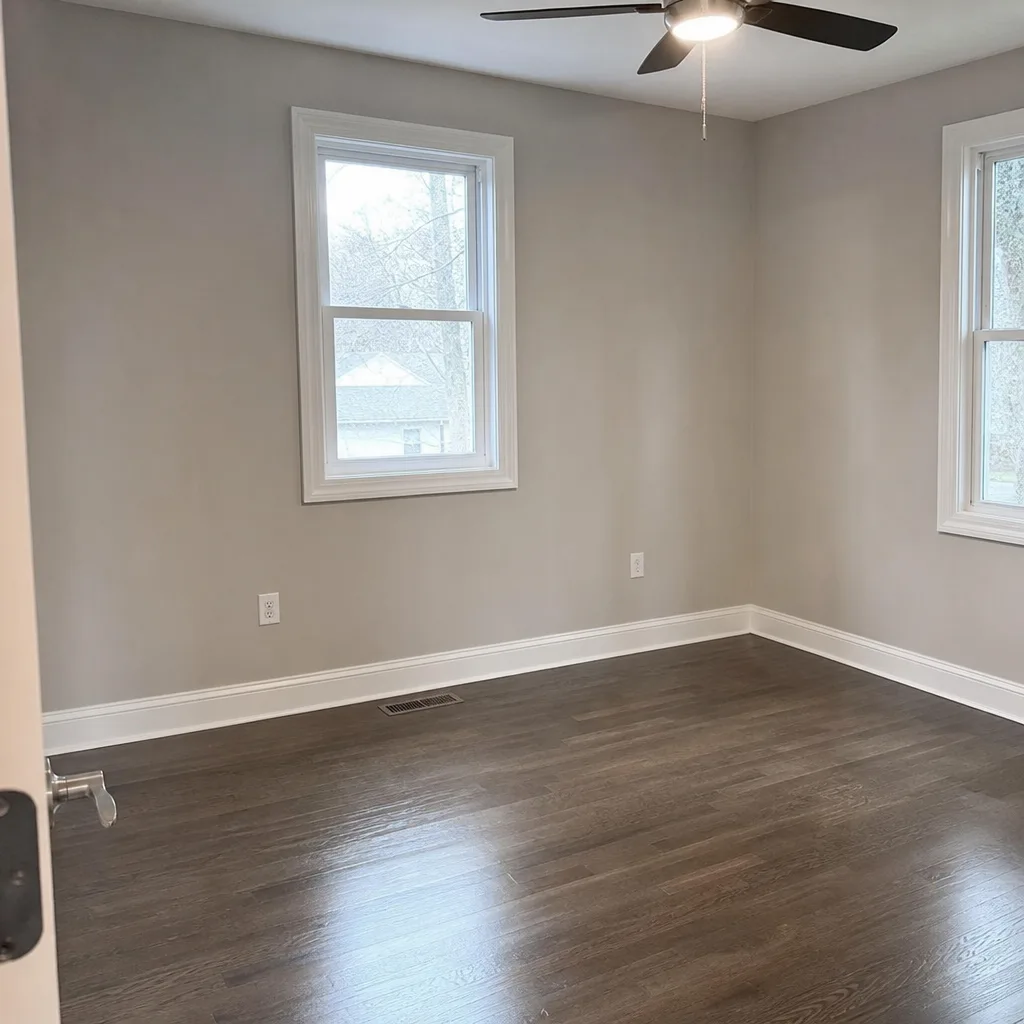 After
After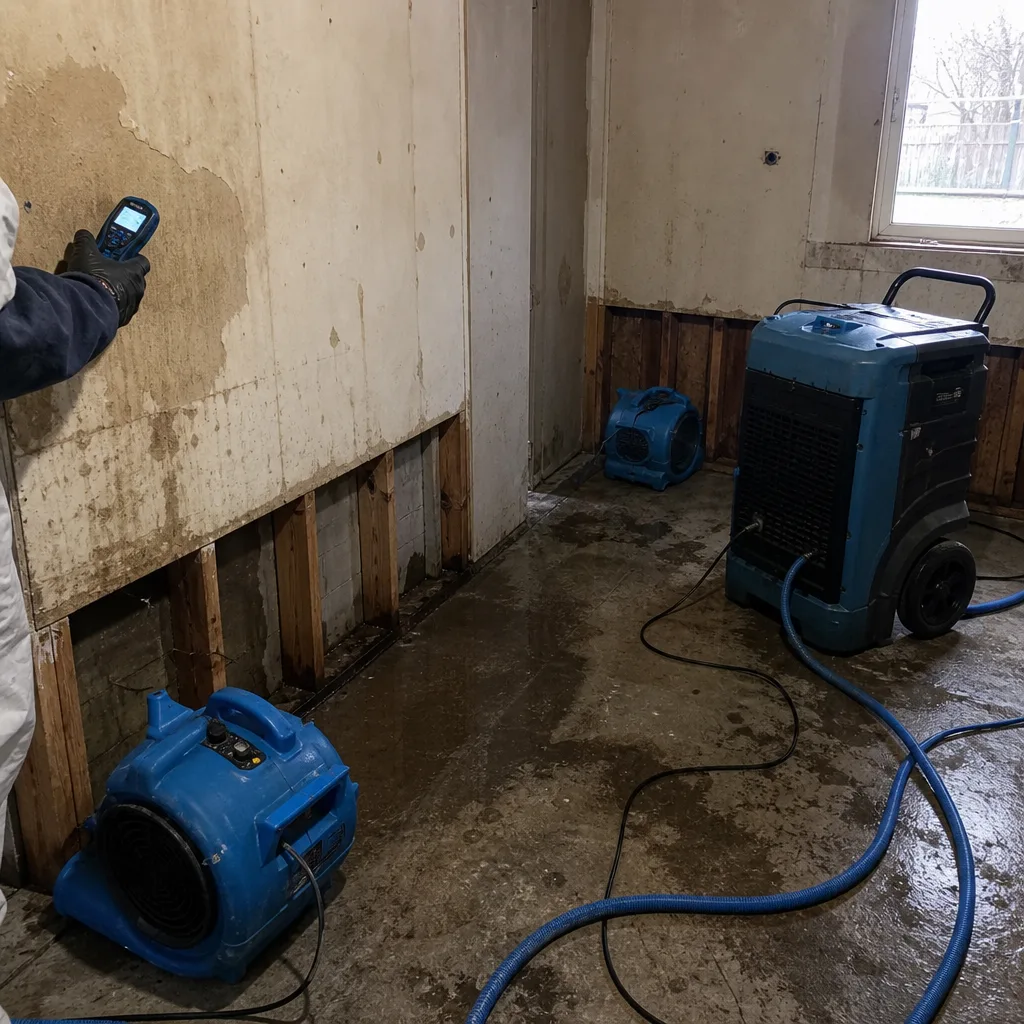 Before
 After
After24/7 Emergency Water Damage Restoration in Bogota
Water damage in Bogota demands speed, because groundwater moves through pre-1960 masonry faster than most owners expect. Call (845) 875-4326 and a live person answers, 24 hours a day, every day. We dispatch crews into Bogota within 45 minutes of your call, and we do not charge for the initial visual inspection that tells you what you’re facing. The first hour determines whether a wet basement stays a cleanup job or becomes a full reconstruction, and in Bogota’s flat, river-adjacent terrain, water that starts in one wall often travels through balloon-frame cavities into rooms that looked untouched.
Understanding Water Damage Restoration Severity in Bogota Properties
Water damage breaks into three categories, and Bogota’s geography pushes most basement events into Category 2 or 3, even when the source looks clean. Category 1 is clean supply-line water. Category 2 carries significant contamination from soil intrusion, and Category 3 is grossly unsanitary. Because Bogota sits at low elevation along the Hackensack River corridor, groundwater pushing through foundation walls typically carries silt, bacteria, and chemical residue from urban runoff, meaning our crews classify and treat it accordingly.
Moisture mapping with thermal imaging and calibrated hygrometers tells us what the eye cannot: how far water has wicked up plaster-and-lath walls, whether vapor pressure differential is still pulling moisture into framing cavities, and when structural drying has reached tertiary phase (below 16% wood moisture content). Bogota’s 1920s-1950s housing stock complicates every reading. Plaster retains moisture longer than drywall. Balloon-frame construction lets water travel vertically inside walls. Cast-iron plumbing, common in these homes, can leak slowly for weeks before showing surface damage. We document every reading, every visit, because your insurer will ask for the psychrometric data that proves drying was complete before reconstruction started.
Why Bogota Property Owners Choose DryMark Restoration Englewood
- 45-minute response commitment to Bogota properties, because groundwater intrusion spreads through legacy framing faster than modern construction.
- 24/7 live answer by a real person, never an automated system or voicemail tree, on every call to (845) 875-4326.
- IICRC-certified crews holding WRT (Water Damage Restoration Technician) and ASD (Applied Structural Drying) certifications, with license numbers documented on every job file.
- Free visual inspection with moisture readings before any work begins or any price is discussed.
- Direct insurance billing with photo-documented estimates formatted to carrier standards, so your claim moves without dispute.
- One team from extraction through reconstruction, meaning the crew that knows your Bogota home’s quirks finishes the job, not a rotating cast of subcontractors.
BeforeAfterOur Water Damage Restoration Process
1. Inspection & Assessment
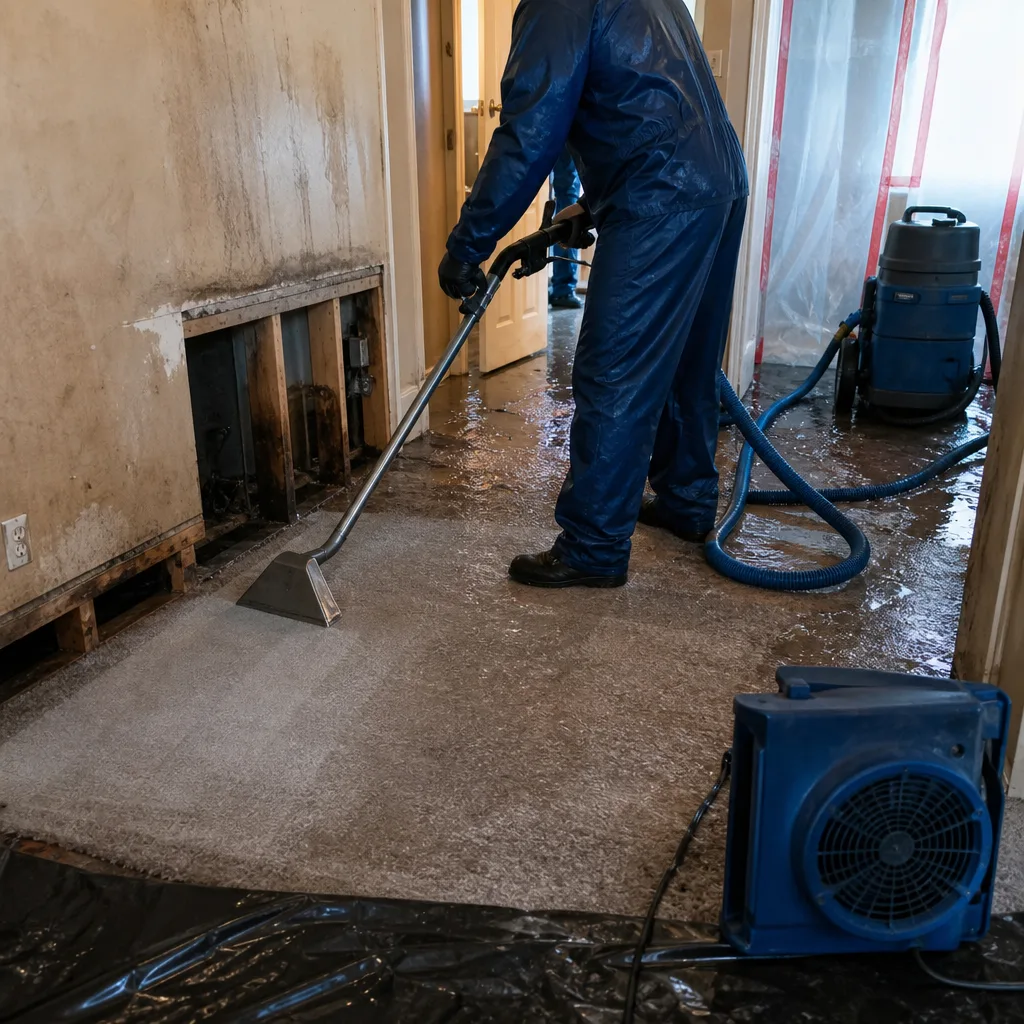
We arrive with thermal imaging cameras, pin and pinless moisture meters, and hygrometers to map the full extent of water migration. In Bogota’s pre-1960 homes, we pay particular attention to balloon-frame wall cavities and plaster-and-lath assemblies where water travels unseen. You receive a written scope and price before any equipment runs.
2. Extraction & Stabilization
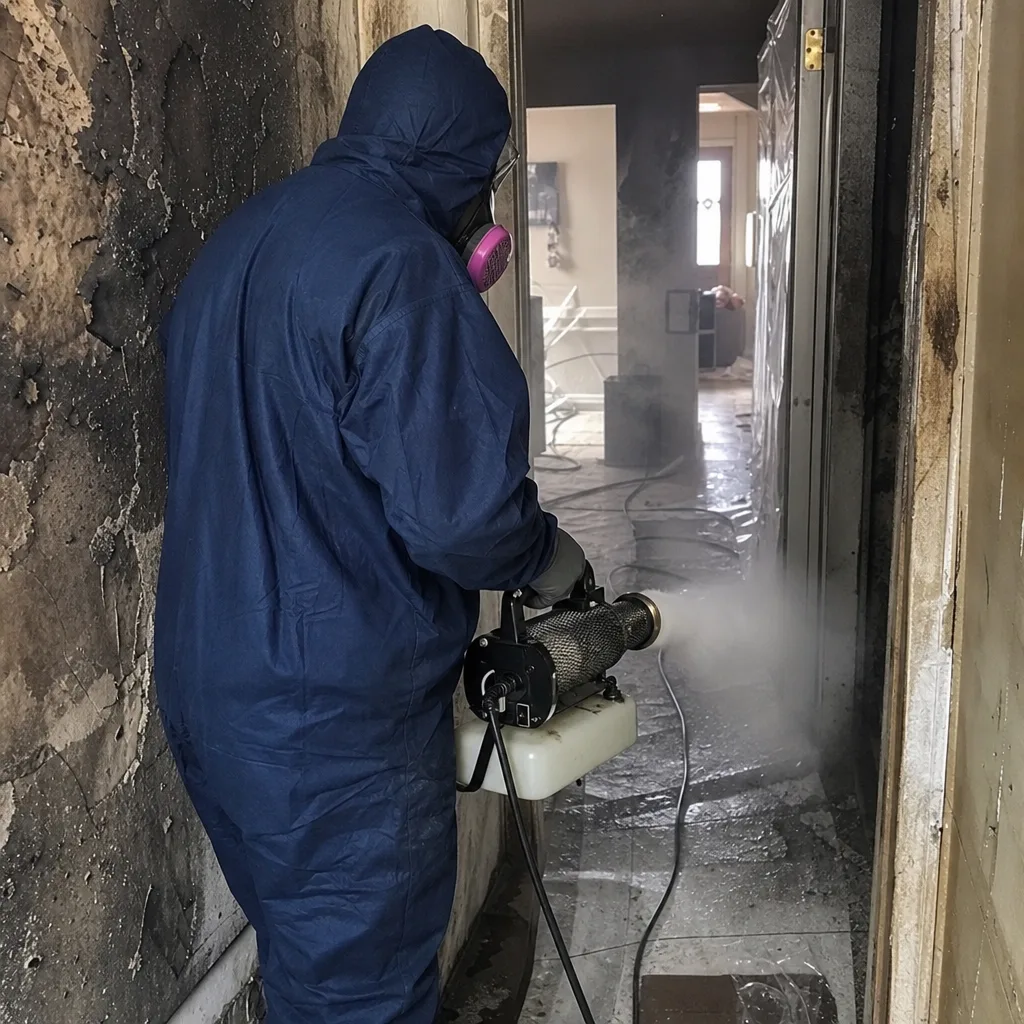
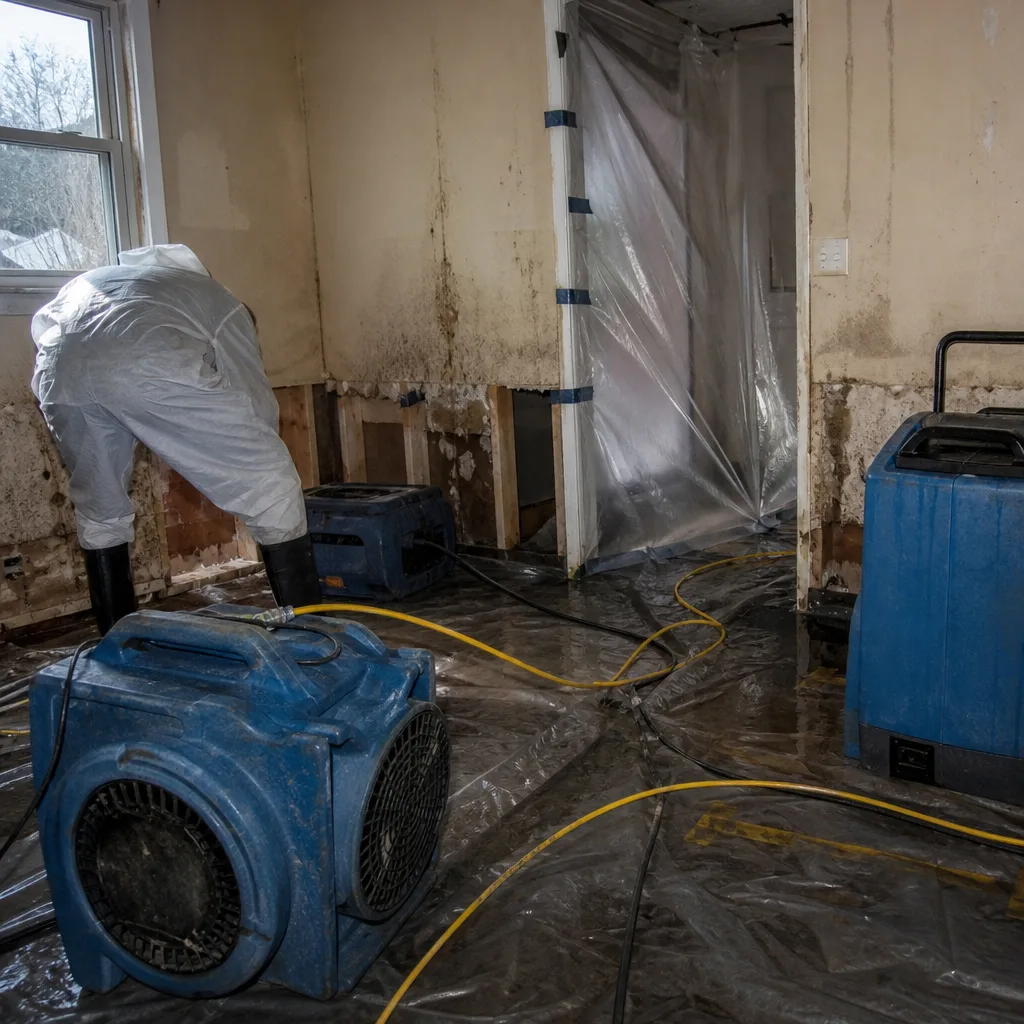
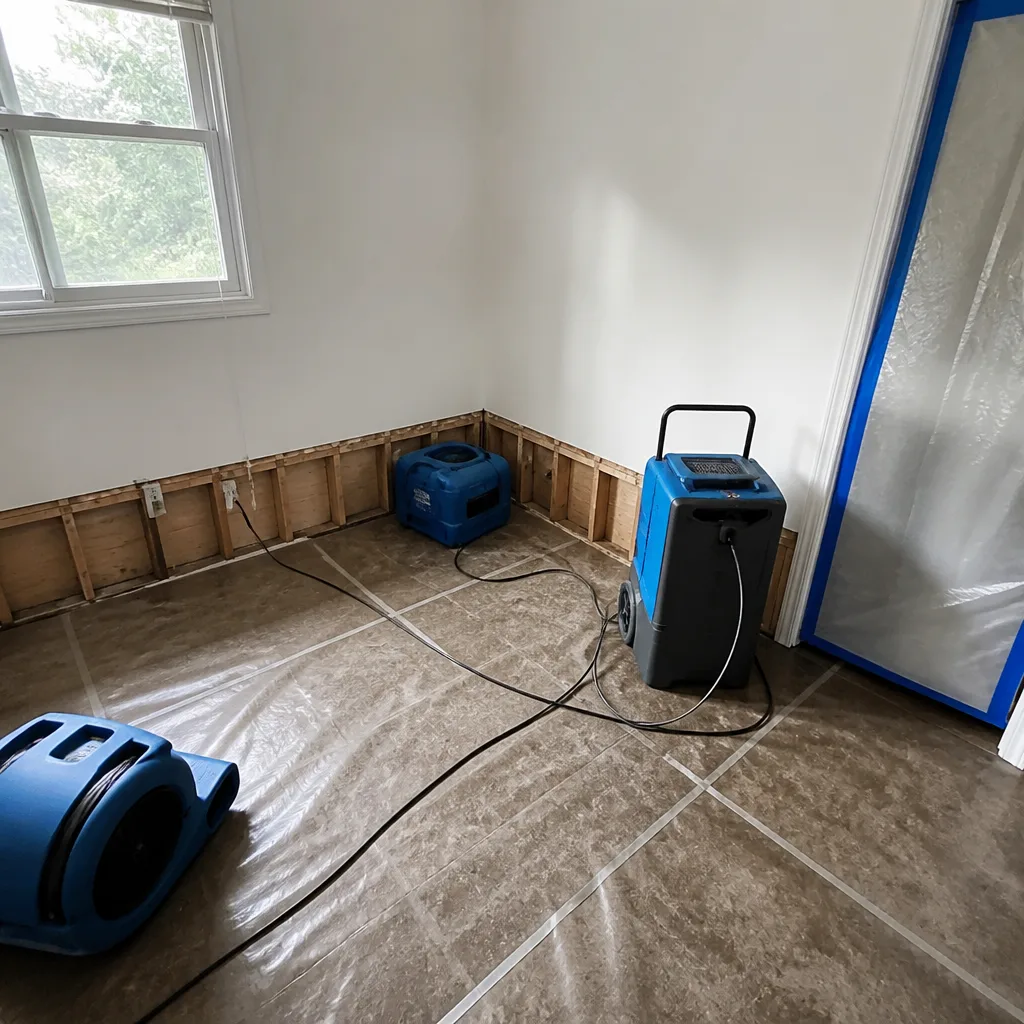
Standing water comes out first, using truck-mounted extraction systems and portable units for tight basement access. We remove saturated carpet pad and identify compromised plaster or lath that cannot be salvaged. Category 2 or 3 water triggers immediate antimicrobial application per IICRC S500 standards.
3. Drying & Dehumidification
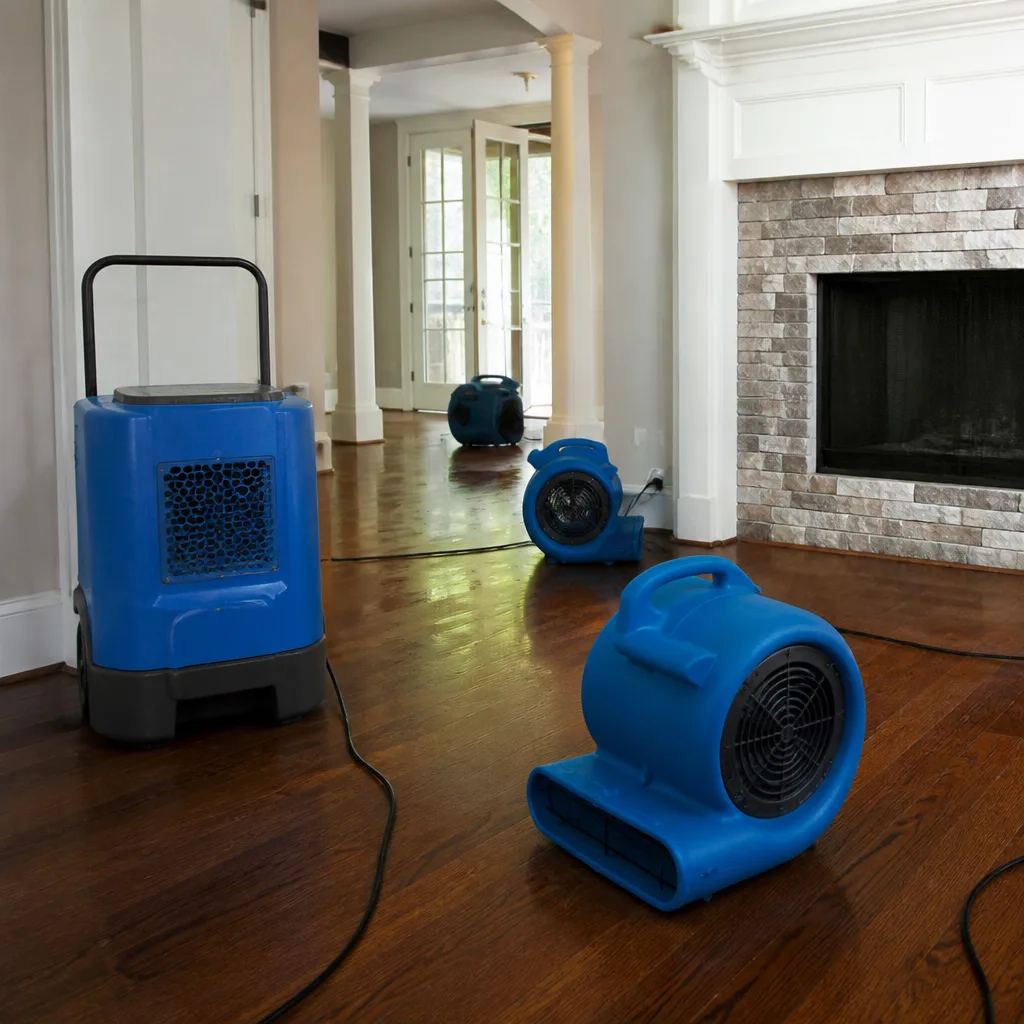
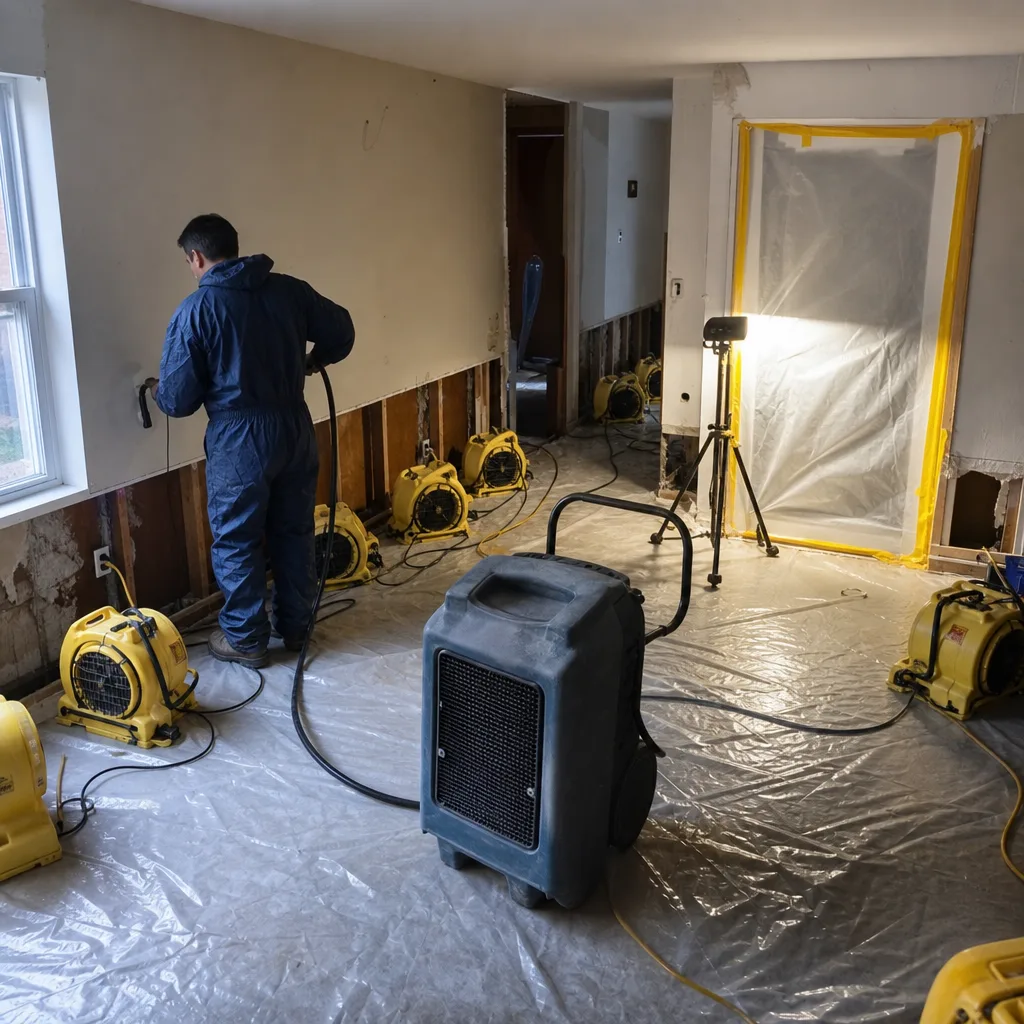
We deploy Dri-Eaz and Phoenix LGR dehumidifiers, XPOWER and B-Air air movers, and Injectidry cavity-drying systems when wall interiors need targeted airflow. Drying logs record temperature, relative humidity, and specific humidity at least daily, with moisture-content readings taken from affected framing until equilibrium is reached.
4. Cleaning & Sanitization
All affected surfaces receive HEPA vacuuming followed by antimicrobial treatment appropriate to the water category. In Bogota’s older basements, we treat mortar joints and concrete surfaces where groundwater has deposited silt and organic material, not just the visible waterline.
5. Moisture Verification & Documentation
We do not call drying complete until moisture readings meet IICRC drying goals for the specific materials in your home. Plaster-and-lath assemblies in Bogota Capes often need extended drying cycles. We provide your insurer with dated drying logs, photo documentation, and a written statement of pre-loss condition.
6. Repairs & Restoration
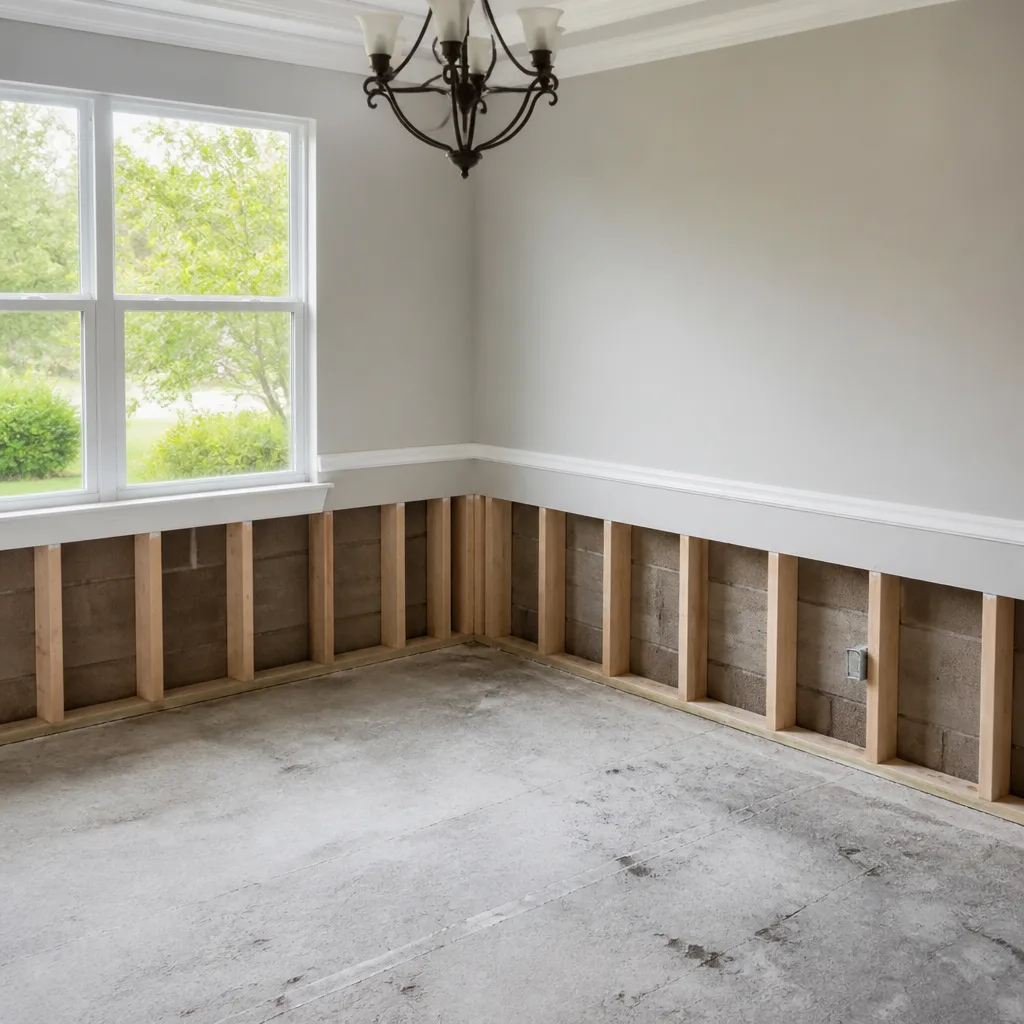
Our crew returns affected areas to pre-loss condition: replacing removed plaster with matching material, repairing or replacing damaged flooring, repainting, and addressing the source of intrusion where possible. Every repair carries our 365-Day Done Right Promise under The Haven Standard.
Need Emergency Water Damage Restoration in Bogota Now?
Crews minutes away, answering live 24 hours a day. The sooner we start, the less it costs.
Working With Your Insurance Company
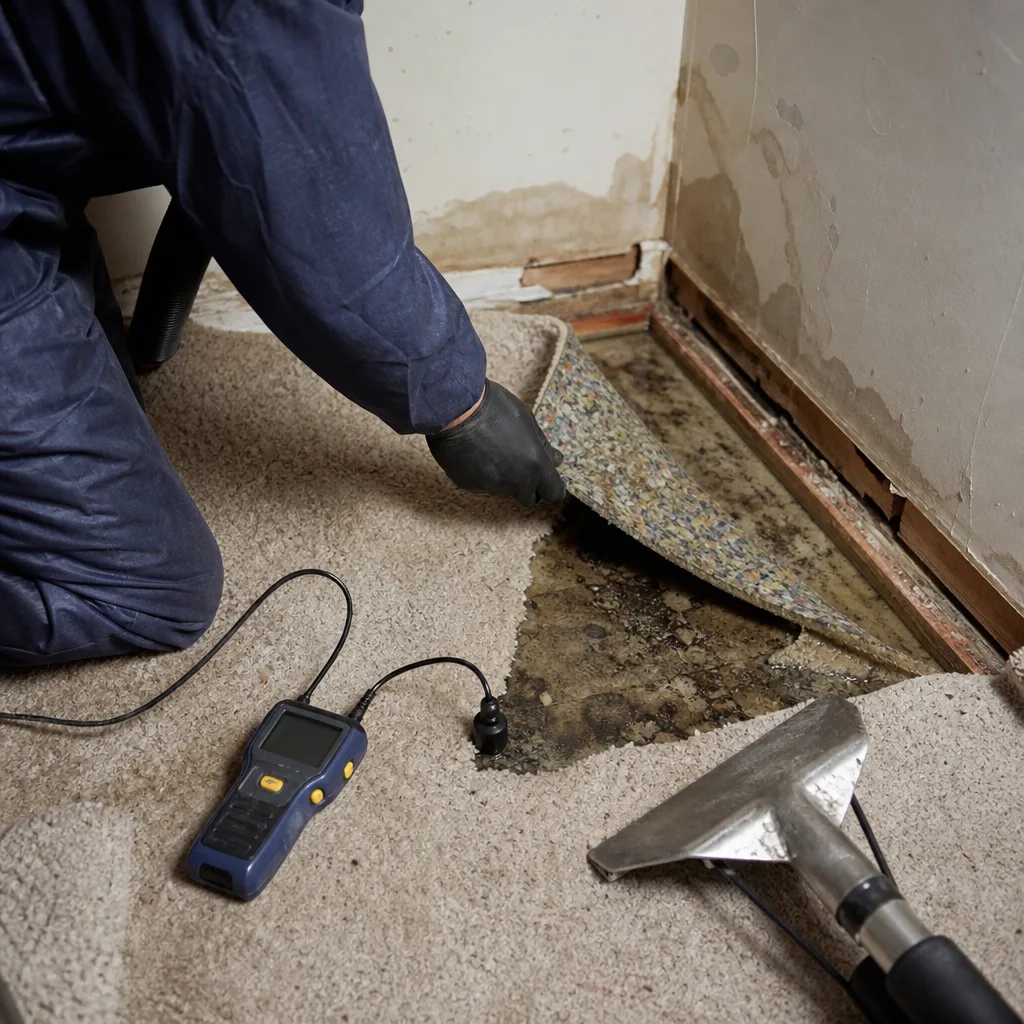
Insurance claims succeed or fail on documentation, and Bogota’s older housing stock creates documentation challenges that adjusters know to probe. We begin building your file from the first phone call: photos of the loss scene before anything moves, moisture readings with equipment serial numbers, and a written scope that separates pre-existing conditions from new damage. Our estimates follow Xactimate or Symbility formats that carriers recognize, and we coordinate directly with your adjuster rather than handing you a bill to submit alone.
The Haven Standard requires photo documentation on every visit, not just the first. Your insurer receives the complete record: initial moisture mapping, daily drying logs with psychrometric data, verification readings showing completion, and a final walkthrough with date-stamped images. When carriers dispute scope, we respond with the evidence already in the file.
What We Provide Your Insurer
- Thorough documentation of the loss
- Photos of all damage, room by room
- Moisture readings and drying logs
- A detailed, line-item scope of work
- Direct coordination with your carrier
Built for Bogota’s Loss Calendar
Bogota’s water damage calendar runs on three forces: the Hackensack River’s water table, Bergen County’s freeze-thaw cycle, and the borough’s aging infrastructure. January through March brings the most predictable damage. Freeze-thaw cycling opens hairline cracks in masonry-block and poured-concrete basement walls that were already stressed by decades of groundwater pressure. Owners often notice new seepage after the third or fourth cycle, not the first.
April and May bring spring rains on saturated ground. The river corridor’s flat grade means snowmelt and rain have nowhere to drain quickly. June through September delivers convective thunderstorms with intense, short-duration rainfall that overwhelms older municipal storm lines. October through December brings nor’easters that can raise the water table across entire Bogota blocks simultaneously, producing the neighborhood-scale mobilizations our crews have learned to expect.
After a March nor’easter dumped rain across Bergen County, we mobilized to a tight block off West Main Street in Bogota’s western section where three pre-1950 Capes on the same street had water pushing through their poured-concrete basement walls at once. We ran moisture mapping along the base of each wall, set up water extraction and air movers with Dri-Eaz dehumidification, and because the intrusion was groundwater we treated it as category 2 water, meaning antimicrobial treatment and a scope of work that accounted for the balloon-frame construction and plaster-and-lath walls slowing the structural drying timeline. Jobs that would normally be house-by-house became a neighborhood-scale mitigation, with drying logs documenting pre-loss condition on each property.
Water Damage Restoration Across Bogota’s Neighborhoods
Bogota’s compact 0.7 square miles contains distinct response zones, and our crews route based on loss pattern, not just address.
Western blocks near the Hackensack River (roughly west of River Road and Larch Avenue) see the most concentrated groundwater intrusion. These streets sit lowest in elevation, and their pre-war Capes and bungalows share uniformly old basements. After significant rain, we watch this zone for block-wide mobilization. Crews carry extra dehumidification capacity because multiple adjacent jobs compete for the same atmospheric moisture.
The central corridor along West Main Street and East Main Street mixes commercial and residential properties. Two-family colonials here often have divided basements with partial finishes, meaning water damage hides behind paneling or drop ceilings until saturation is advanced. Our inspections include probing behind finished surfaces when moisture meters suggest migration.
Northern sections toward Fort Lee Road see more supply-line and plumbing failures than groundwater events, though freeze-thaw foundation cracking still appears. The housing stock shifts slightly newer, with some 1950s-1960s ranches, but pre-1960 construction still dominates.
Southern pockets near the border with Ridgefield Park share the western blocks’ drainage challenges. These tight lots with minimal setback leave little grading opportunity to direct water away from foundations. Gutters and downspout maintenance is critical here, and we often find that extending drainage just ten feet would prevent recurring intrusion.
Specialized Water Damage Restoration Services We Offer in Bogota
Emergency Water Extraction
Standing water in a Bogota basement demands immediate removal before it wicks into plaster and balloon-frame cavities. Our truck-mounted extraction systems handle bulk water, and portable units access tight 1920s stairwells and bulkheads that larger equipment cannot navigate. We extract carpet, pad, and standing water in the same mobilization.
Structural Drying & Dehumidification
Bogota’s plaster-and-lath walls and solid-wood framing dry slower than modern assemblies. We calculate specific dehumidification capacity based on cubic footage, material type, and vapor pressure differential, then adjust daily. Injectidry systems dry wall cavities without removing intact plaster when possible. Drying timelines in Bogota’s legacy homes typically run 5-10 days, not the 3-5 common in newer construction.
Flood Cleanup
When the Hackensack River or overwhelmed storm infrastructure backs water into Bogota properties, we classify and treat it as Category 2 or 3 from the start. Flood cleanup includes silt removal, pressure washing of masonry and concrete, antimicrobial treatment of all affected surfaces, and disposal of porous materials that cannot be sanitized. Documentation for flood claims requires particular attention to pre-existing condition and water source verification.
Burst Pipe Restoration
Bogota’s aging galvanized and cast-iron supply lines fail in freeze events or from internal corrosion. We extract water, dry affected assemblies, and coordinate with licensed plumbers for pipe replacement. Because balloon-frame construction lets water travel vertically inside walls, our moisture mapping traces the full extent of migration before any drywall or plaster is opened.
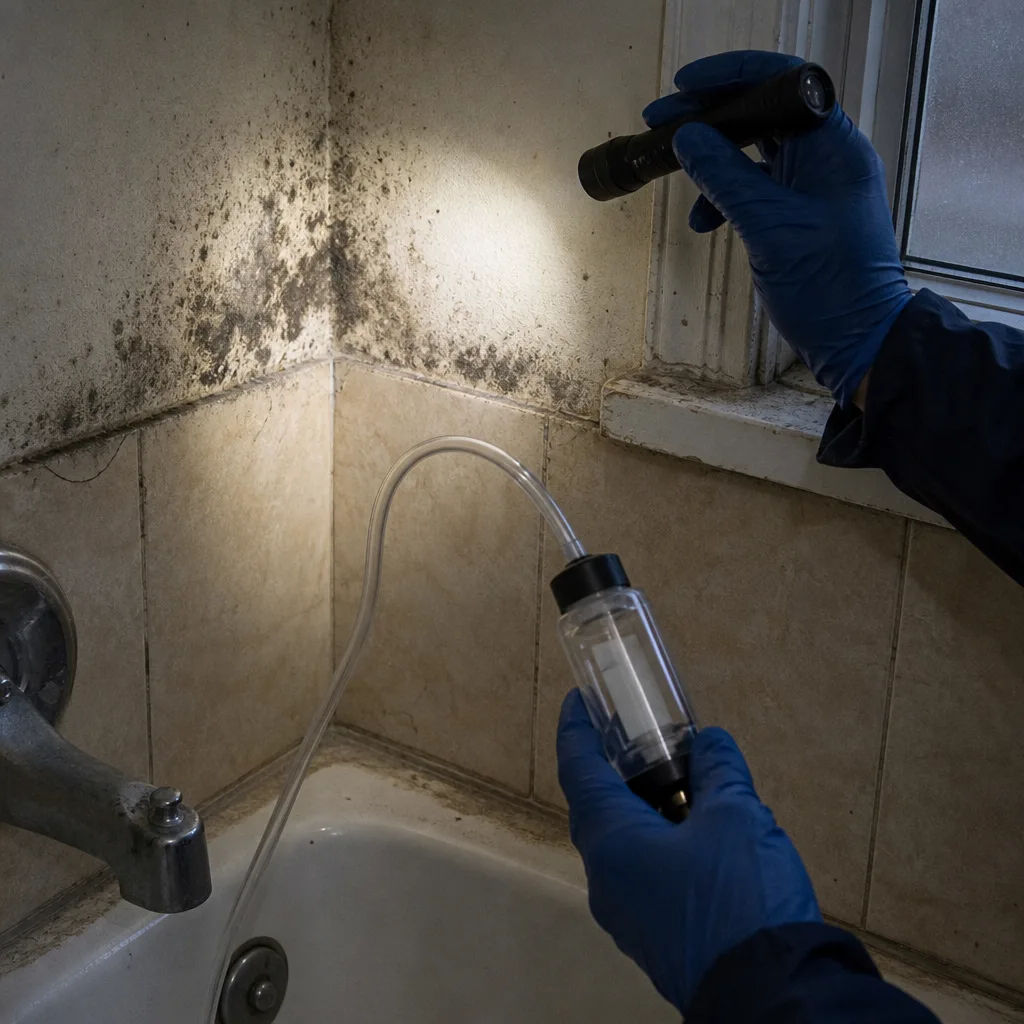
Basement Water Removal
This is Bogota’s most called-for service. Groundwater intrusion through foundation walls, failed sump pumps, and seepage at the slab edge all require classification, extraction, drying, and source assessment. We evaluate whether waterproofing, grading correction, or sump system upgrades should accompany restoration to prevent recurrence.
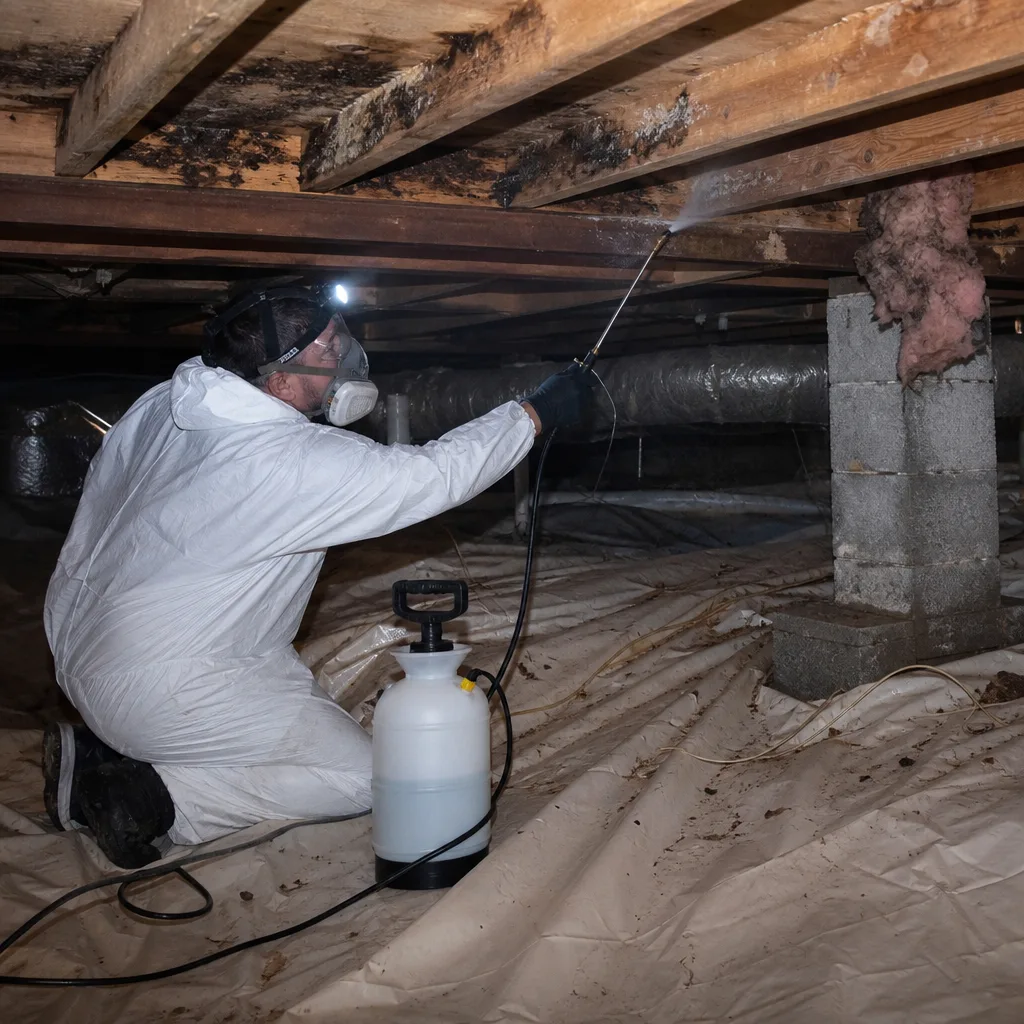
Ceiling & Roof Leak Water Damage
Flat and low-slope roofs on Bogota’s older homes and additions collect water that finds path of least resistance into plaster ceilings. We trace the leak source, document the damage path, dry affected cavity insulation and framing, and restore ceiling finish to match existing texture and plaster profile.
What happens when you call
- 1
A real person answersNo phone trees - you reach a local pro.
- 2
You get an upfront price rangeHonest numbers before anyone is dispatched.
- 3
A background-checked tech heads outLicensed & insured, dispatched right away.
- 4
You approve before work beginsNothing starts until you say go.
Water Damage Restoration Costs in Bogota, NJ
These ranges reflect actual Bogota-area jobs we have scoped and completed. Every job receives a written, line-item price before work begins, per Haven Standard, Clause 1.
| Service | Typical Range in Bogota |
|---|---|
| Emergency water extraction (up to 500 sq ft basement) | $1,200 - $2,800 |
| Structural drying & dehumidification (5-7 day cycle) | $2,400 - $4,500 |
| Category 2 groundwater cleanup with antimicrobial treatment | $3,200 - $6,000 |
| Plaster-and-lath wall drying with Injectidry cavity system | $1,800 - $3,400 |
| Full basement restoration (extraction through rebuild) | $8,500 - $18,000 |
| Written estimate and moisture inspection | No charge |
What moves the price: water category (clean vs. contaminated), affected square footage, whether plaster or drywall is involved, and whether contents require pack-out. Insurance typically covers sudden and accidental water damage from plumbing failures, storm intrusion, and most groundwater events where the source is documented. Gradual seepage from maintenance issues may be excluded. We review your policy with you and coordinate directly with your adjuster to clarify coverage before work starts. Call (845) 875-4326 for a written estimate specific to your Bogota property.
We Also Serve Cities Near Bogota
Our crews respond from the New York City metro office to Water Damage Restoration in Bogota and surrounding communities. We regularly serve Ridgefield Park to the south, Hackensack to the north and west, Little Ferry across the Hackensack River to the east, and Leonia to the northeast. Each community shares Bergen County’s climate patterns but presents distinct building stock and drainage challenges that our local experience addresses.
Serving Bogota, NJ - Our Local Coverage Area
We’re based in the Bogota area and know this community well. Use the map below to see our service coverage - if you’re nearby, we can almost certainly help.
Bogota Water Damage Restoration Questions, Answered
Why does my Bogota basement flood even when my street looks dry?
Bogota’s flat, low-lying grade and position along the Hackensack River corridor mean groundwater can rise and breach basement walls without any surface flooding visible at street level. The water table, not the weather radar, determines basement intrusion here. After moderate rain, we regularly find water pushing through foundation walls on blocks where the street is completely dry. Call (845) 875-4326 and we’ll inspect to confirm the source.
How fast does mold become a problem in my Bogota home after water damage?
Mold can begin colonizing wet materials within 24-48 hours, and Bogota’s older plaster-and-lath walls provide organic substrate that drywall does not. The slower drying timeline in legacy construction means mold risk persists longer than in modern homes. We begin antimicrobial treatment during extraction and monitor moisture levels until structural drying goals are met, documented in daily logs. If you suspect mold has started, call (845) 875-4326 for moisture mapping and assessment.
Do the old masonry-block basements common in Bogota need different drying methods?
Yes. Masonry-block and poured-concrete walls in Bogota’s pre-1960 homes absorb and release moisture differently than modern framed assemblies. We use higher-capacity LGR dehumidifiers to pull vapor from dense masonry, and we extend drying timelines to account for the thermal mass of concrete. Injectidry systems may be needed to dry the cavities between block walls and furring strips. Our moisture readings continue until block surfaces and interior air reach equilibrium, not just until the air feels dry.
Is all water damage in Bogota treated the same?
No. Water is classified by contamination level, and Bogota’s low-lying geography means most basement intrusion carries soil, bacteria, or chemical residue from urban runoff, requiring Category 2 or 3 treatment. Clean supply-line breaks are Category 1. The classification determines antimicrobial protocol, disposal requirements, and drying approach. We test and classify on arrival, document the determination in your file, and scope work accordingly. Call (845) 875-4326 for inspection and proper classification.
What can Bogota homeowners do to prevent recurring freeze-thaw water intrusion?
January-through-March freeze-thaw cycling cracks older mortar joints and masonry foundations, opening new pathways for seasonal water intrusion. Maintain gutters and downspouts to direct roof runoff at least six feet from foundation walls. Seal visible cracks with appropriate masonry repair material before cold weather. Ensure sump pumps discharge well away from the foundation. For persistent intrusion, we can assess whether exterior waterproofing, interior drainage systems, or foundation repair should accompany restoration. Call (845) 875-4326 for a prevention assessment.
How fast can your crew get to my Bogota property?
We commit to 45-minute response times to Bogota addresses for emergency water damage calls. Our live dispatch operates 24 hours a day, and crews are staged for Bergen County mobilization. The first hour of water damage determines whether a basement stays a mitigation job or becomes a reconstruction project. Call (845) 875-4326 for immediate dispatch.
Will my insurance cover water damage restoration in Bogota?
Most sudden and accidental water damage is covered, including supply-line breaks, storm-driven intrusion, and documented groundwater events. Gradual seepage from maintenance issues or long-term neglect is typically excluded. We provide the documentation your carrier needs: photos, moisture readings, drying logs, and a line-item scope in standard insurance format. We coordinate directly with adjusters and can review your policy with you before work begins. Call (845) 875-4326 to discuss your specific situation.
Can I stay in my Bogota home during water damage restoration?
For localized, Category 1 water damage affecting one area, often yes. For Category 2 or 3 groundwater intrusion, whole-basement events, or when HVAC systems are affected, temporary relocation is usually recommended for health and safety. We assess livability during inspection and document our recommendation for your insurer if displacement coverage applies. Call (845) 875-4326 and we’ll evaluate your specific situation.
Written by Alicia Brennan, Owner at Back to Dry Restoration, serving Bogota and Bergen County since 2011.
Water Damage Restoration in Nearby Areas