
Free visual inspection and a written scope of work before any mitigation begins - photos, moisture readings, and drying logs go in your claim file
The scope we write is the scope we bill. Anything new gets shown to you, in writing, before we touch it.
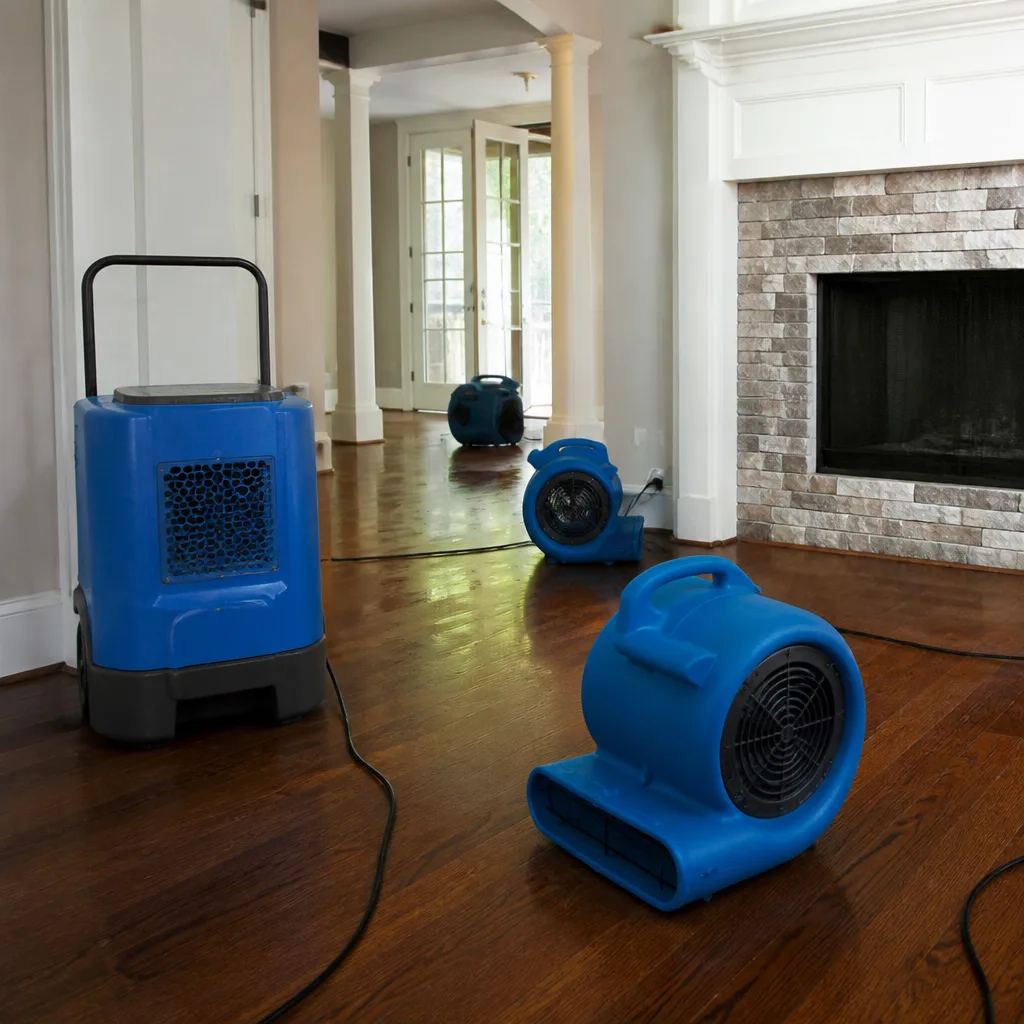
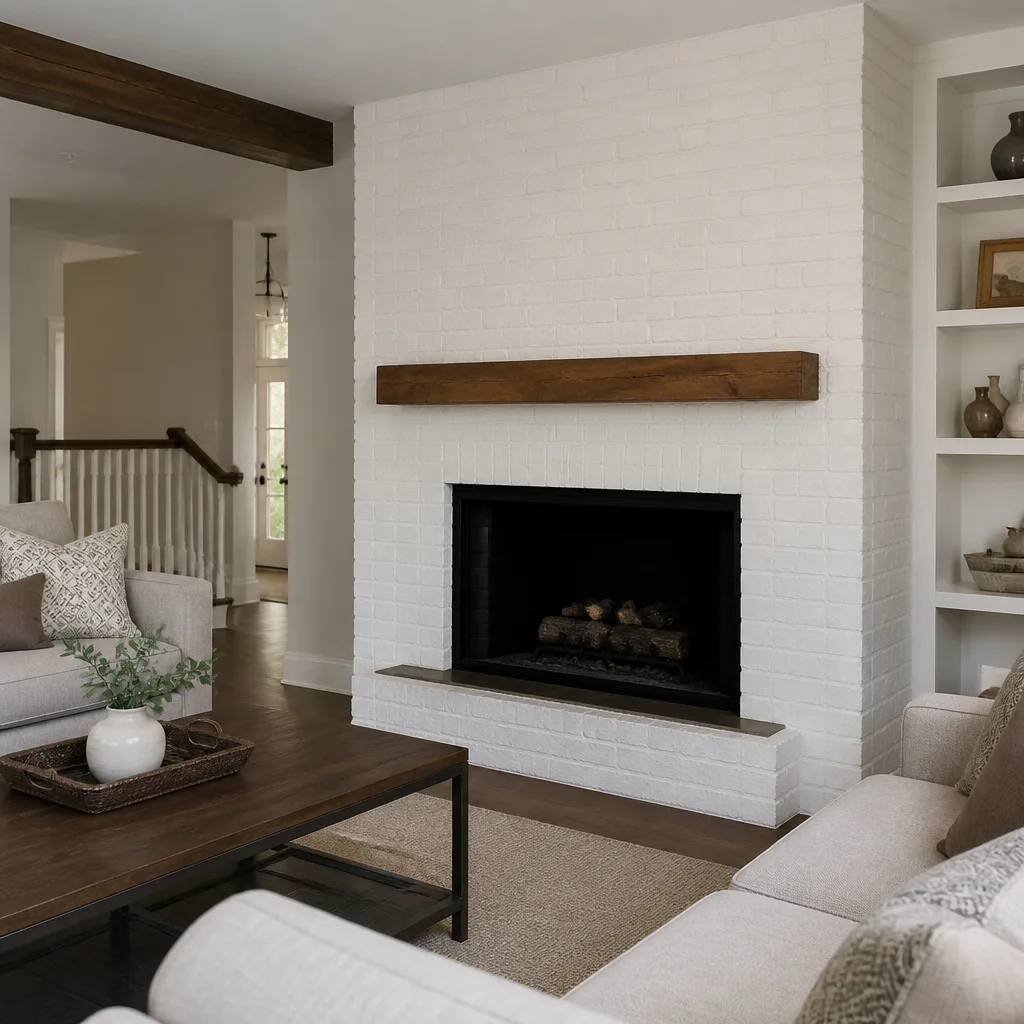
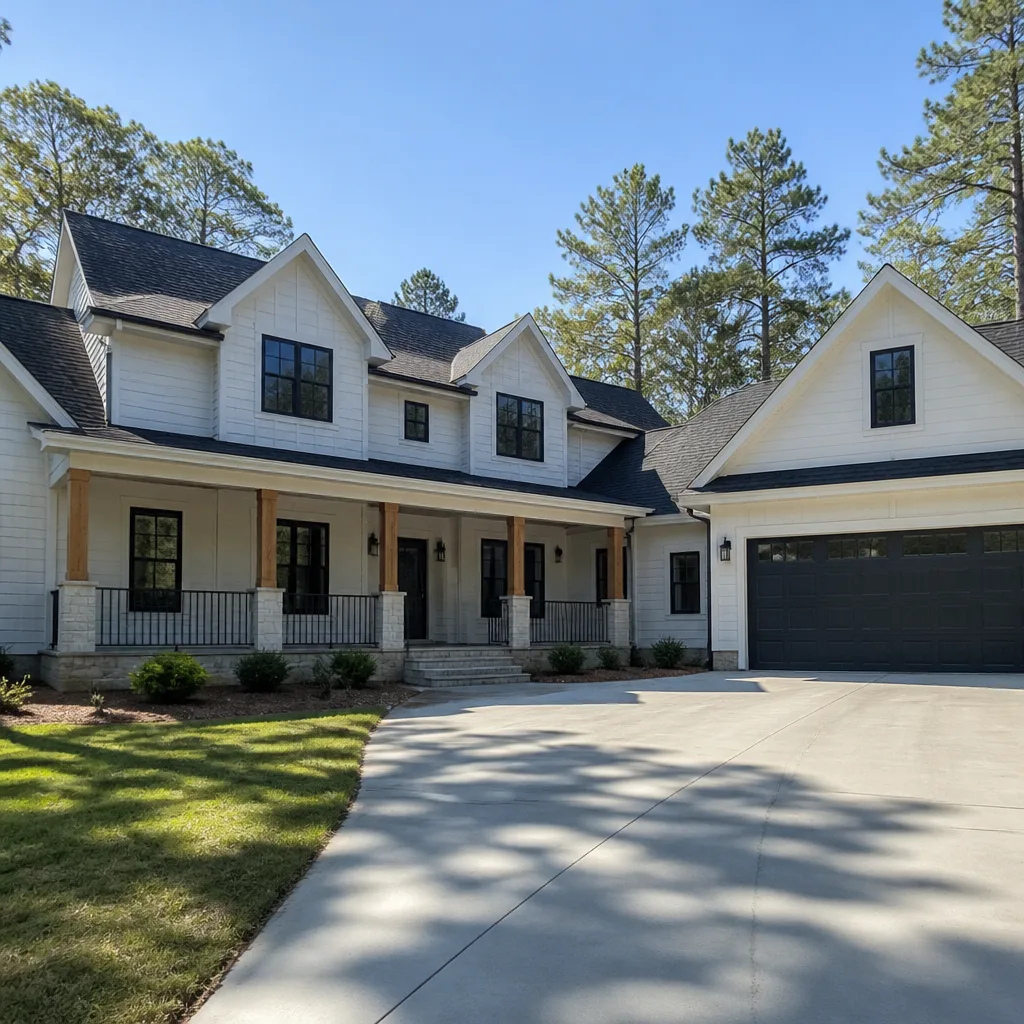
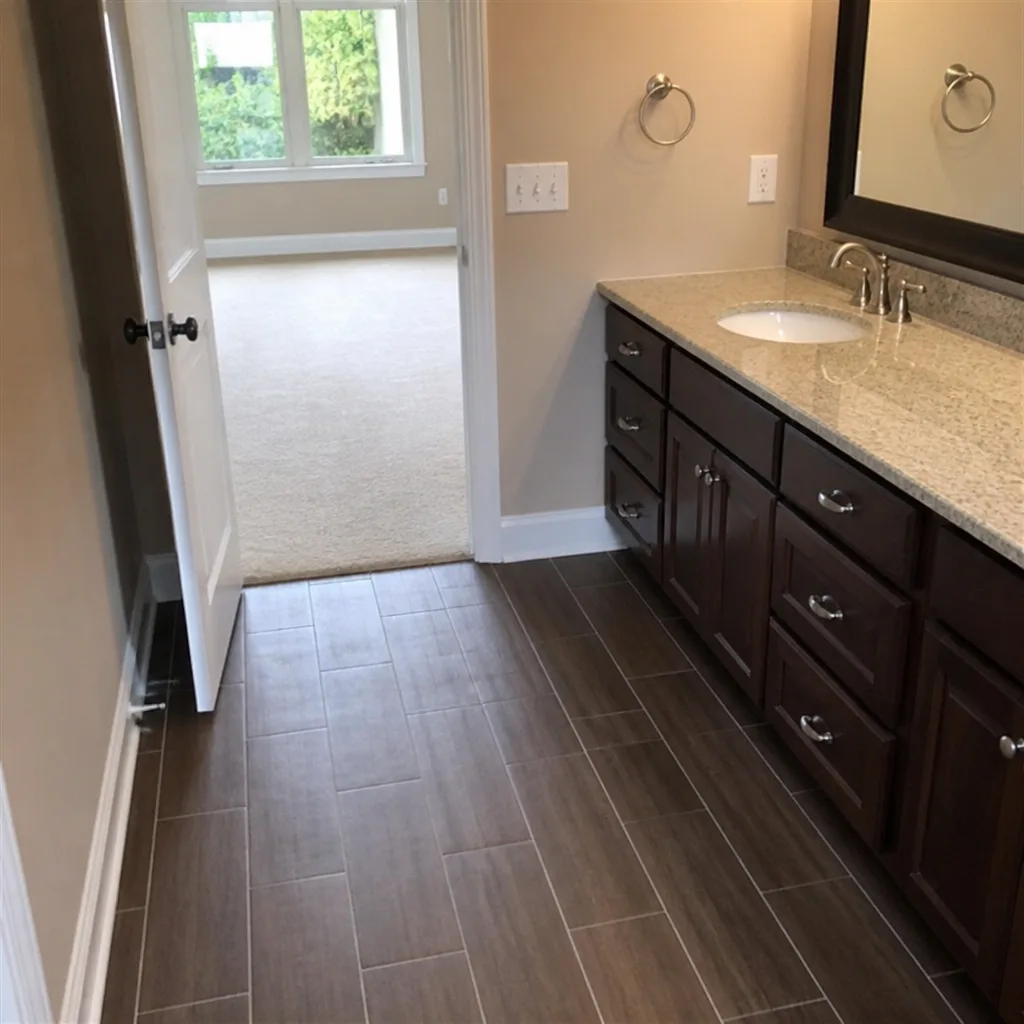
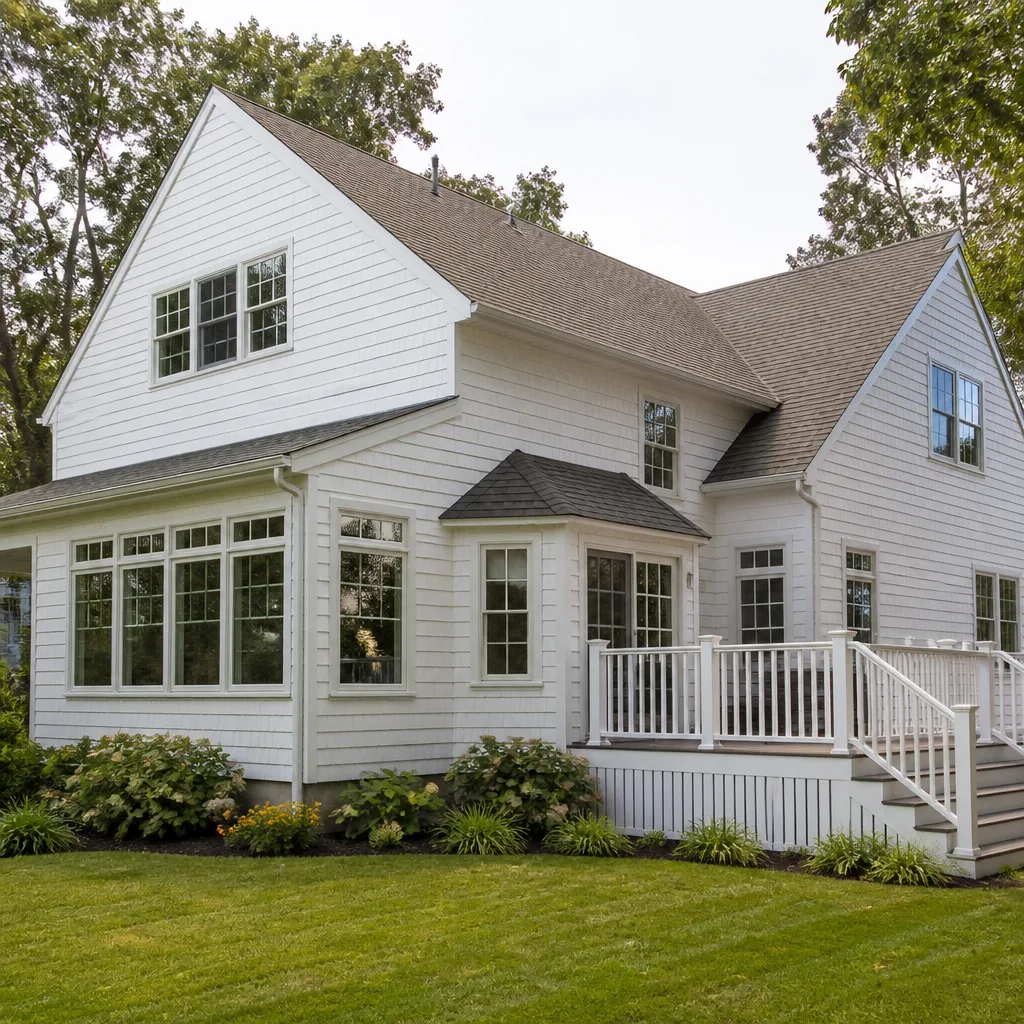
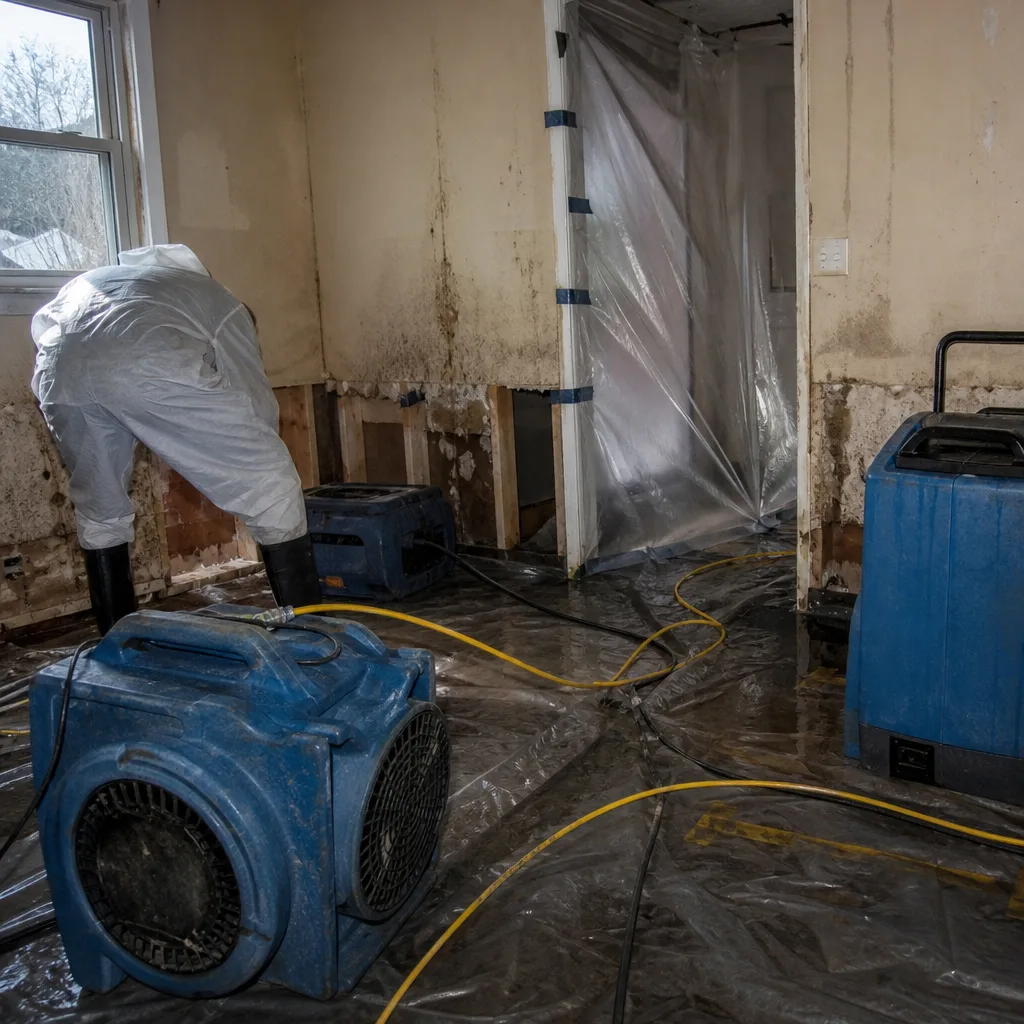 Before
 After
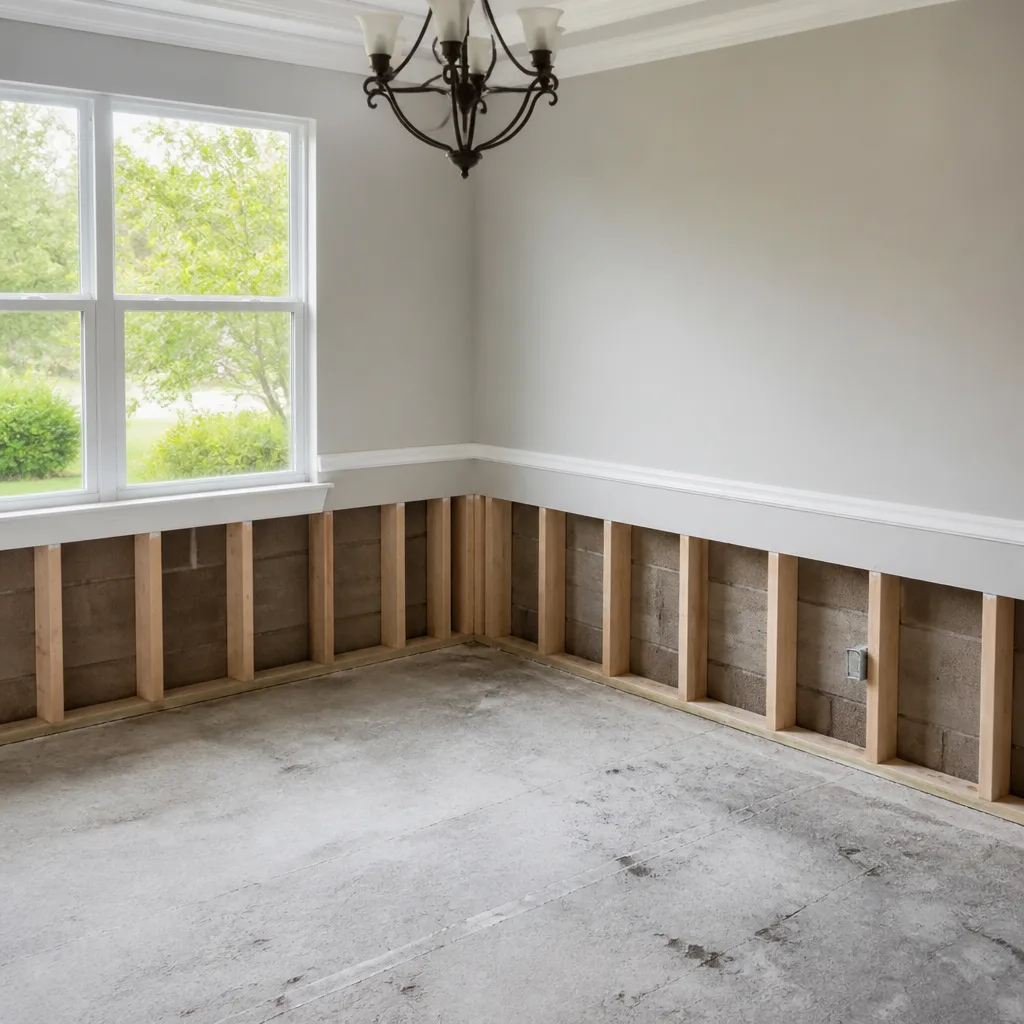
After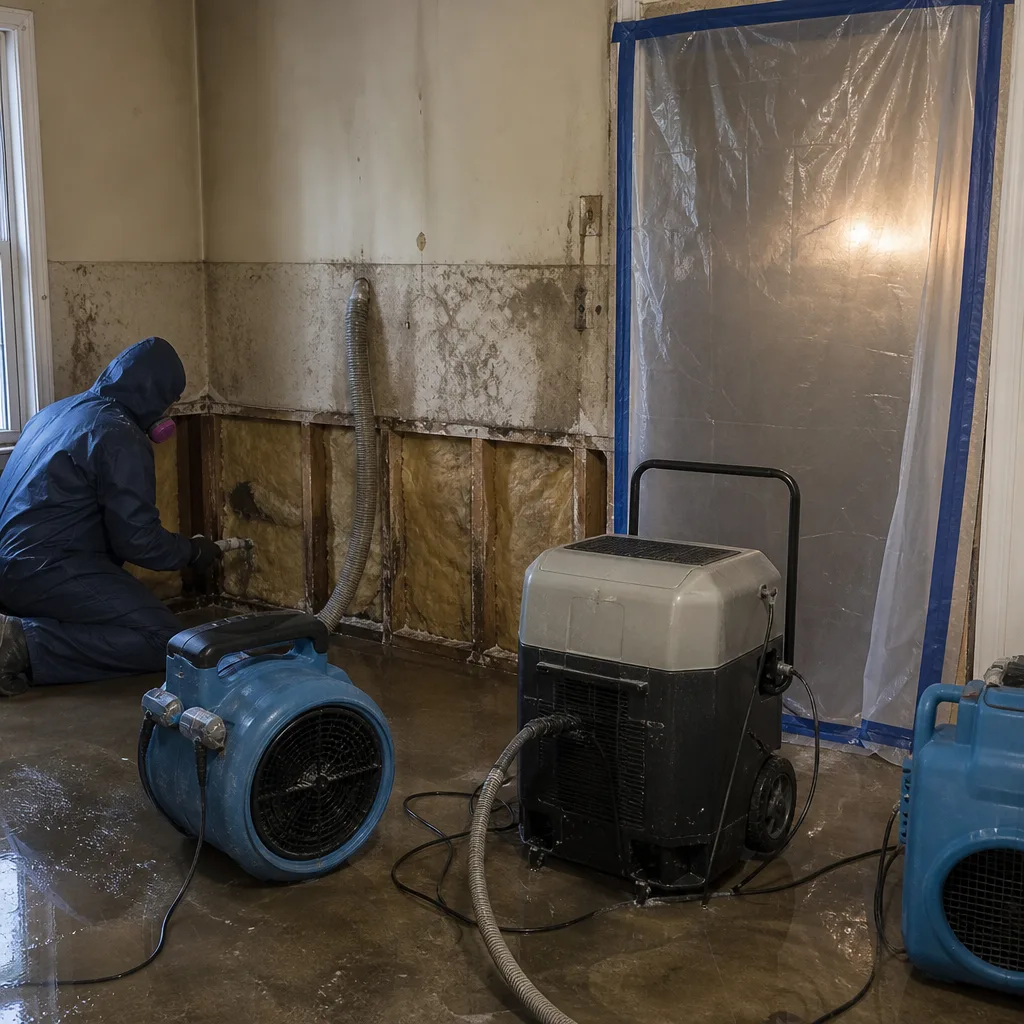 Before
 After
After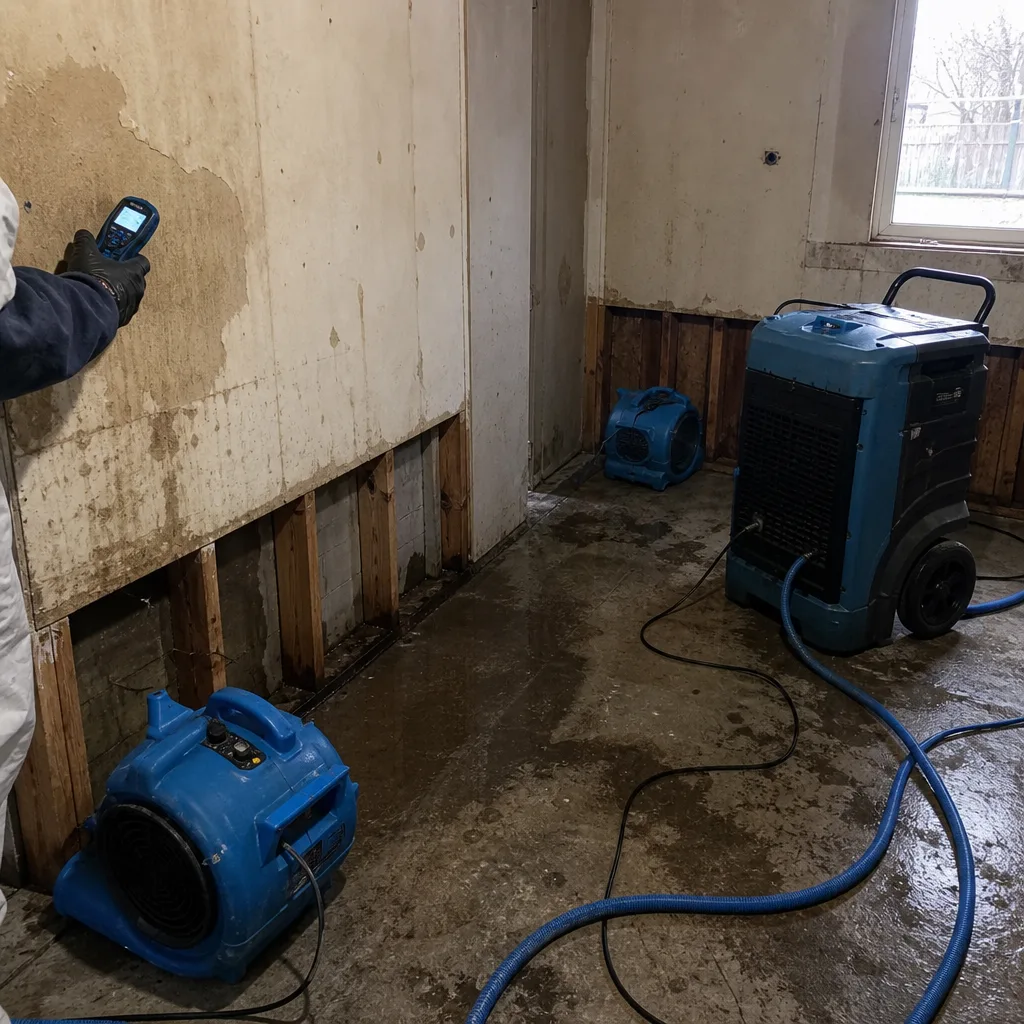 Before
 After
After24/7 Emergency Mold Remediation in Riverdale
Mold remediation in Riverdale typically costs $1,800-$6,500 depending on square footage and whether the contamination has spread through shared building systems, with most co-op and single-family jobs starting with a free visual inspection that same day. Call (845) 875-4326 and a live person answers - no voicemail, no callback queue - because mold doesn’t wait for business hours, and neither do we. Our crews dispatch throughout Riverdale from our New York City office, carrying containment barriers, HEPA air scrubbers, and moisture mapping equipment to stop colony expansion in the first hour.
The first sixty minutes matter more than most property owners realize. Mold releases spores within 24-48 hours of moisture contact, but in Riverdale’s pre-war co-op towers, those spores travel vertically through pipe chases and steam risers, turning a single-unit problem into a building-wide remediation before the managing agent even knows there’s water damage. That’s why our Mold Remediation team trains specifically on co-op governance protocols - so we can document, contain, and begin drying while board approval processes move in parallel, not in sequence.
Understanding Mold Remediation Severity in Riverdale Properties
We classify mold contamination by affected square footage, material porosity, and whether the HVAC system or shared building cavities are involved - what the industry calls limited, moderate, or major contamination under IICRC S520 standards. Limited growth stays under 10 square feet on non-porous surfaces like ceramic tile or sealed concrete. Moderate contamination spans 10-100 square feet or involves porous drywall, insulation, or carpet. Major contamination exceeds 100 square feet, penetrates structural framing, or has colonized HVAC ductwork and shared riser cavities.
Riverdale’s building stock pushes most jobs toward the moderate-to-major range. The pre-war co-op towers along Palisade Avenue and the Henry Hudson Parkway corridor contain original plaster walls with horsehair reinforcement, a material that wicks moisture laterally and vertically while providing organic substrate for mold growth. Single-family Tudors and Colonials on the hillside lots above Fieldston Road face a different pattern: stone and brick foundations with deteriorated mortar joints that allow groundwater intrusion into basements and crawl spaces, creating chronic humidity that sustains colonies year-round. Both building types require containment strategies that newer construction simply doesn’t - negative air pressure setups, sealed work zones, and in co-ops, coordination with building-wide ventilation shutdowns.
Why Riverdale Property Owners Choose DryMark Restoration Englewood
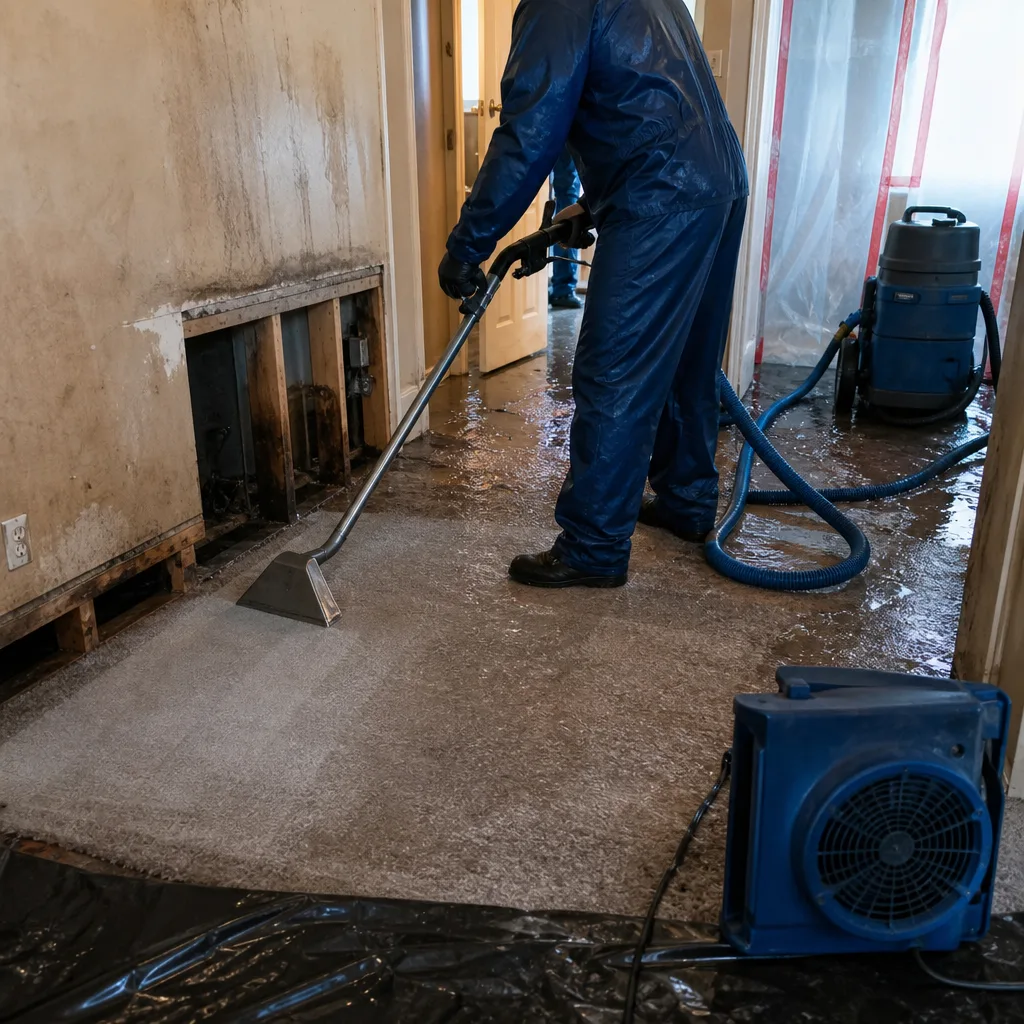
- 45-minute response commitment to Riverdale from dispatch, with crews carrying portable containment and air scrubbing equipment so work begins while board approvals are still pending.
- 24/7 live answer - a real person, never an automated system or voicemail tree, because mold emergencies in co-op buildings often reach us through managing agents at 2 a.m. after a tenant reports a musty odor.
- IICRC-certified crews holding WRT (Water Damage Restoration Technician), AMRT (Applied Microbial Remediation Technician), and FSRT (Fire & Smoke Restoration Technician) certifications, with license numbers documented on every job file.
- Free visual inspection including moisture mapping with thermal imaging and hygrometer readings, delivered with a written scope and price before any remediation work begins - Haven Standard, Clause 1.
- Direct insurance billing with photo-documented estimates, daily drying logs, and adjuster coordination that turns restoration invoices into payable claims without dispute.
- One team from inspection to clearance - no handoffs between mitigation and reconstruction crews, so the technician who mapped your moisture readings also oversees the final post-remediation verification.
BeforeAfterOur Mold Remediation Process
1. Inspection & Assessment
We arrive with thermal imaging cameras, penetrating and non-penetrating moisture meters, and borescopes to examine wall cavities and riser chases. In Riverdale’s co-op buildings, we map moisture vertically through multiple floors, not just the unit that called. The inspection produces a written scope, a line-item price, and a photo record - all before any remediation begins.
2. Containment & Stabilization
We seal the work zone with 6-mil polyethylene barriers and establish negative air pressure using HEPA-filtered air scrubbers. In co-op towers, this means coordinating with building engineers to isolate affected risers and prevent spore migration through shared HVAC returns. Containment stays active until post-remediation clearance testing passes.
3. Air Filtration & Moisture Control
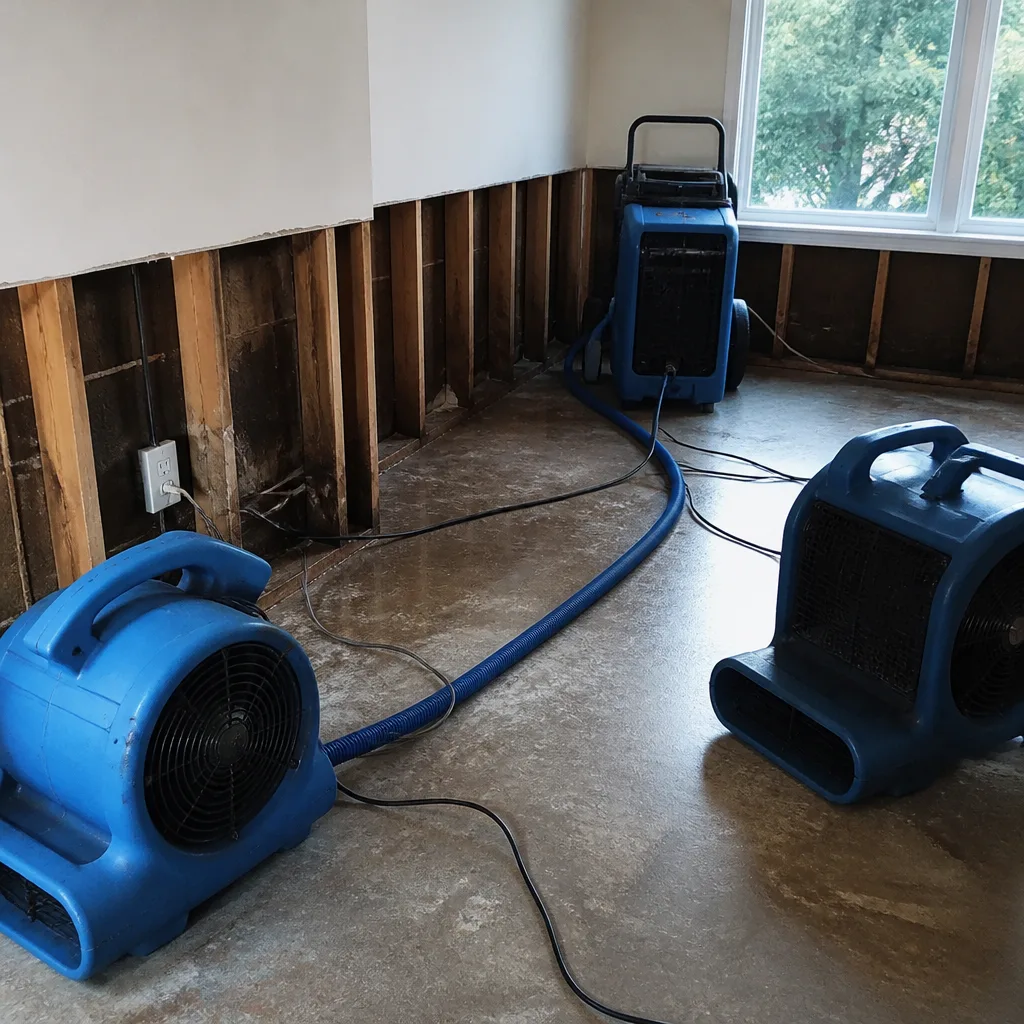
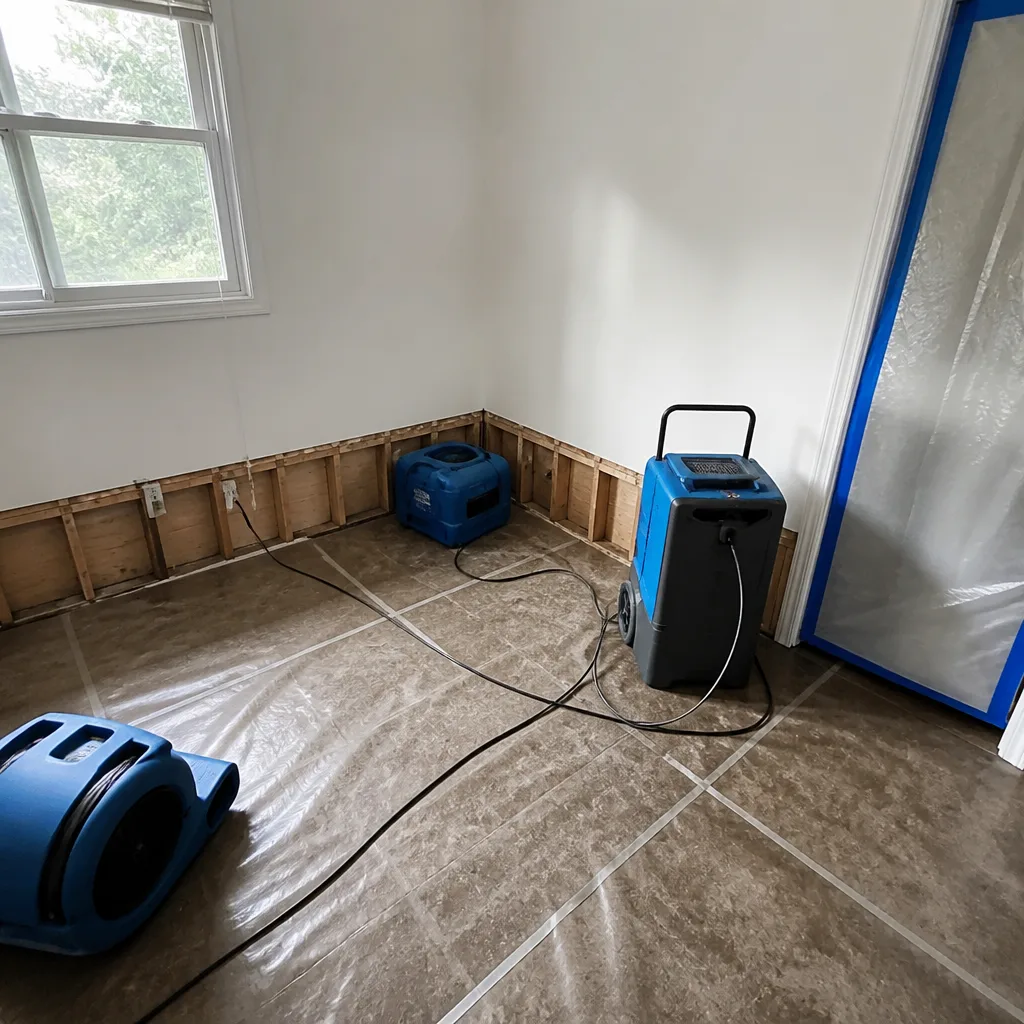
We deploy Dri-Eaz and Phoenix LGR dehumidifiers alongside XPOWER and B-Air air movers to drop relative humidity below 60%, the threshold where mold stops growing. Psychrometric data - temperature, relative humidity, and vapor pressure differential - gets logged every four hours to document progress for your insurer and prove the drying chamber is working.
4. Removal & Antimicrobial Treatment
Porous materials with confirmed growth (drywall, insulation, carpet padding, deteriorated plaster) are removed and bagged under containment. Non-porous surfaces receive HEPA vacuuming followed by antimicrobial application per manufacturer specifications. We never paint over active mold - the colony must be eliminated at the substrate, not sealed behind a moisture barrier that will fail.
5. Air Quality Restoration & Clearance Testing
After remediation, we run 24-hour air sampling with spore trap cassettes analyzed by an independent laboratory. Clearance criteria follow NYC Department of Health guidelines: indoor spore counts must match or fall below outdoor baseline levels for the Riverdale area, with no indicator species present. You receive the lab report, our photo documentation, and a written clearance letter for your co-op board and insurer.
6. Moisture & Humidity Control & Repairs
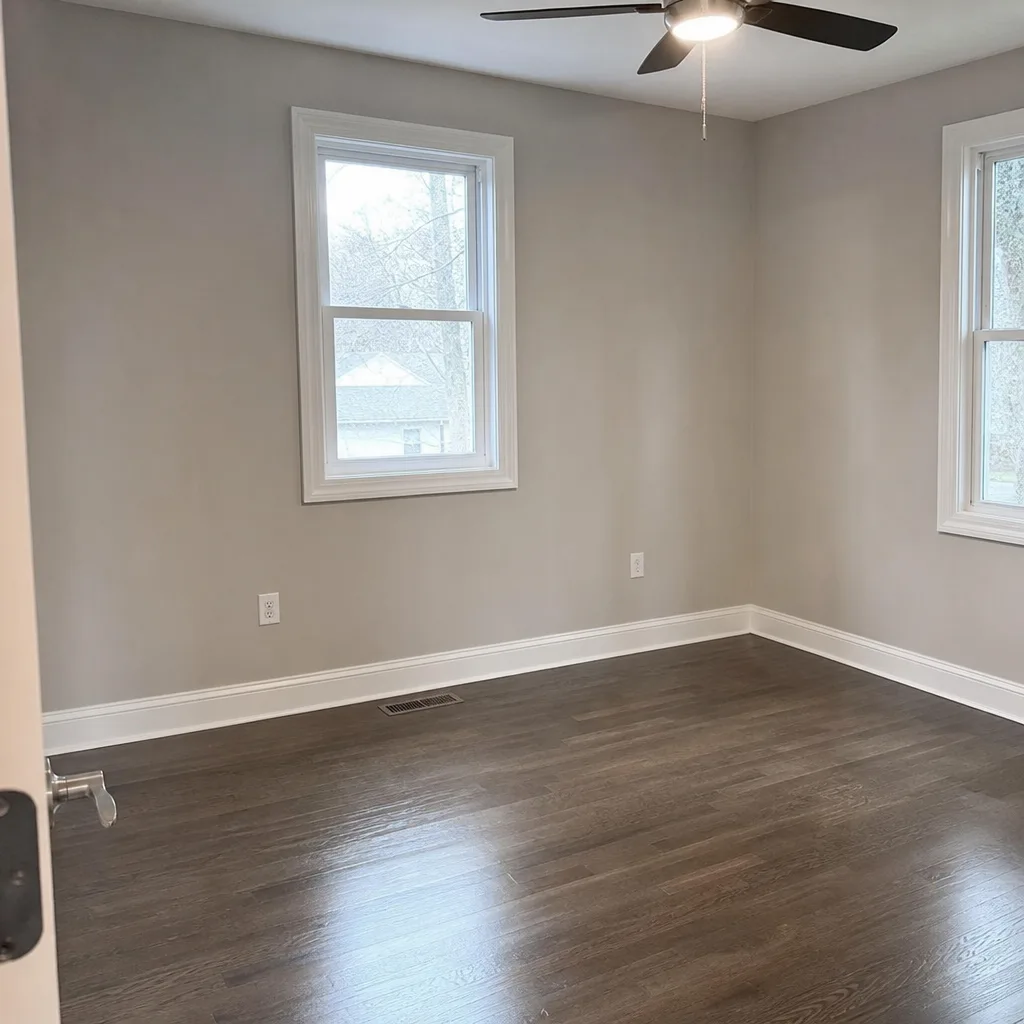
We identify and correct the moisture source - failed riser, foundation seepage, or drainage failure - then rebuild with moisture-resistant materials where appropriate. In Riverdale’s hillside homes, this often means installing vapor barriers in crawl spaces and sump systems in sub-basements. Every repair carries our 365-Day Done Right Promise under The Haven Standard.
Need Emergency Mold Remediation in Riverdale Now?
Crews minutes away, answering live 24 hours a day. The sooner we start, the less it costs.
Working With Your Insurance Company
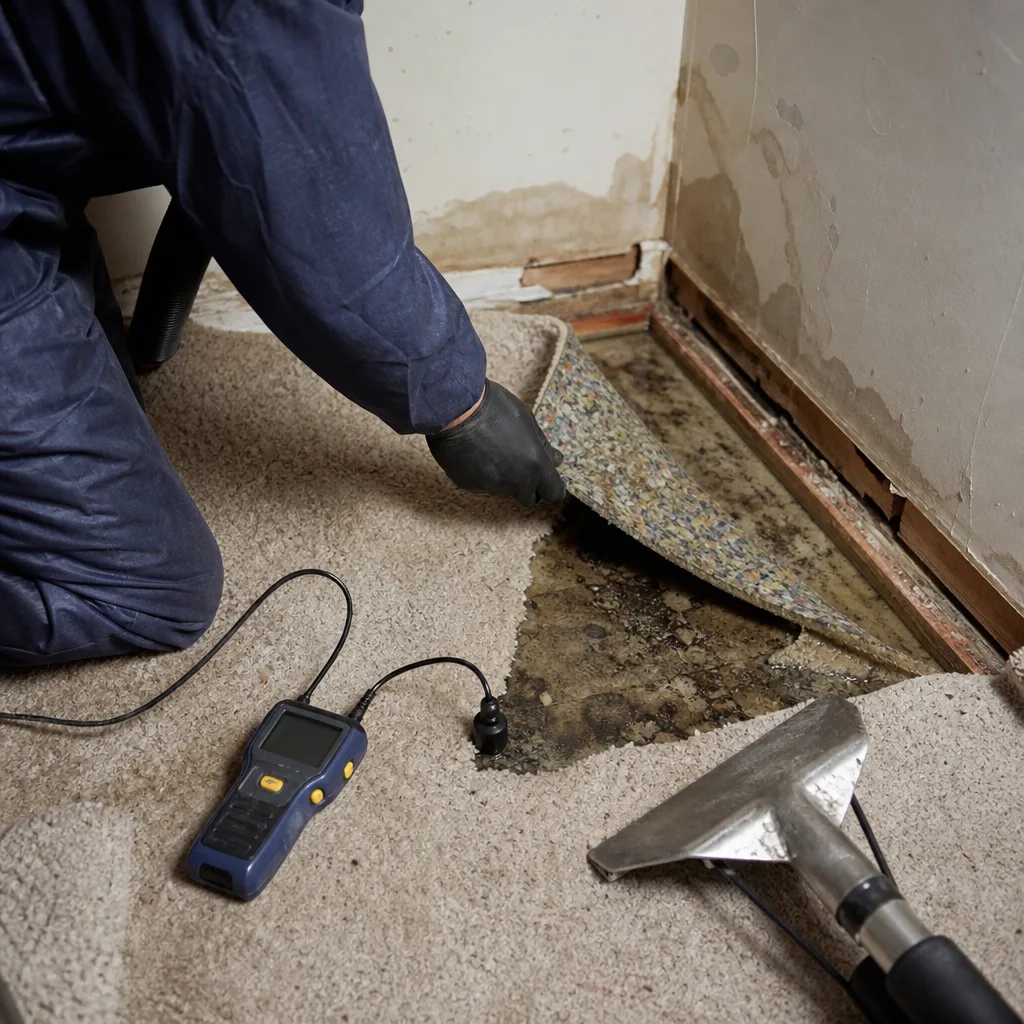
Mold claims fail more often than water claims because insurers demand proof that the mold resulted from a covered peril - sudden pipe failure, storm intrusion, or accidental overflow - rather than long-term maintenance neglect. We build that proof from the first hour. Our technicians photograph the original water source, document moisture migration paths with thermal imaging, and maintain daily drying logs that establish a clear timeline: water event, response, remediation, resolution.
We write estimates to Xactimate standards, the pricing database used by most major carriers, and communicate directly with your adjuster rather than handing you a bill to submit alone. Alicia Brennan founded Back to Dry Restoration in 2011 after working as a claims adjuster and watching homeowners lose legitimate claims to documentation gaps. That origin shapes every file we prepare.
What We Provide Your Insurer
- Thorough documentation of the loss origin and moisture migration path
- Photos of all damage, room by room, with date and time stamps
- Moisture readings and drying logs with psychrometric data
- A detailed, line-item scope of work written to Xactimate standards
- Direct coordination with your carrier’s adjuster, including supplemental estimates if hidden damage emerges
Built for Riverdale’s Loss Calendar
January deep freezes split original cast iron risers in co-op towers, sending water through multiple floors before anyone notices - the steam heat keeps pipes warm enough to delay freezing, but when it happens, the pressure in those old systems is brutal. Spring thaw brings basement seepage in hillside homes along Sycamore Avenue and Independence Avenue, where snowmelt runs down toward the Hudson and finds every crack in century-old foundations. Summer thunderstorms overwhelm flat roofs and parapet walls on mid-rise buildings near Riverdale Avenue, while tropical systems push tidal backflow up Spuyten Duyvil Creek into below-grade parking garages and mechanical rooms.
Fall is often worst for mold discovery. The heating season starts, warm air rises through buildings, and dormant colonies in wall cavities reactivate as temperature differentials drive vapor movement. We see a surge of calls in October and November from co-op managing agents who ignored a summer leak because it “dried out” - it didn’t dry, it just went quiet.
Mold Remediation Across Riverdale’s Neighborhoods
North Riverdale, along the Hudson ridge from 254th Street to the city line, holds the area’s largest pre-war co-op towers - buildings like the Whitehall and the Greystone with 200-plus units, original cast iron plumbing, and managing agents who know our documentation standards because we’ve worked with them before. Mold jobs here are almost always multi-floor, requiring board authorization for access and building-wide ventilation coordination.
Central Riverdale, the commercial corridor along Riverdale Avenue and Johnson Avenue, mixes mid-rise co-ops from the 1950s and 1960s with smaller retail-residential buildings. The newer construction doesn’t mean simpler jobs - those decades saw experimental plumbing materials and flat roof designs that fail differently than pre-war systems, but no less dramatically.
Fieldston, the private enclave of large single-family homes south of 252nd Street, presents the opposite challenge: sprawling Tudors and Colonials on heavily wooded lots with stone foundations, finished basements, and crawl spaces that flood seasonally from hillside runoff. Mold in Fieldston often hides behind built-in bookcases and paneled walls, discovered only when a homeowner notices a persistent musty odor or a family member develops respiratory symptoms.
Spuyten Duyvil, the peninsula between the Hudson and Harlem River, combines co-op towers near the Metro-North station with low-lying garden apartments vulnerable to tidal flooding. We’ve responded to mold outbreaks there after every major storm since Sandy, often finding that previous remediation skipped moisture source correction - the foundation seepage that created the mold was never addressed, so the colony returned within two seasons.
Specialized Mold Remediation Services We Offer in Riverdale
Mold Inspection & Testing
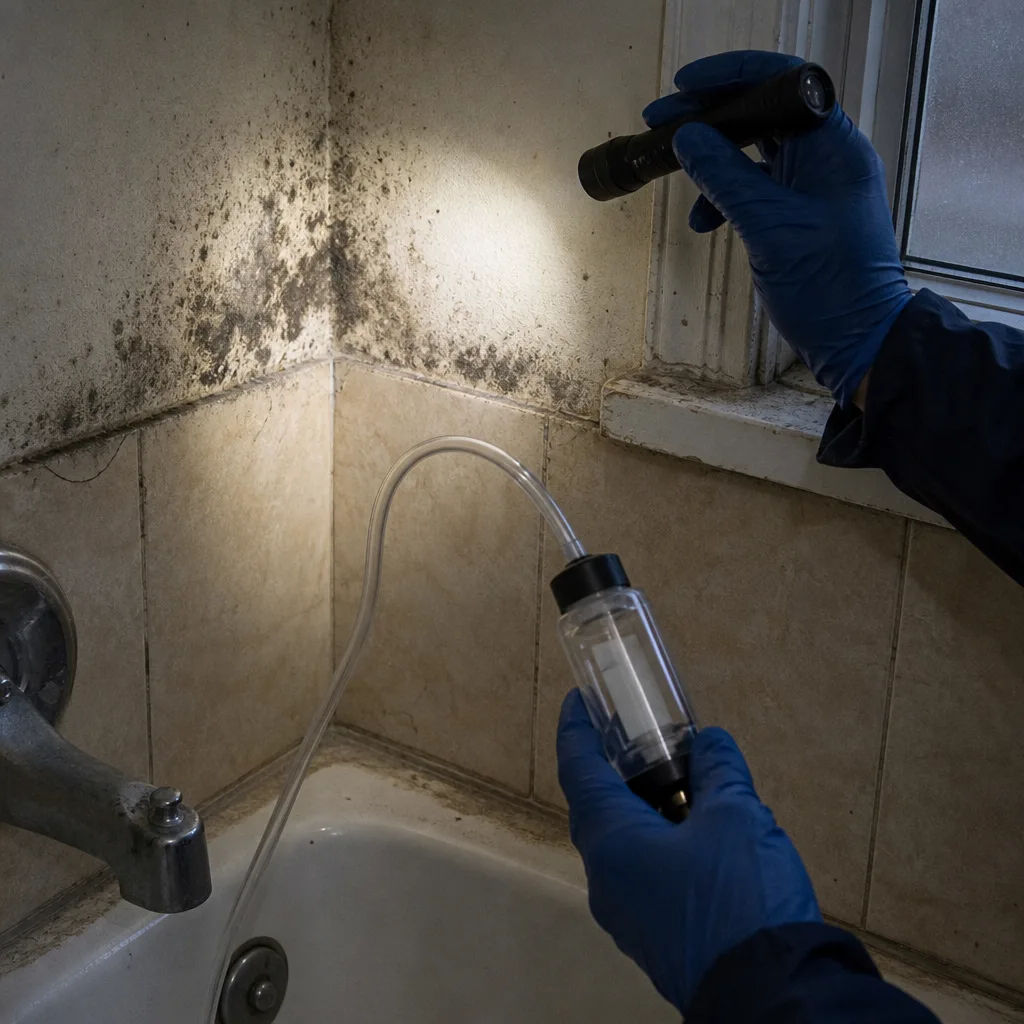
Our inspections go beyond visual identification. We use thermal imaging to find moisture behind finished surfaces, borescopes to examine inside wall cavities, and air sampling to quantify spore types and concentrations. In Riverdale’s co-op buildings, we specifically inspect shared pipe chases and riser openings - the vertical highways that spread contamination between units. Testing results come from independent laboratories with turnaround times that let us begin remediation within 48 hours.
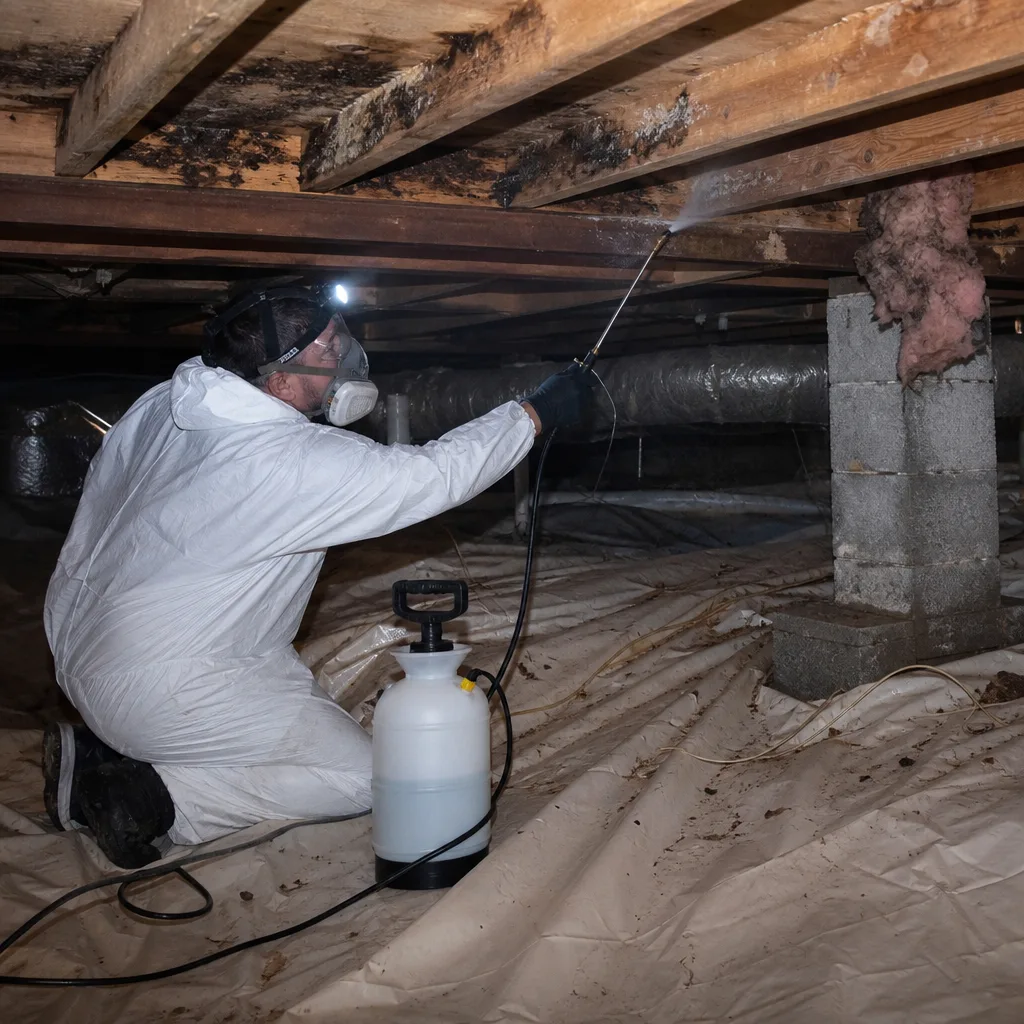
Mold Removal
Removal means physical elimination of contaminated materials, not surface cleaning. We remove drywall, insulation, carpet padding, and deteriorated plaster to expose the structural cavity, then HEPA-vacuum and treat remaining substrates. In Riverdale’s pre-war buildings, we frequently encounter asbestos-containing floor tiles, pipe insulation, or plaster that must be abated under NYC Department of Environmental Protection protocols before remediation proceeds - a coordination step that adds time but protects occupants and workers.
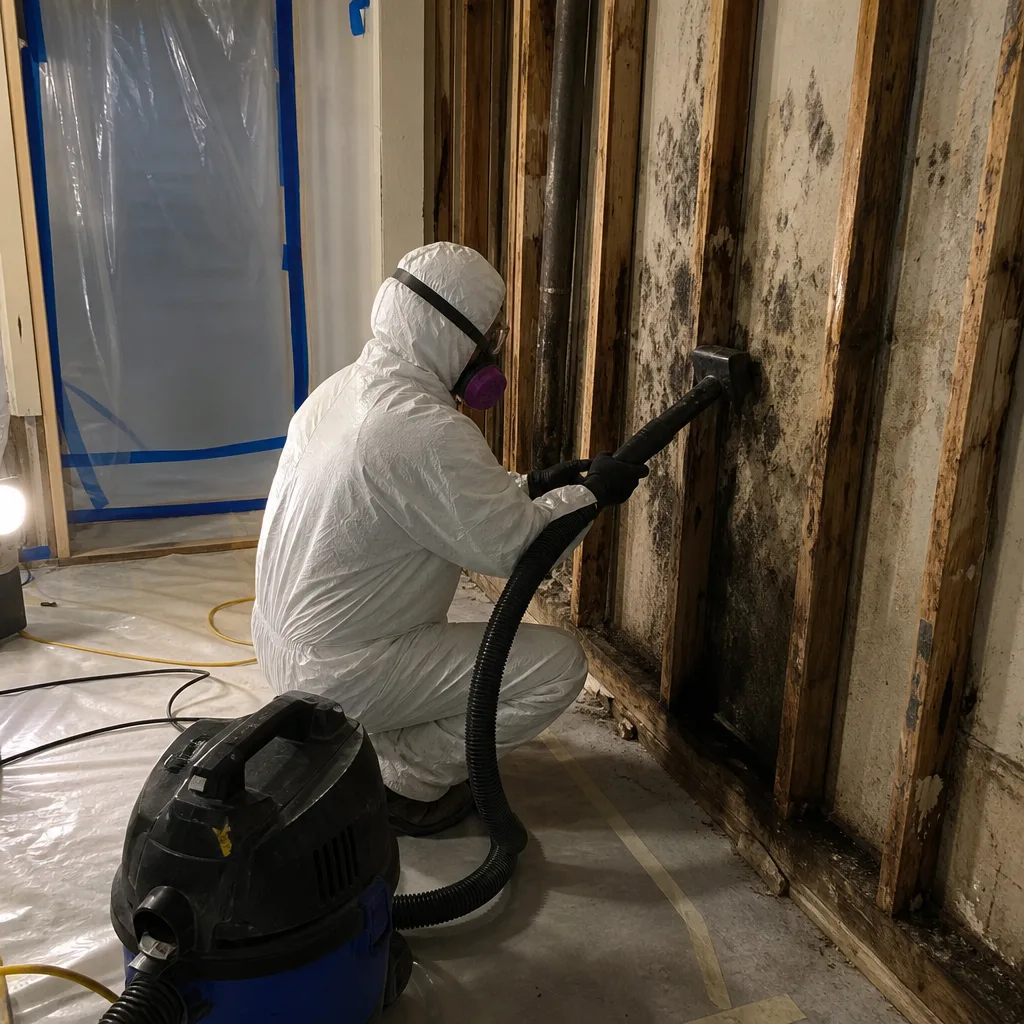
Black Mold Remediation
Stachybotrys chartarum - the species commonly called “black mold” - requires the same containment and removal protocols as other toxigenic molds, with additional precautions for mycotoxin exposure. We treat all confirmed or suspected Stachybotrys jobs with full PPE, negative air pressure, and sealed waste transport. In Riverdale’s humid basements and crawl spaces, this species often colonizes water-damaged cellulose materials like drywall paper and cardboard storage.
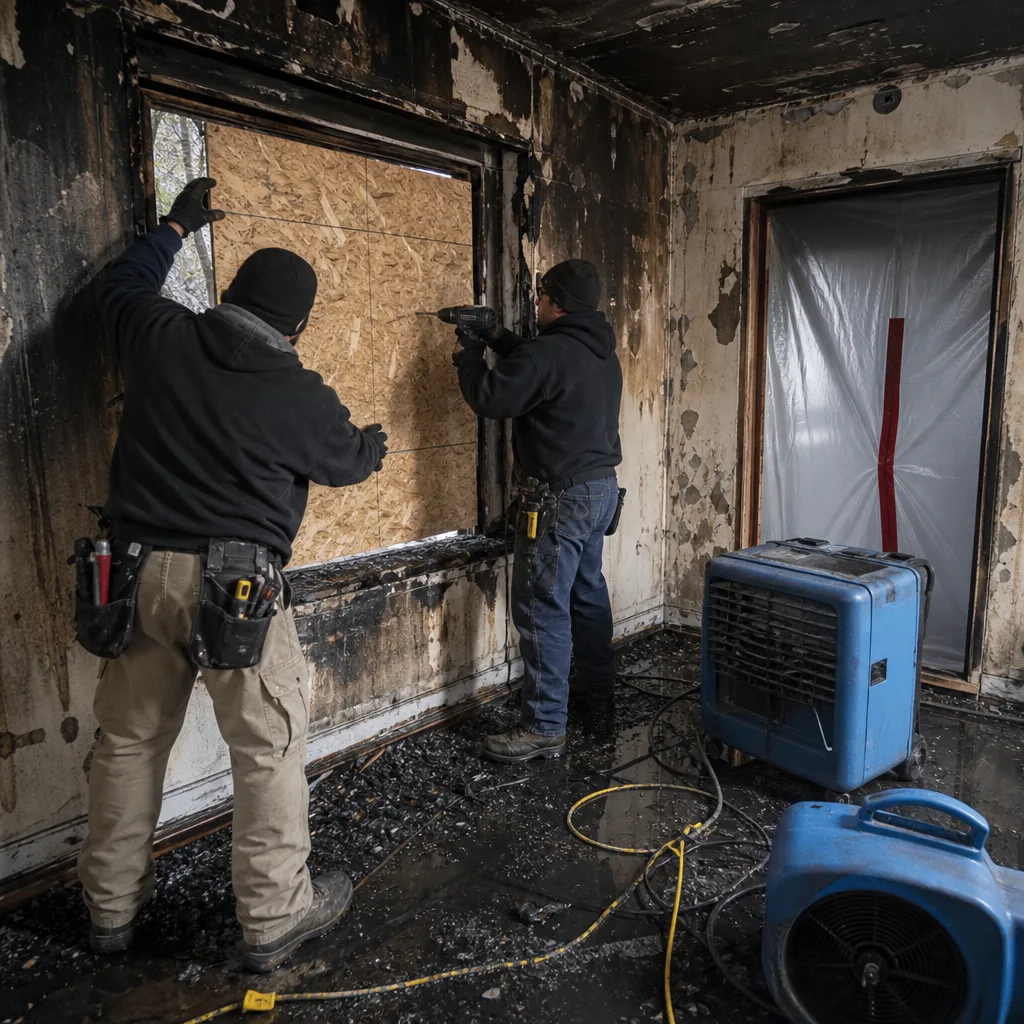
Air Quality Restoration
Post-remediation air quality restoration includes 24-48 hours of continuous HEPA filtration, followed by spore trap sampling and laboratory analysis. We compare indoor results to outdoor baseline samples collected the same day, since Riverdale’s tree canopy and Hudson River proximity create naturally higher outdoor spore counts than inland areas. Clearance is achieved only when indoor levels meet or fall below this localized baseline.
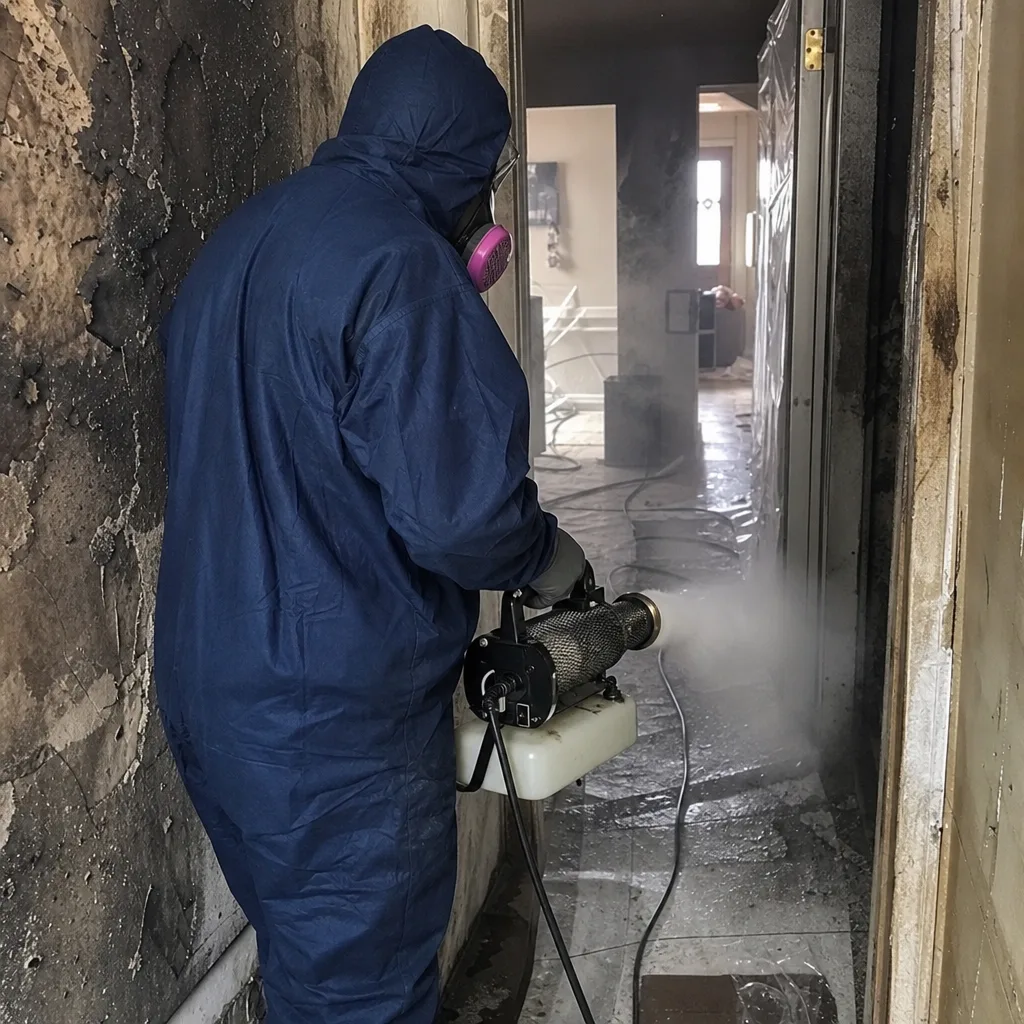
Crawl Space Treatment
Riverdale’s hillside homes often have dirt-floored crawl spaces beneath original construction, where groundwater seepage and poor ventilation create perpetual humidity. We install vapor barriers, dehumidification systems, and sump pumps where appropriate, then treat structural framing with borate-based preservatives that inhibit future mold growth. Without this step, first-floor mold returns regardless of how thoroughly the living space was remediated.
Moisture & Humidity Control
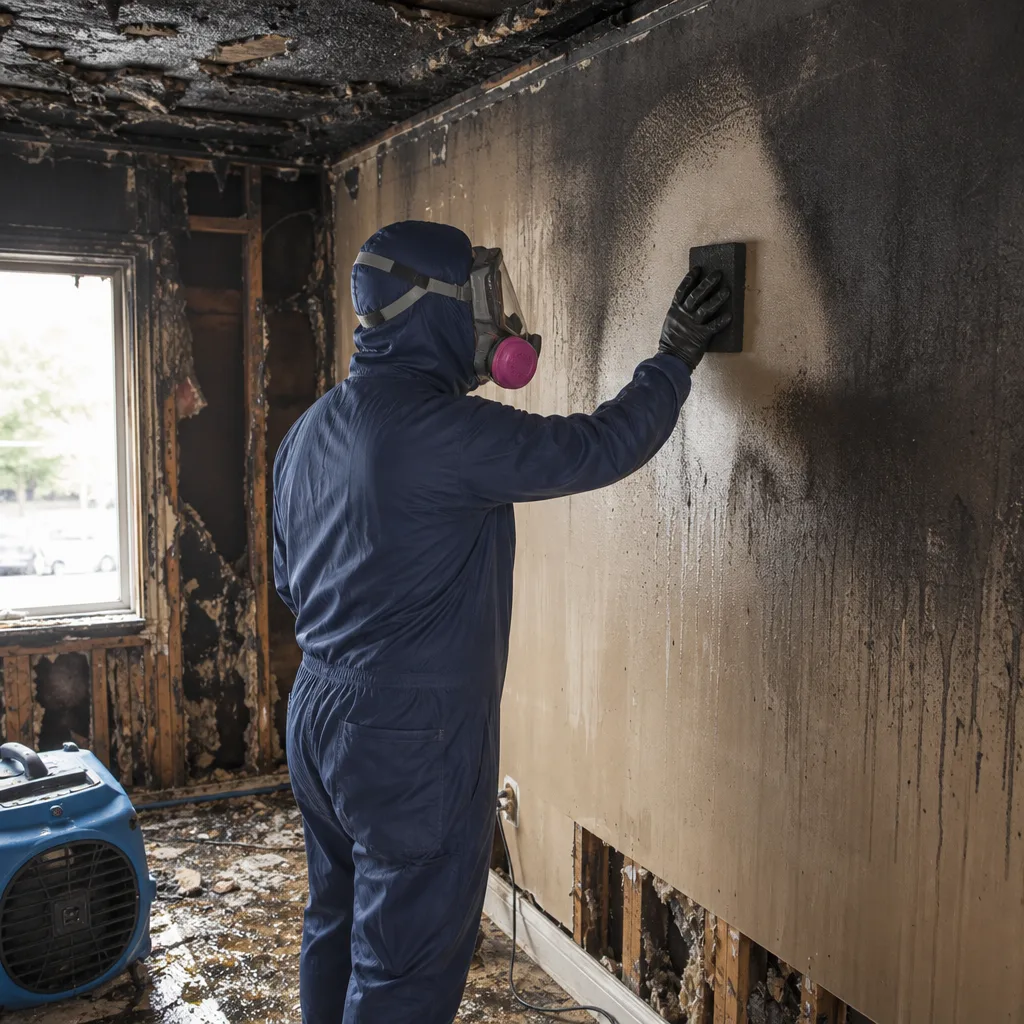
The permanent solution to mold is moisture control, not chemical treatment. We install whole-building dehumidification in co-op mechanical rooms, basement dehumidifiers with condensate pumps in single-family homes, and humidity monitoring systems that alert property managers before conditions favor colony growth. For Mold Remediation in Riverdale, this is the difference between a one-time job and a recurring problem.
What happens when you call
- 1
A real person answersNo phone trees - you reach a local pro.
- 2
You get an upfront price rangeHonest numbers before anyone is dispatched.
- 3
A background-checked tech heads outLicensed & insured, dispatched right away.
- 4
You approve before work beginsNothing starts until you say go.
Mold Remediation Costs in Riverdale, NY
A typical limited mold remediation in Riverdale - under 10 square feet, single room, no HVAC involvement - runs $1,800-$2,800. Moderate contamination, 10-100 square feet with drywall removal and air scrubbing, ranges $3,200-$5,500. Major remediation involving multiple co-op units, shared riser cavities, or crawl space reconstruction can reach $6,500-$15,000, with asbestos abatement coordination adding $800-$2,400 where required.
What moves the price: square footage of confirmed growth, number of affected rooms or units, whether containment must extend to common hallways or risers, material type (plaster removal costs more than drywall), and whether independent clearance testing is required by the co-op board or insurer. Insurance covers mold remediation when it results from a covered water loss - sudden pipe failure, storm damage, accidental overflow - but typically excludes long-term maintenance neglect. We review your policy language and document the loss origin to support your claim. Every inspection includes a written, line-item price before work begins - Haven Standard, Clause 1. Call (845) 875-4326 for your free inspection and exact quote.
We Also Serve Cities Near Riverdale
Our crews respond throughout the northwest Bronx and upper Manhattan, including Kingsbridge with its mix of pre-war apartment buildings and Victorian-era homes, Washington Heights where Hudson River humidity affects upper-floor units in large co-ops, Morningside Heights with its institutional and residential buildings facing aging infrastructure challenges, and Harlem where brownstone renovations frequently uncover hidden mold behind century-old plaster. Each neighborhood shares Riverdale’s core challenge - older buildings with systems at or past design life - but each requires localized response protocols we know from repeated work.
Serving Riverdale, NY - Our Local Coverage Area
We’re based in the Riverdale area and know this community well. Use the map below to see our service coverage - if you’re nearby, we can almost certainly help.
Riverdale Mold Remediation Questions, Answered
How does mold spread between co-op units in Riverdale’s pre-war buildings?
Mold travels vertically through shared pipe chases, steam riser openings, and HVAC return plenums that connect multiple floors in pre-war construction. In Riverdale’s co-op towers, a single moisture source on one floor can contaminate units above and below within 48-72 hours as spores ride air currents and surface moisture through these unsealed cavities. We map this migration with thermal imaging and borescopes, then establish floor-by-floor containment with negative air pressure to stop further spread. Call (845) 875-4326 if you suspect cross-unit contamination - early containment prevents a building-wide remediation.
What should I expect if my Riverdale co-op needs mold remediation?
Expect a multi-step authorization process: our inspection produces a written scope and price, then your managing agent presents it to the co-op board for access approval floor by floor. We begin containment and air scrubbing in authorized units immediately while pending approvals move in parallel. Most Riverdale co-op jobs take 5-10 business days from inspection to clearance, with asbestos abatement coordination adding 3-5 days where required. You receive daily progress photos, moisture logs, and a final clearance report for your files and insurer.
Why does mold keep coming back in my Riverdale basement?
Recurring basement mold in Riverdale’s hillside homes almost always means the moisture source was never eliminated. Foundation seepage from rainfall runoff, failed sump pumps, or high water tables create chronic humidity that re-colonizes treated surfaces within one season. Our crawl space and basement inspections identify the actual water path - not just the visible mold - and we install permanent moisture control (vapor barriers, dehumidification, drainage corrections) as part of remediation. Without this, you’re paying for the same job twice.
Do Riverdale’s older homes require special handling for mold remediation?
Yes. Pre-war construction in Riverdale frequently contains asbestos-containing materials (floor tiles, pipe insulation, plaster) that require NYC DEP notification and licensed abatement before disturbance. Original plaster walls with horsehair reinforcement absorb moisture differently than modern drywall and demand modified drying protocols. Steam-heat systems with cast iron risers create unique humidity patterns in winter. Our crews hold AMRT certification and NYC asbestos handler certifications where required, and we coordinate abatement through licensed third parties when needed.
How quickly can mold grow after a water leak in my Riverdale apartment?
Visible mold growth begins 24-48 hours after water contacts organic material at temperatures above 60°F. In Riverdale’s pre-war buildings, the timeline compresses because plaster walls, horsehair reinforcement, and accumulated dust in riser cavities provide ideal substrate. Steam heat maintains year-round temperatures that accelerate colony establishment even in winter. If you’ve had a leak, call (845) 875-4326 within 24 hours - our free inspection includes moisture mapping that finds hidden growth before it’s visible.
Will my insurance cover mold remediation in Riverdale?
Insurance covers mold remediation when it results from a sudden, accidental water loss - burst pipe, storm damage, appliance overflow - that your policy covers. It typically excludes mold from long-term leaks, maintenance neglect, or humidity buildup without a specific water event. We document the loss origin with photos, moisture readings, and timeline evidence to establish coverage, then write estimates to Xactimate standards for direct carrier billing. Bring your policy documents to the inspection and we’ll review coverage specifics at no charge.
How long does mold remediation take in Riverdale?
Single-room, limited contamination: 2-3 days. Multi-unit co-op jobs with riser involvement: 7-14 days including clearance testing. Jobs requiring asbestos abatement coordination: add 3-5 days for DEP notification and licensed removal. The timeline extends when co-op board approvals are delayed - one reason we begin containment in authorized areas immediately rather than waiting for full-building access. We provide a written schedule with your scope and price, updated daily with photo documentation.
Can I stay in my home during mold remediation?
For limited contamination in a single room, yes - with the work zone sealed and air scrubbers running. For moderate-to-major jobs, especially in co-op buildings where containment may extend to hallways or shared HVAC, temporary relocation is often necessary and may be covered by your insurance under additional living expense provisions. We specify occupancy recommendations in your written scope before work begins, never after crews are inside. Your safety and the effectiveness of containment drive this decision, not our scheduling convenience.
We got a call from a managing agent on Palisade Avenue about a musty odor in a 4th-floor co-op. Our moisture mapping showed elevated moisture readings in the shared pipe chase, and mold had spread down to the 2nd and 3rd floors through the riser openings. After the co-op board authorized floor-by-floor access, we set up containment and ran Dri-Eaz dehumidifiers and XPOWER air movers for four days, then performed antimicrobial treatment on all affected surfaces. The board later approved a building-wide moisture and humidity control plan to prevent it from happening again.
Written by Alicia Brennan, Owner at Back to Dry Restoration, serving Riverdale since 2011.
Mold Remediation in Nearby Areas