Free visual inspection and a written scope of work before any mitigation begins - photos, moisture readings, and drying logs go in your claim file
The scope we write is the scope we bill. Anything new gets shown to you, in writing, before we touch it.
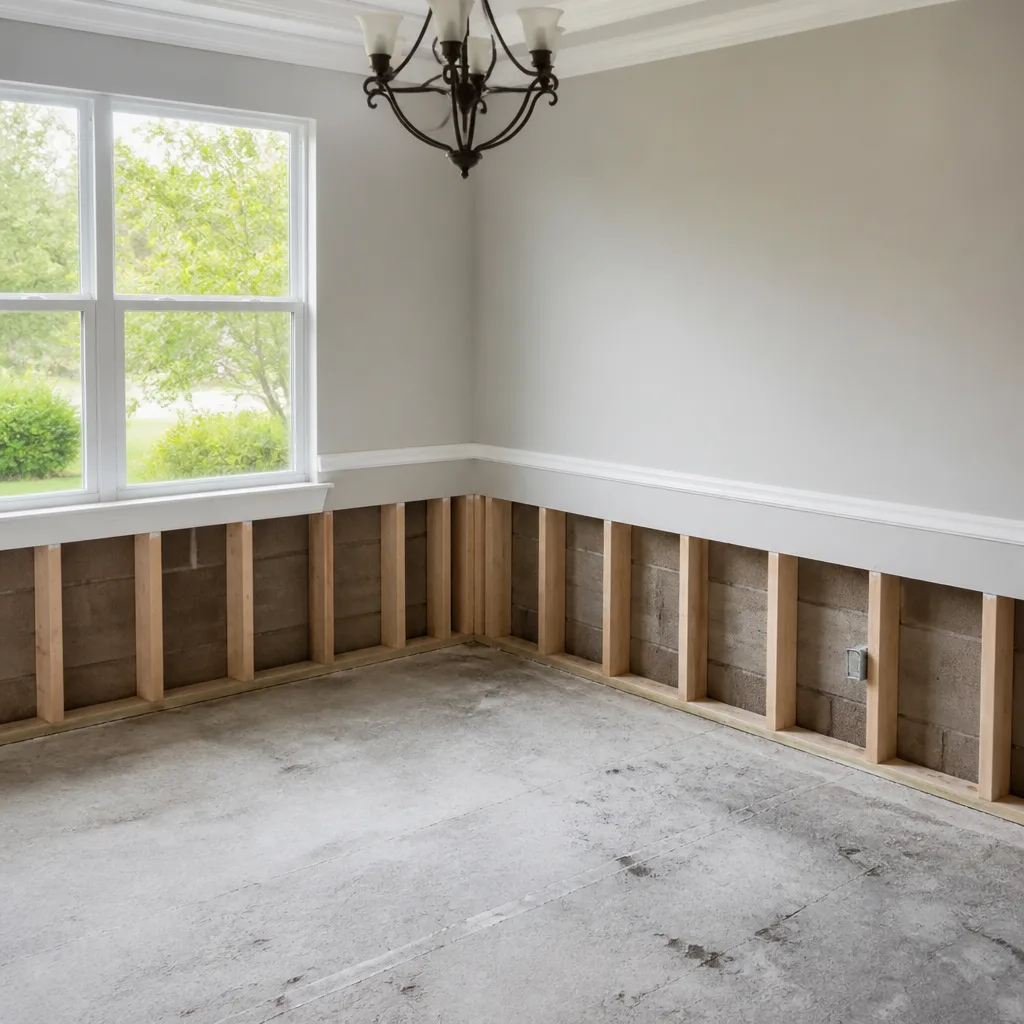
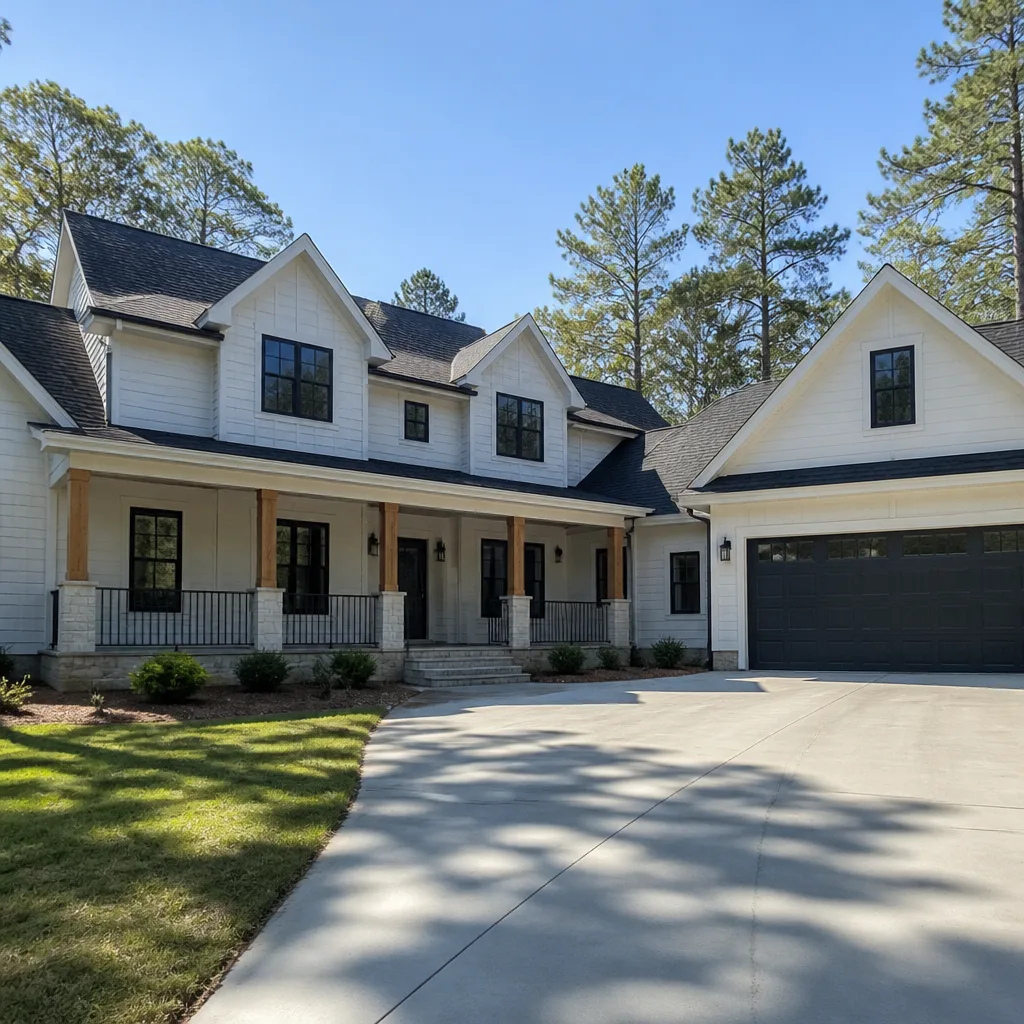
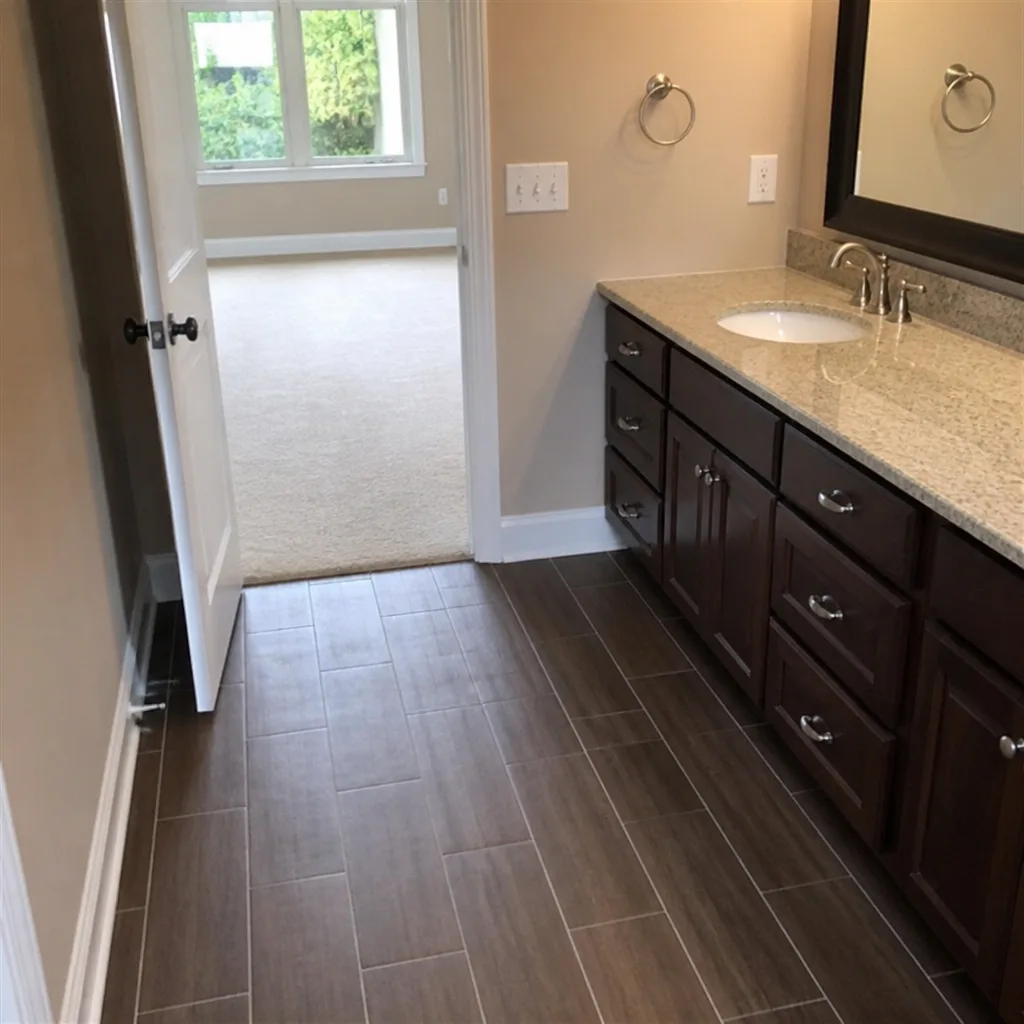
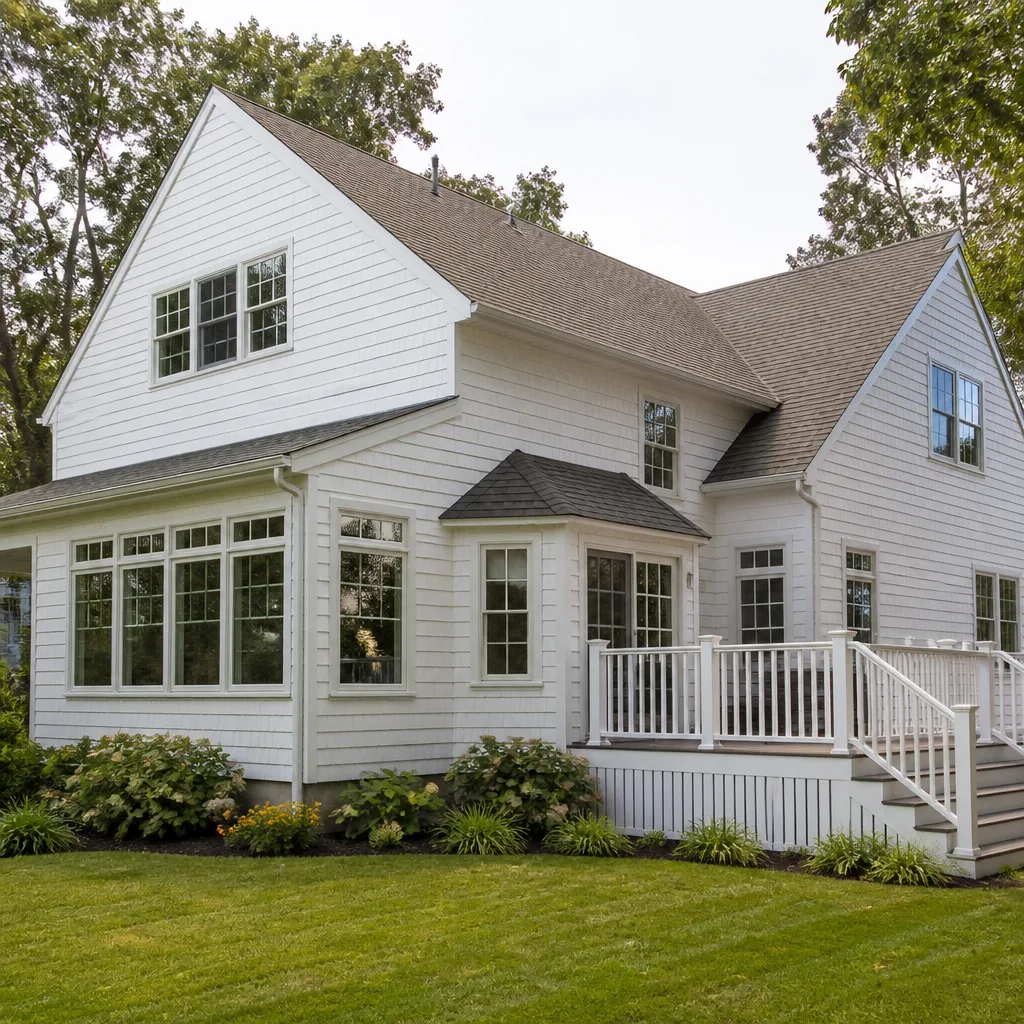
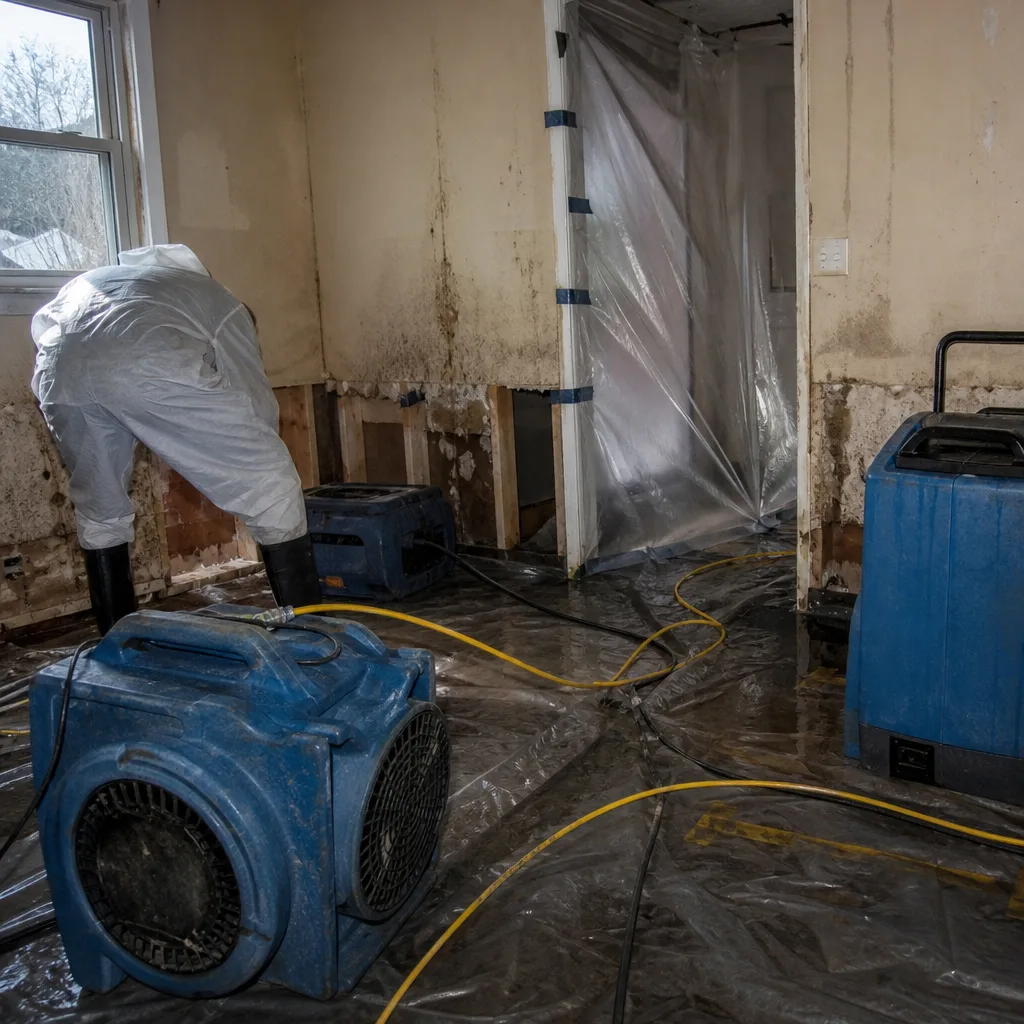 Before
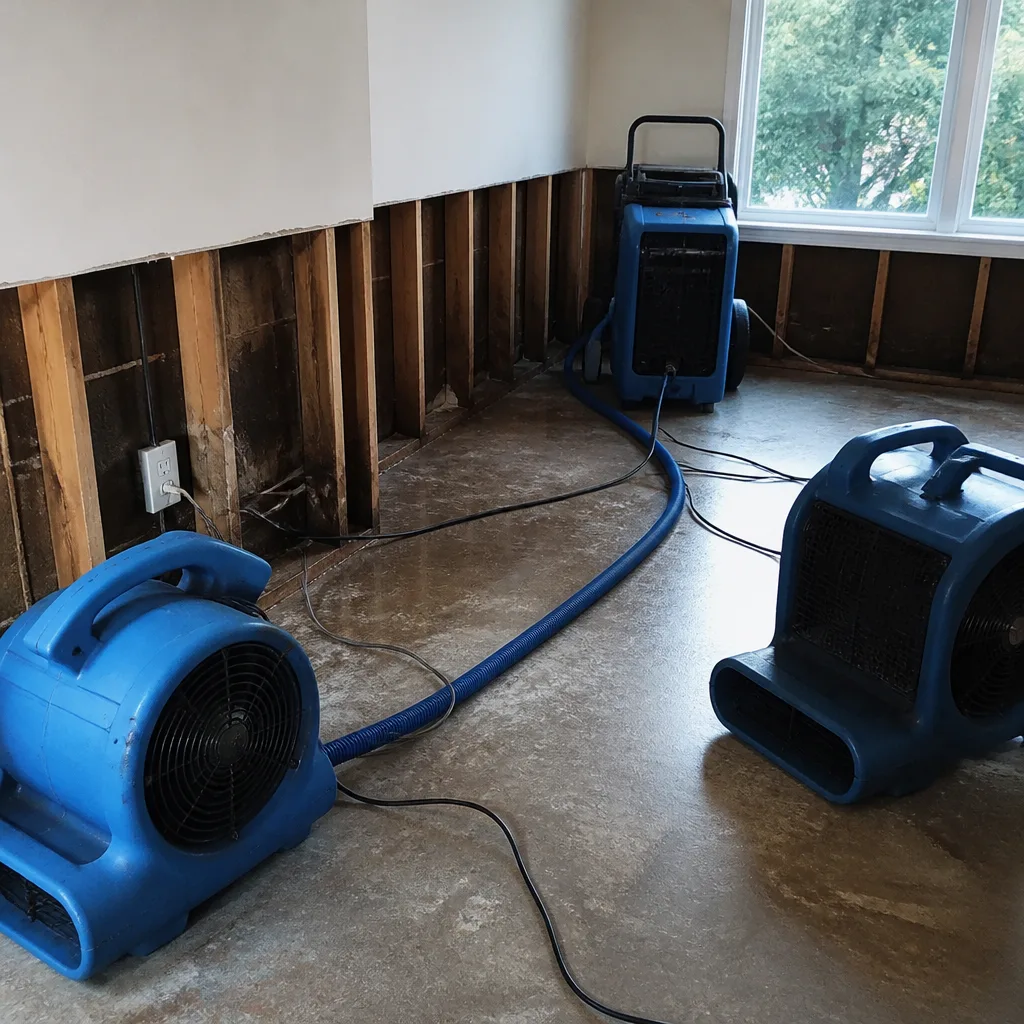 After
After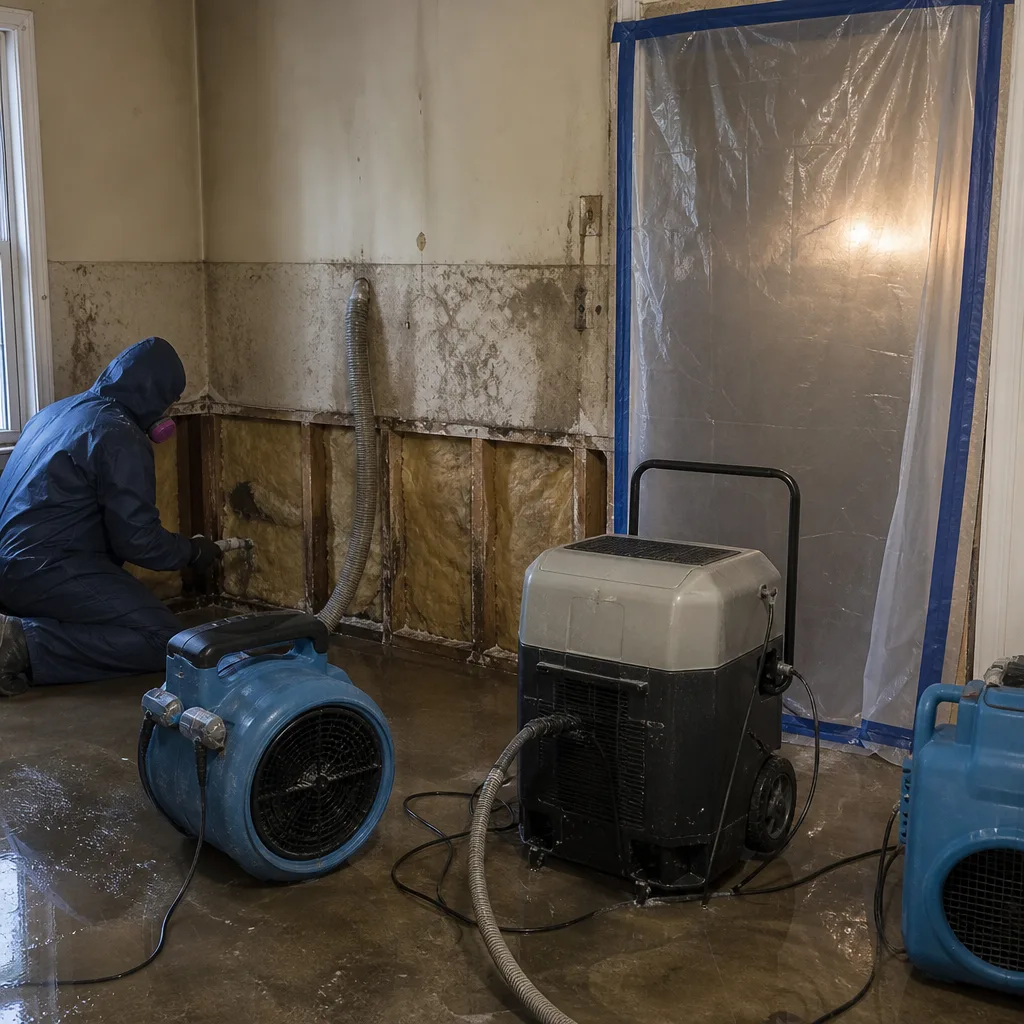 Before
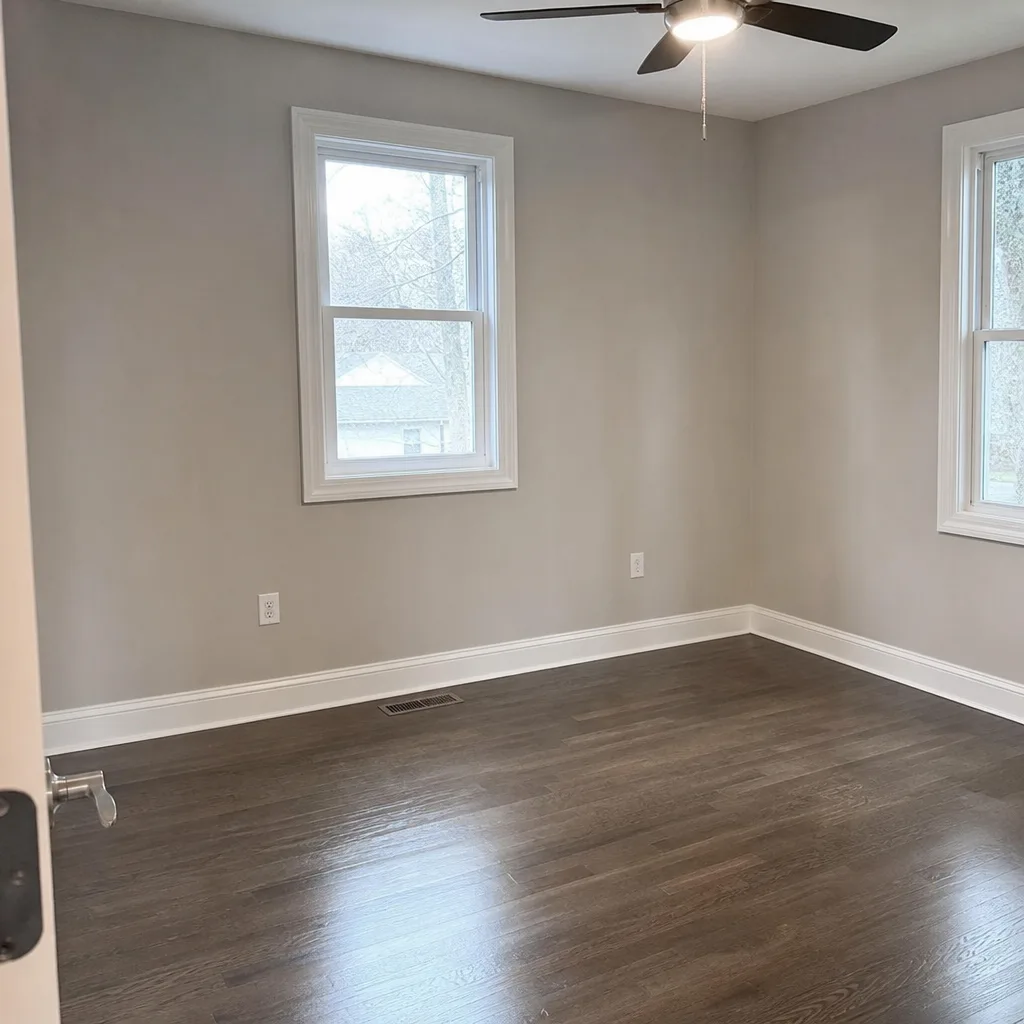 After
After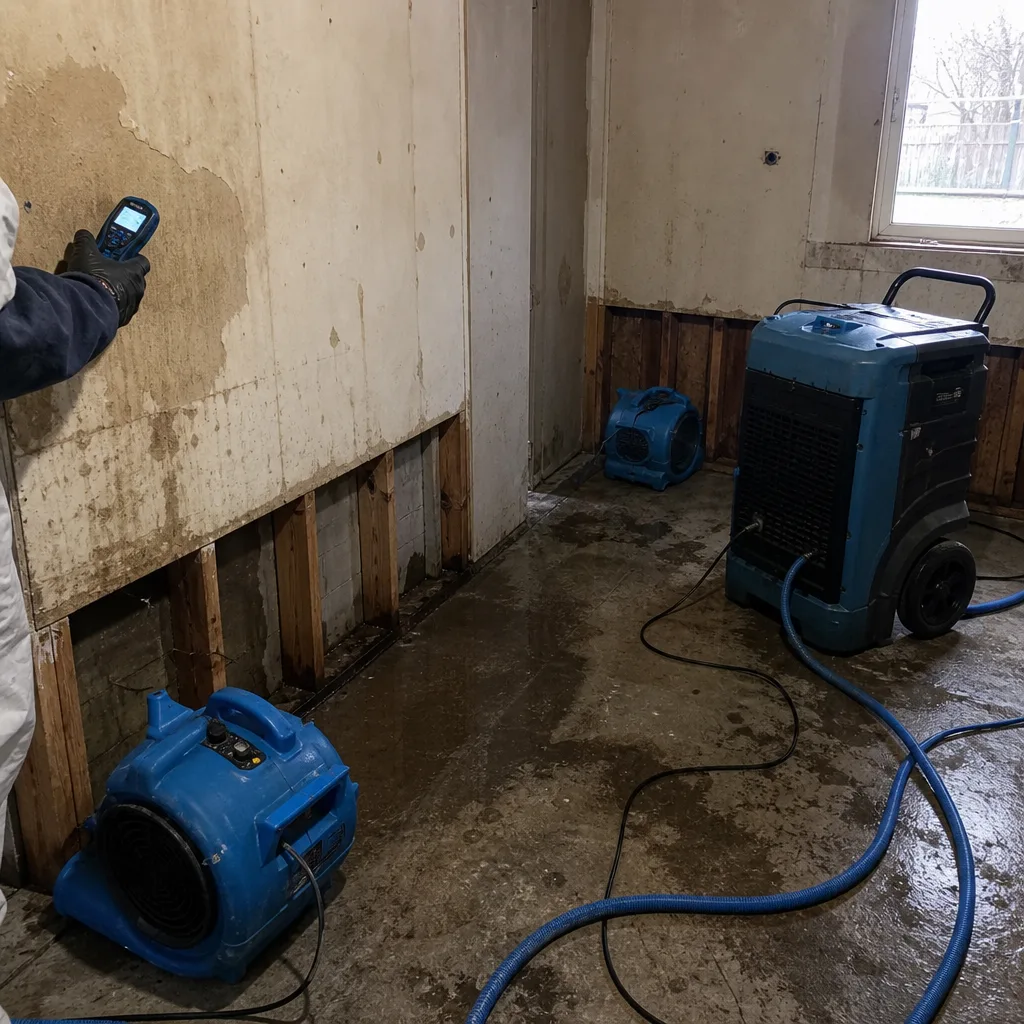 Before
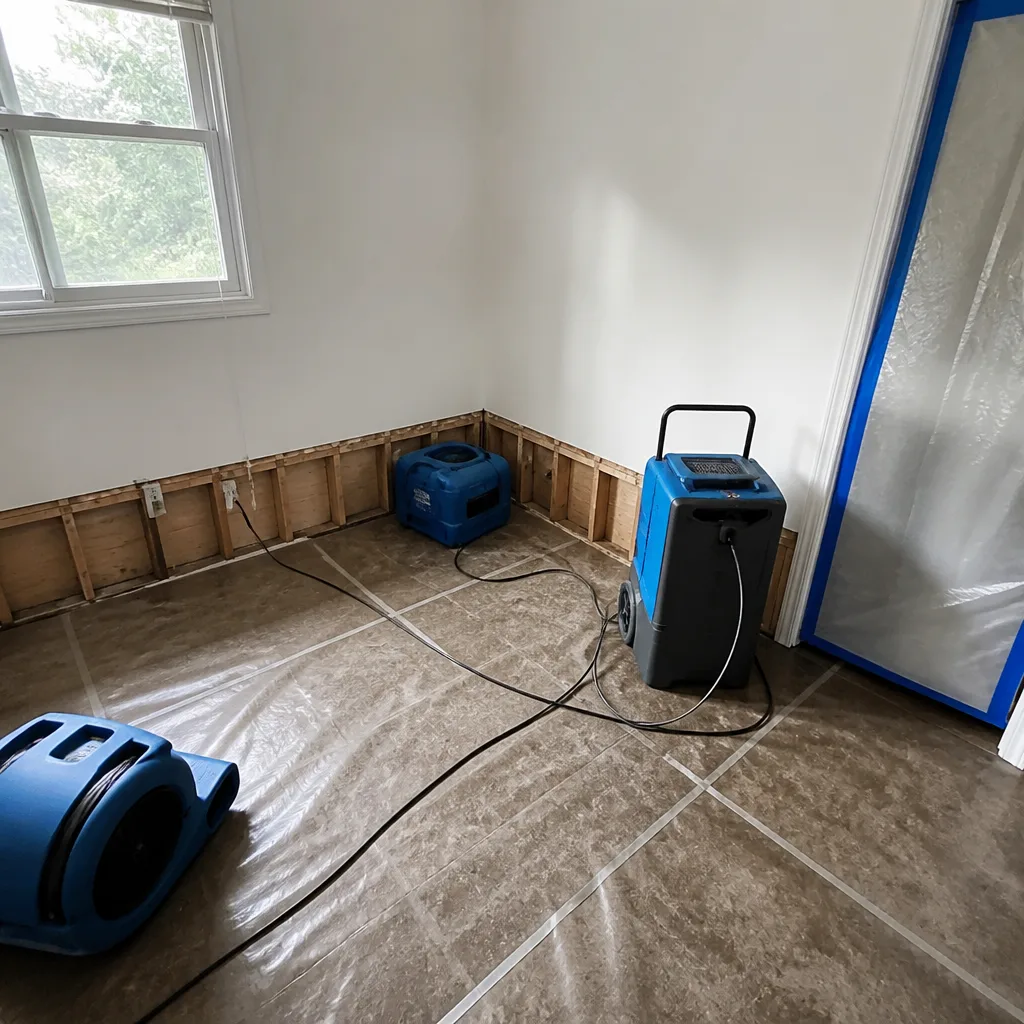 After
After24/7 Emergency Fire & Smoke Damage Restoration in Englewood
Fire damage in an Englewood home rarely stays where the flames touched. Smoke migrates through HVAC ducts, climbs inside balloon-frame wall cavities, and settles into porous plaster before you realize the extent. If you’re standing in a fire-damaged property right now, call (845) 875-4326. A live person answers every call, 24 hours a day, 7 days a week - no voicemail trees, no next-business-day callbacks while soot continues to etch your surfaces. Our crews dispatch throughout Englewood and surrounding Bergen County within 45 minutes of your call. We perform a free visual inspection on arrival, document every affected room with photos, and deliver a written scope and price before any work begins. The first hour determines whether smoke odor becomes a temporary problem or a permanent structural issue.
Understanding Fire & Smoke Damage Restoration Severity in Englewood Properties
Fire damage restoration in Englewood operates on a severity scale that maps directly to construction type and response speed. Dry smoke residue, produced by fast-burning, high-heat fires, presents as powdery, light-colored soot that rests on surfaces and responds to careful dry-cleaning methods. Wet smoke residue, from slow-burning, oxygen-starved fires, is sticky, smeary, and acidic - it bonds aggressively with porous materials like the original plaster walls found throughout Englewood’s pre-1950 housing stock. Protein residue, nearly invisible but pungent, comes from kitchen fires and requires enzymatic cleaners to break down.
Smoke migration follows pressure differentials and thermal buoyancy. In Englewood’s older homes with balloon-frame construction - studs running continuously from foundation to attic - smoke travels vertically inside walls with minimal obstruction. A kitchen fire on the first floor of a 1920s Colonial on East Palisade Avenue can contaminate second-floor bedrooms and attic spaces without ever showing visible soot in the stairwell. Our crews use thermal imaging to trace migration paths and moisture meters to identify where fire-suppression water has pooled inside these same cavities. Tertiary smoke damage, the residual odor that persists after visible cleaning, is the most common call-back in older homes where restoration contractors failed to address the full migration path.
Why Englewood Property Owners Choose DryMark Restoration Englewood
- 45-minute response commitment to any address in Englewood, with crews staged for Bergen County dispatch.
- 24/7 live answer - a real person, never an automated system or voicemail queue, on every call to (845) 875-4326.
- IICRC-certified crews holding FSRT (Fire & Smoke Restoration Technician) and WRT (Water Damage Restoration Technician) certifications, documented on every job folder.
- Free visual inspection with no obligation; we document what we find and explain it before discussing next steps.
- Direct insurance billing with photo-documented estimates formatted to your carrier’s standard, reducing back-and-forth by days.
- One team from emergency response through reconstruction - no handoffs between mitigation and rebuild contractors, no gaps in documentation.
BeforeAfterOur Fire & Smoke Damage Restoration Process
1. Inspection & Assessment
We arrive with thermal imaging cameras, moisture meters, and hygrometers to map the full extent of fire, smoke, and water damage. In Englewood’s older homes, we pay particular attention to balloon-frame wall cavities and original plaster surfaces where smoke migrates invisibly. Every finding is photo-documented before any equipment is placed.
2. Emergency Board-Up & Stabilization
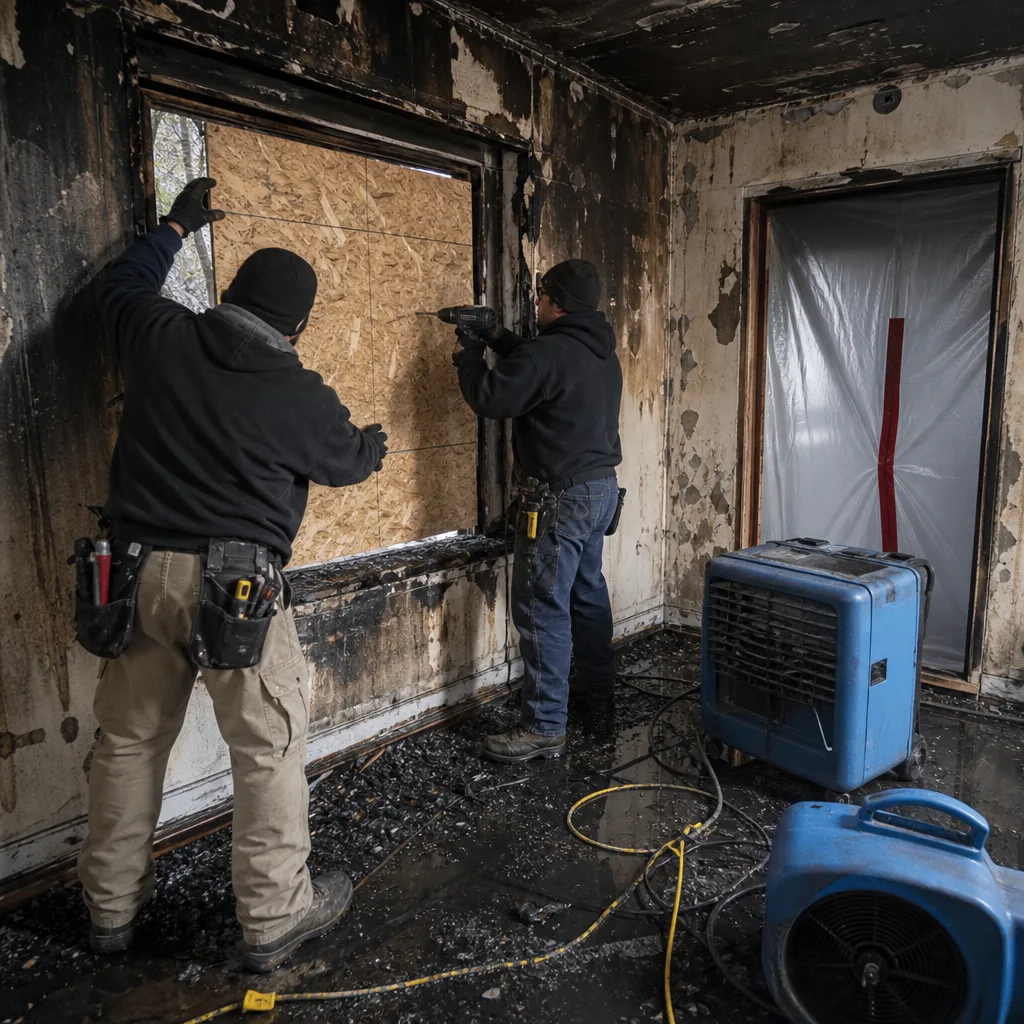
Broken windows, compromised roofs, and damaged doors are secured with plywood and roof tarps to prevent weather intrusion and unauthorized entry. We coordinate this step with your insurance adjuster when possible, documenting the pre-existing condition of all openings.
3. Water Extraction & Structural Drying
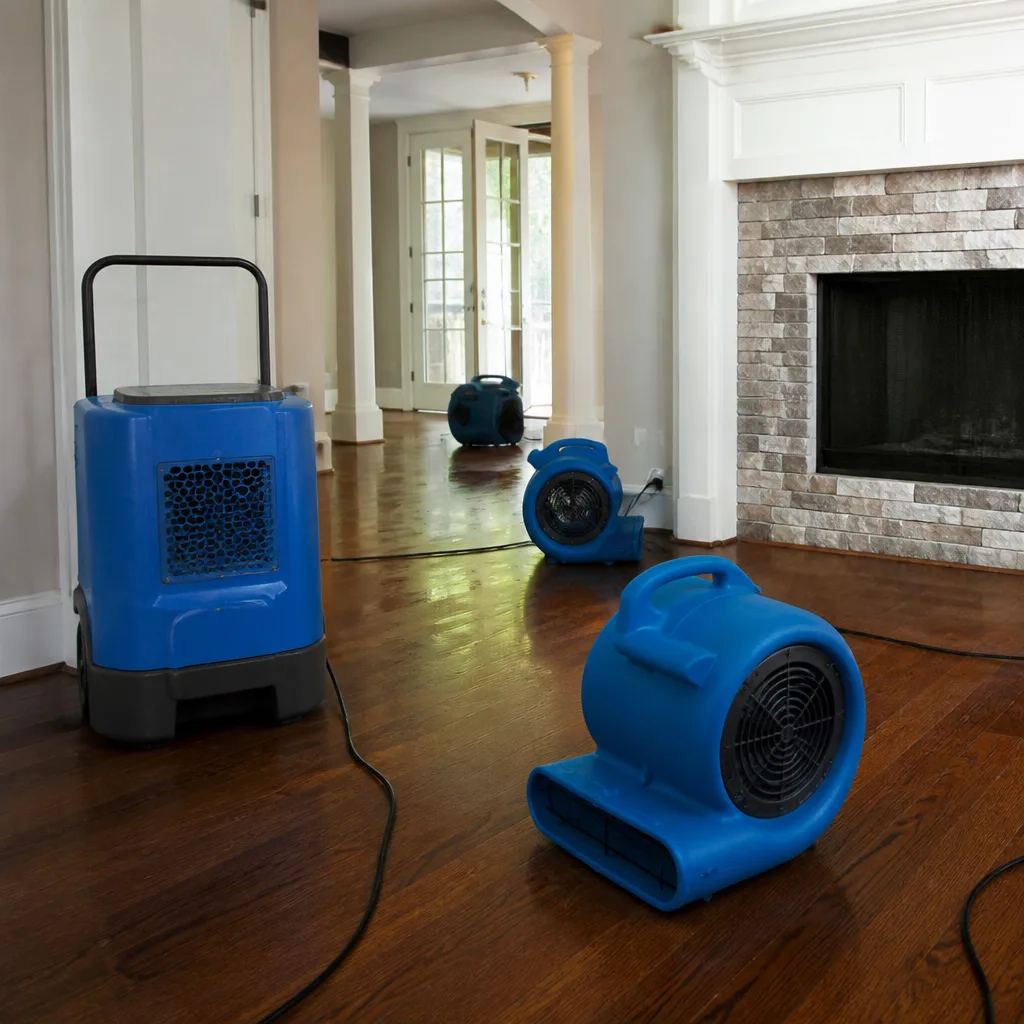
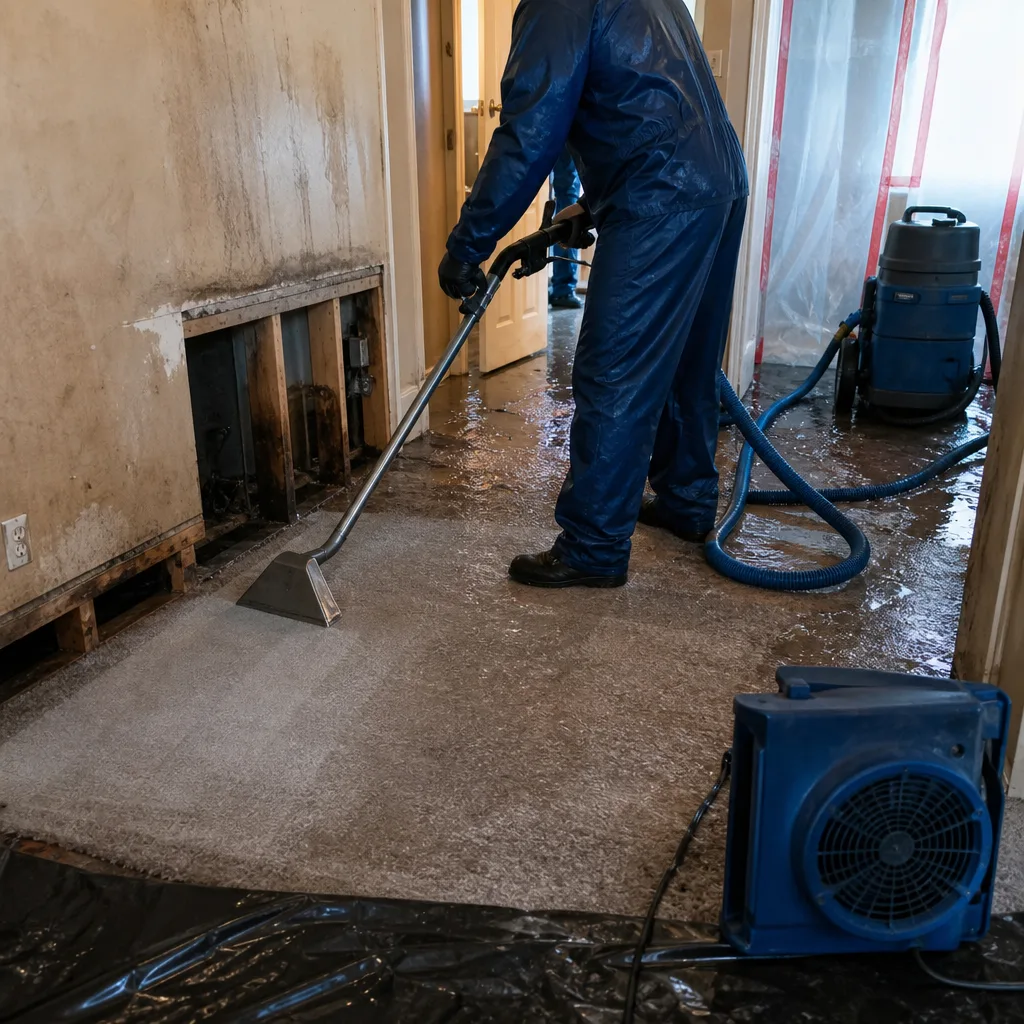
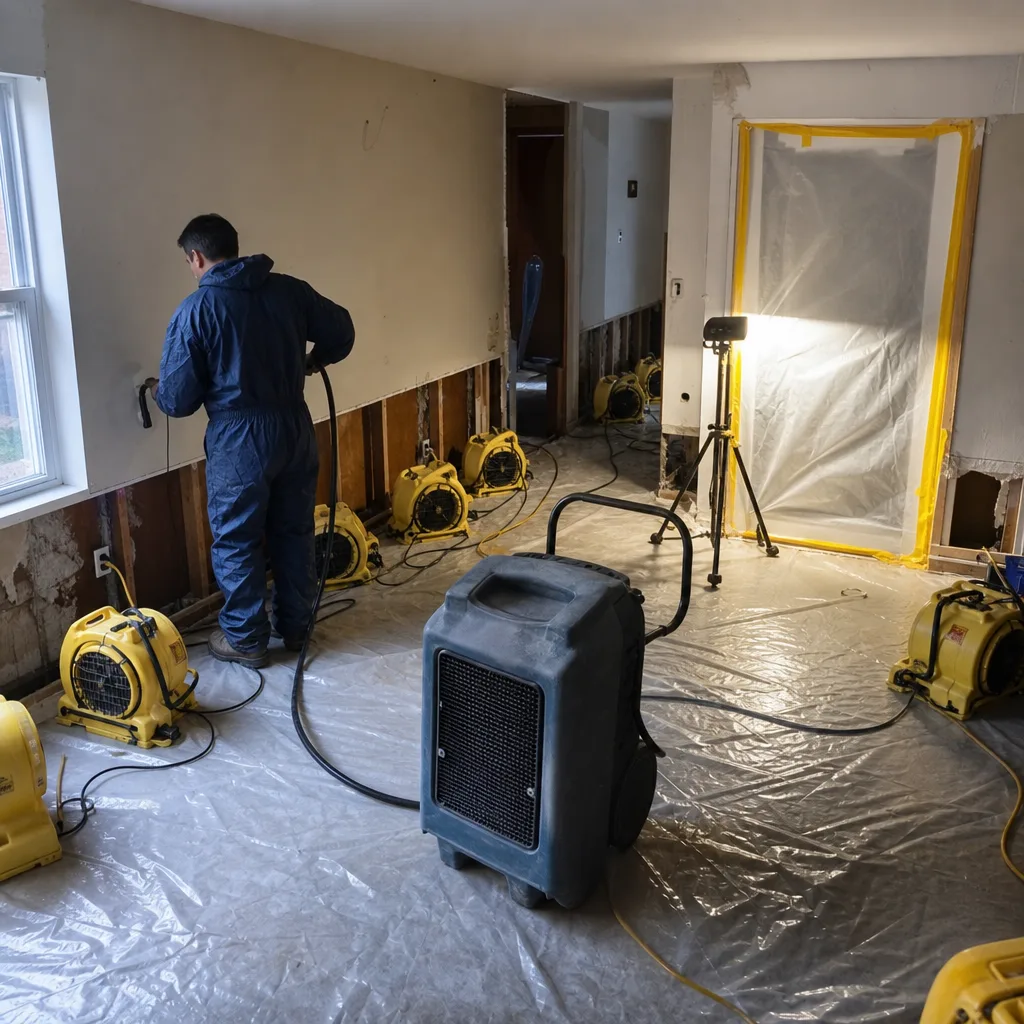
Fire suppression leaves thousands of gallons of water that must be extracted before mold colonization begins. We deploy truck-mounted extractors, Dri-Eaz and Phoenix dehumidifiers, and air movers positioned to create optimal vapor pressure differentials - the measurable force that drives moisture from materials into the air for removal. Daily moisture logs track progress to IICRC S500 standards.
4. Smoke & Soot Cleaning
HEPA vacuums remove loose particulate before any wet contact. Dry chemical sponges lift dry smoke residue from original plaster without introducing moisture that would swell horsehair binders. Wet smoke and protein residues receive pH-neutral cleaning agents selected for the specific substrate - never a one-product approach.
5. Odor Removal & Deodorization
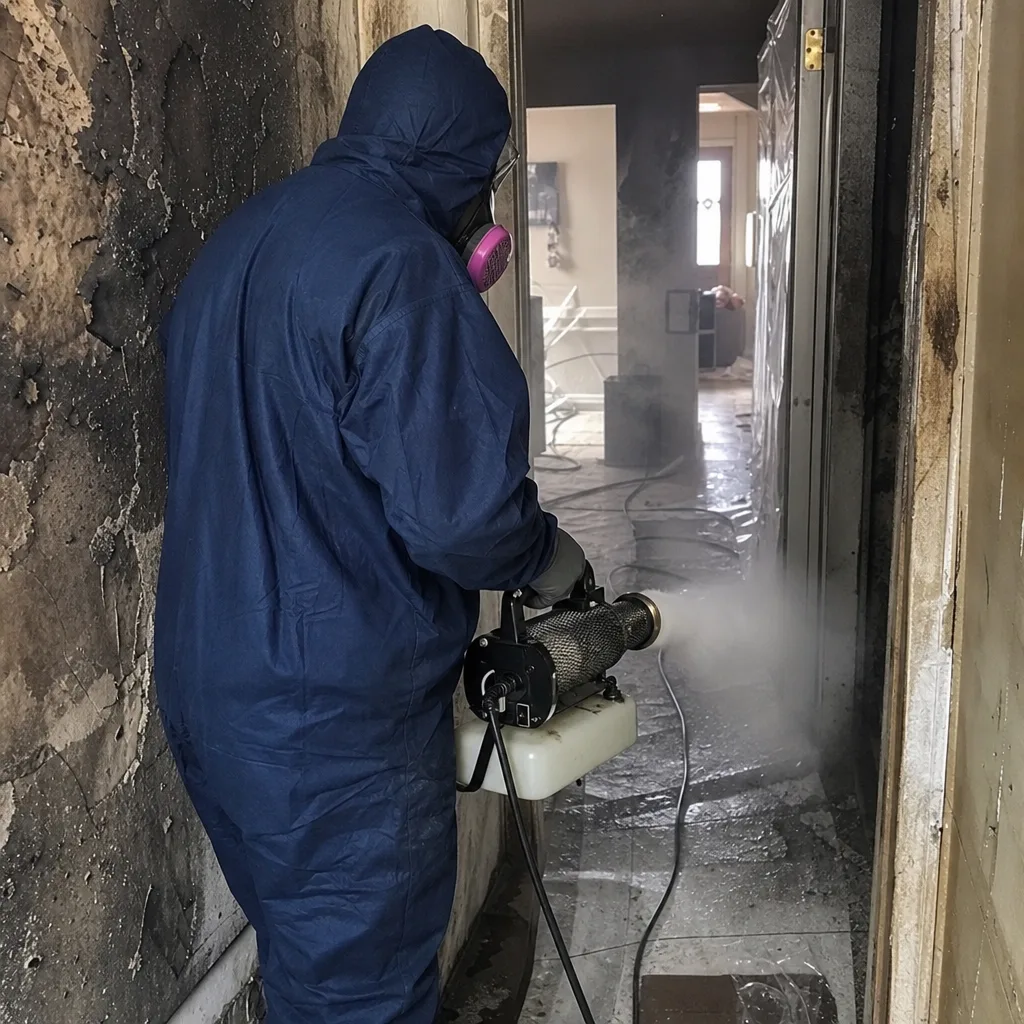
Hydroxyl generators and thermal fogging penetrate porous materials where cleaning cannot reach. In Englewood’s pre-WWII homes with extensive original millwork, we run hydroxyl treatment for 24-72 hours while simultaneously wiping custom built-ins by hand. The goal is odor elimination, not odor masking.
6. Repairs & Restoration
Our reconstruction team matches period finishes - plaster repair, custom millwork replication, historic trim sourcing - returning the property to pre-loss condition. A written warranty under The Haven Standard covers all work for 365 days.
Need Emergency Fire & Smoke Damage Restoration in Englewood Now?
Crews minutes away, answering live 24 hours a day. The sooner we start, the less it costs.
Working With Your Insurance Company
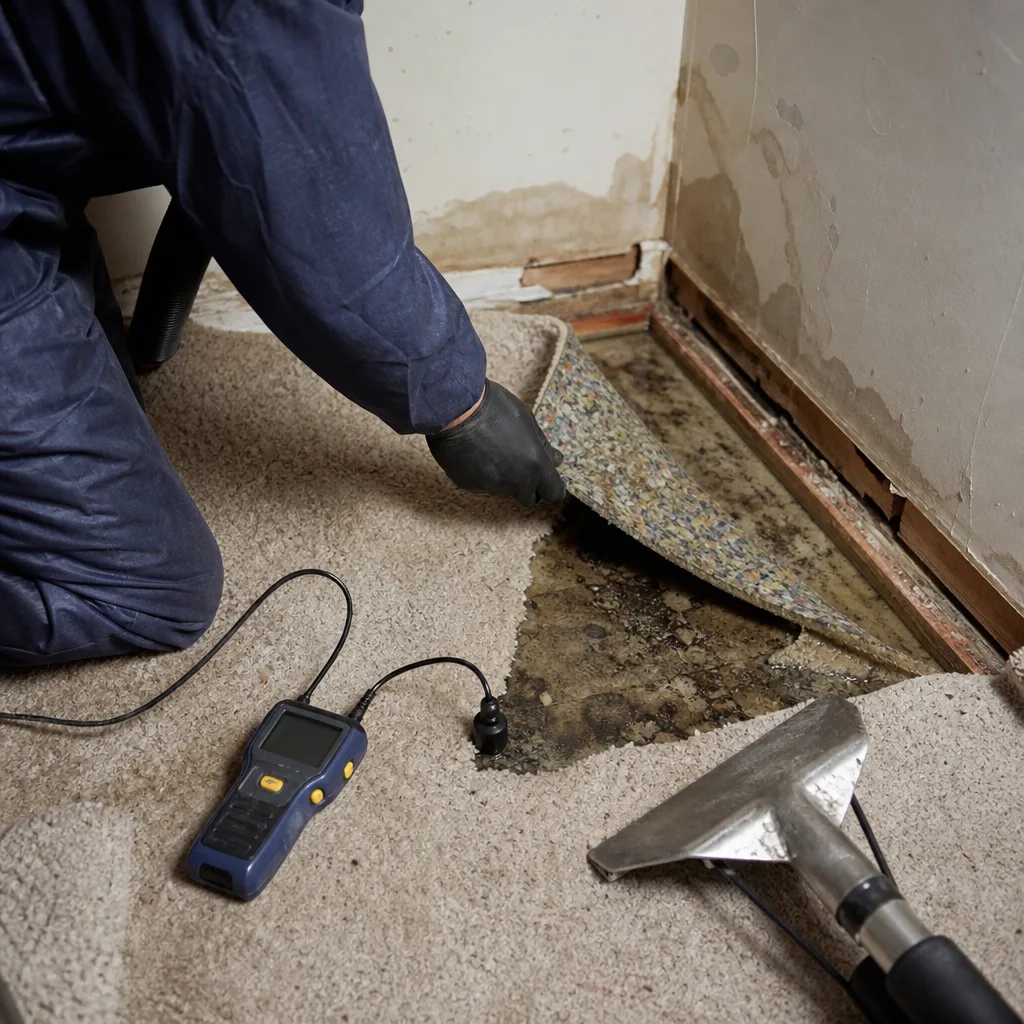
Insurance claims for fire damage fail most often at the documentation stage. Adjusters deny line items they cannot verify, and homeowners bear the gap. Our process begins documenting from the first hour: every photo is timestamped, every moisture reading is logged, every piece of equipment is noted with serial number and placement time. We produce estimates in Xactimate, the industry-standard format that eliminates translation errors between contractor and carrier.
Our team speaks directly with your adjuster, not through you as intermediary. We explain why original plaster repair costs more than drywall replacement, why balloon-frame wall cavities require specialized cleaning access, and why odor removal in historic millwork cannot be rushed. The photo record on every visit, included as standard deliverable, gives your adjuster visual proof of progress and completion.
What We Provide Your Insurer
- Thorough documentation of the loss
- Photos of all damage, room by room
- Moisture readings and drying logs
- A detailed, line-item scope of work
- Direct coordination with your carrier
Built for Englewood’s Loss Calendar
Englewood’s fire damage patterns track closely with its housing stock and climate. January deep freezes strain aging electrical systems in pre-WWII homes, with knob-and-tube remnants and overloaded panels causing electrical fires in balloon-frame walls. Spring thaw brings basement seepage from Flat Rock Brook’s drainage pattern, complicating fire restoration when suppression water meets pre-existing moisture. Summer’s humidity slows drying times for smoke-impacted plaster, extending project schedules by 20-30% compared to winter jobs. Fall and winter holiday cooking surges produce protein fires in kitchens throughout the city, with grease residue coating cabinet interiors and requiring enzymatic treatment.
The most complex Englewood fires occur when multiple systems fail simultaneously: an electrical fire in an aging panel, suppressed with water that then finds pre-existing intrusion paths from the brook drainage gradient. Our crews are trained to identify these compound losses during initial assessment, not discover them during reconstruction.
Fire & Smoke Damage Restoration Across Englewood’s Neighborhoods
Englewood’s geography shapes its restoration needs block by block. The East Hill area, rising above the downtown core, contains some of the city’s finest pre-1920 estates on winding streets like Woodland Road and Lincoln Drive. Fires here typically involve complex original systems - slate roofs with built-in gutters, plaster-over-lath construction, and custom millwork that cannot be sourced from a big-box store. Our crews carry specialized scaffolding for steep roof access and maintain relationships with regional plaster restoration specialists.
The downtown corridor along Palisade Avenue and Dean Street mixes commercial and residential occupancy in multi-story masonry buildings. Fires in these structures require coordinated evacuation, utility shutoff protocols with PSE&G, and containment strategies that account for shared walls and common HVAC. The west side, sloping toward Flat Rock Brook, holds dense concentrations of 1920s-1940s frame houses on streets like Spruce and William. These properties face the dual risk of fire damage and water intrusion from the brook’s drainage pattern, making our assessment protocol particularly thorough on lower-lying blocks.
We were called to a 1925 Tudor on West Palisade Avenue after a kitchen fire sent smoke through the original plaster and built-ins. Our techs set up containment, used HEPA vacuuming and dry chemical sponges on the plaster, then ran hydroxyl generators for odor removal while wiping down the custom millwork. The homeowner said the rooms smelled like new again without stripping the historic finish.
Specialized Fire & Smoke Damage Restoration Services We Offer in Englewood
Fire Damage Cleanup
Structural cleaning after fire requires matching method to material. In Englewood’s pre-WWII homes, we evaluate every surface before selecting cleaning agents - alkaline cleaners for synthetic soot, acidic for wood and cellulose, pH-neutral for mixed or unknown residues. The wrong product on original plaster destroys more than it saves.
Smoke & Soot Removal
Because Englewood’s pre-WWII homes retain original plaster walls and ornate detailing in the fire-affected rooms, our smoke cleaning must be slow enough to match period finishes, so soot jobs here take on a preservation workflow rather than a quick wipe-down. Wet cleaning methods on original plaster can cause the horsehair binder to swell and fail, creating more damage than the smoke itself. We test every surface before applying moisture.
Odor Removal & Deodorization
Smoke odor persists when molecules penetrate porous materials beyond reach of surface cleaning. In Englewood’s balloon-frame homes, odor hides inside wall cavities that connect floor to floor. Our hydroxyl generators and thermal fogging systems reach these spaces through calculated access points, with treatment duration determined by vapor pressure readings, not guesswork.
Contents Cleaning & Pack-Out
Fire-damaged possessions receive inventory, photo documentation, and specialized cleaning at our facility - ultrasonic for non-porous items, ozone for odor-impacted textiles, hand-cleaning for delicate or historic pieces. We return items to Englewood properties only when the structure itself is verified odor-free, preventing recontamination.
Emergency Board-Up & Tarping
Broken windows and compromised roofs require immediate weather protection. We use fire-rated plywood and reinforced tarps designed for extended exposure, securing all openings to IICRC standards while documenting pre-existing conditions for insurance.
What happens when you call
- 1
A real person answersNo phone trees - you reach a local pro.
- 2
You get an upfront price rangeHonest numbers before anyone is dispatched.
- 3
A background-checked tech heads outLicensed & insured, dispatched right away.
- 4
You approve before work beginsNothing starts until you say go.
Fire & Smoke Damage Restoration Costs in Englewood, NJ
Fire and smoke restoration pricing in Englewood reflects the complexity of the city’s housing stock and the documentation standards we apply to every job. A typical smoke and soot cleanup for a single room in an Englewood home runs $1,800-$3,400. Full-structure fire damage with water suppression, structural drying, and reconstruction begins at $15,000 and ranges upward depending on affected square footage and finish requirements.
Contents pack-out and cleaning adds $2,500-$6,000 for a typical household inventory. Odor removal with hydroxyl or ozone treatment runs $800-$1,800 per affected zone. Original plaster repair, common in Englewood’s pre-1950 homes, costs 40-60% more than drywall replacement but preserves historic character and property value.
Insurance typically covers fire damage restoration when the policy includes dwelling and personal property coverage. Out-of-pocket costs arise from deductibles, coverage limits, and upgrades beyond like-kind replacement. We provide a written price before work begins on every job, with no scope-creep additions once the crew is inside - Haven Standard, Clause 1. Call (845) 875-4326 for a free inspection and firm scope.
We Also Serve Cities Near Englewood
Our crews respond throughout Bergen County and surrounding areas, including Englewood Cliffs to the east along the Palisades, Tenafly to the north with its similar pre-war housing stock, Leonia to the south with its mix of historic and mid-century construction, and Bogota to the west across the Hackensack River. Each municipality presents distinct building ages, code requirements, and loss patterns that our teams document and address accordingly.
Serving Englewood, NJ - Our Local Coverage Area
We’re based in the Englewood area and know this community well. Use the map below to see our service coverage - if you’re nearby, we can almost certainly help.
Englewood Fire & Smoke Damage Restoration Questions, Answered
How does Englewood’s older housing stock affect smoke and soot cleanup after a fire?
Original plaster walls, horsehair binders, and balloon-frame construction require preservation-sensitive techniques rather than standard wet cleaning. Wet methods swell horsehair and destroy plaster; aggressive scrubbing removes historic finishes. Our crews test every surface, use dry chemical sponges on original materials, and document appropriate methods for insurance. Call (845) 875-4326 for an inspection.
Can smoke odor linger in my Englewood home even after visible soot is gone?
Yes. Smoke molecules penetrate porous materials and travel through balloon-frame wall cavities that connect floors. Visible cleaning addresses surfaces; odor elimination requires hydroxyl or thermal fogging treatment of the full migration path, including accessible wall cavities. We verify completion with olfactory testing and air sampling, not visual inspection alone. Call (845) 875-4326 for an assessment.
What should I do immediately after a fire in my Englewood home before your crew arrives?
Ensure all occupants are safe and accounted for, then contact emergency services if not already on scene. Do not re-enter until fire officials clear the structure. If safe and permitted, open windows for ventilation and turn off HVAC to prevent smoke circulation through ducts. Do not attempt to clean soot yourself - improper methods set stains permanently. Call (845) 875-4326 and our live dispatcher will guide immediate steps.
Do you handle contents cleaning and pack-out for fire-damaged items in Englewood?
Yes. We inventory, photograph, and transport damaged contents to our facility for specialized cleaning - ultrasonic for hard goods, ozone for textiles, hand-cleaning for delicate or historic pieces. Items are returned only after the structure is verified odor-free. Documentation accompanies every item for insurance. Call (845) 875-4326 to schedule pack-out.
How do you prevent mold growth after a fire when water was used to extinguish it?
Fire suppression water must be extracted and the structure dried to IICRC S500 standards within 24-72 hours to prevent mold colonization. We deploy truck-mounted extractors, Phoenix and Dri-Eaz dehumidifiers, and air movers with daily moisture logging. In Englewood’s older homes with pre-existing moisture from Flat Rock Brook drainage, we identify and address both water sources. Call (845) 875-4326 for immediate drying response.
How fast can your crew actually get to my Englewood address?
Our commitment is 45 minutes from your call to arrival at any Englewood address. Crews are staged for Bergen County dispatch, and a live person answers (845) 875-4326 24 hours a day to coordinate response. Actual time varies with traffic and weather, but we communicate ETA throughout. Call for current dispatch status.
Will my insurance cover fire and smoke damage restoration in Englewood?
Most homeowners policies with dwelling and personal property coverage include fire damage restoration. We produce Xactimate estimates, photo documentation, and direct adjuster coordination to support your claim. Our documentation-first approach - daily logs, equipment serials, moisture readings - reduces back-and-forth and speeds approval. Call (845) 875-4326; we can review your policy language with you.
What certifications do your fire restoration technicians hold?
Our lead technicians hold IICRC FSRT (Fire & Smoke Restoration Technician) and WRT (Water Damage Restoration Technician) certifications. All work is documented to IICRC, RIA, and IFA standards. Certifications are verified before technicians arrive on any job and are available for adjuster or homeowner review on request. Call (845) 875-4326 for credential verification.
Back to Dry Restoration provides Fire & Smoke Damage Restoration with the documentation standards that turn restoration invoices into payable insurance claims. Every job receives a written price before work begins, a photo record on every visit, and the 365-Day Done Right Promise under The Haven Standard. Dispatch and scheduling are coordinated from our New York City office; crews serve Englewood locally with 45-minute response commitment.
Call (845) 875-4326 now for 24/7 live response. Free inspection. Written price before any work starts.
Written by Alicia Brennan, Owner at Back to Dry Restoration, serving Englewood since 2011.
Fire & Smoke Damage Restoration in Nearby Areas