
Free visual inspection and a written scope of work before any mitigation begins - photos, moisture readings, and drying logs go in your claim file
The scope we write is the scope we bill. Anything new gets shown to you, in writing, before we touch it.
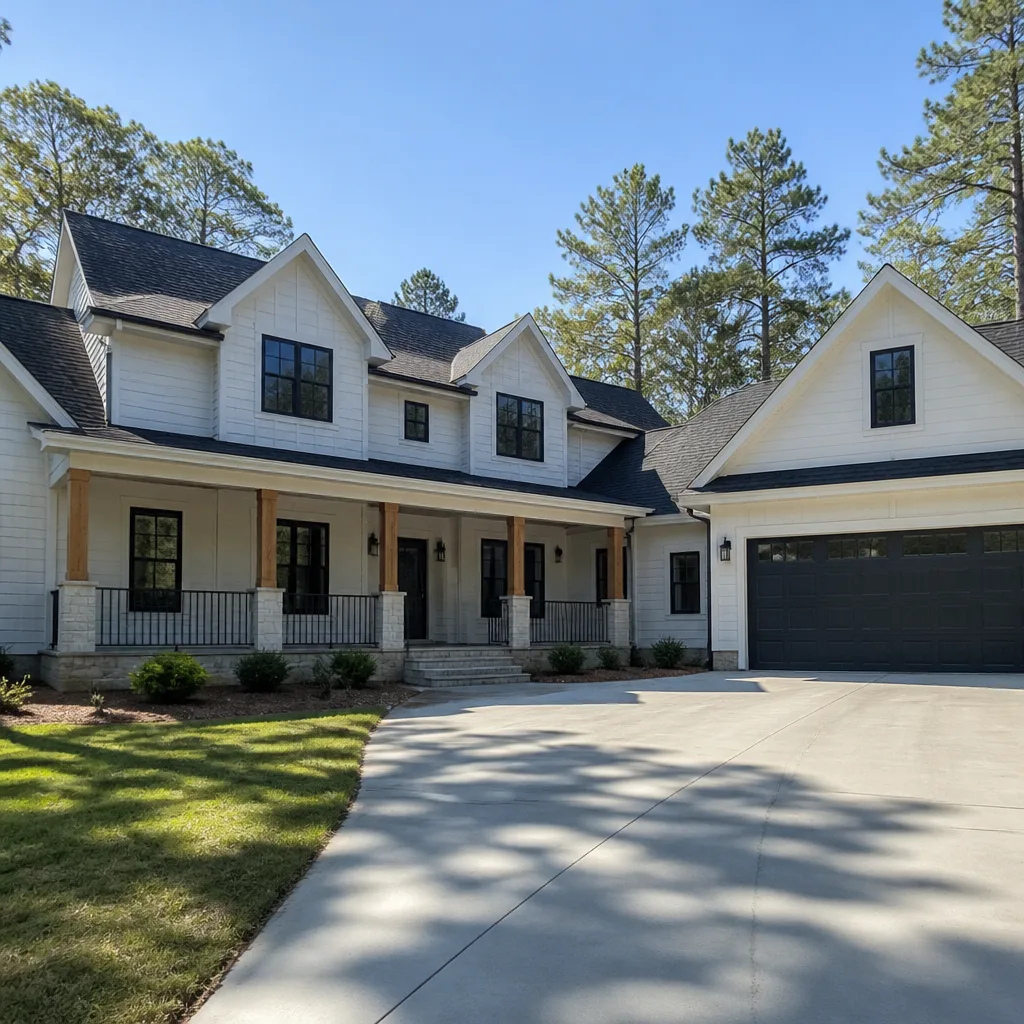
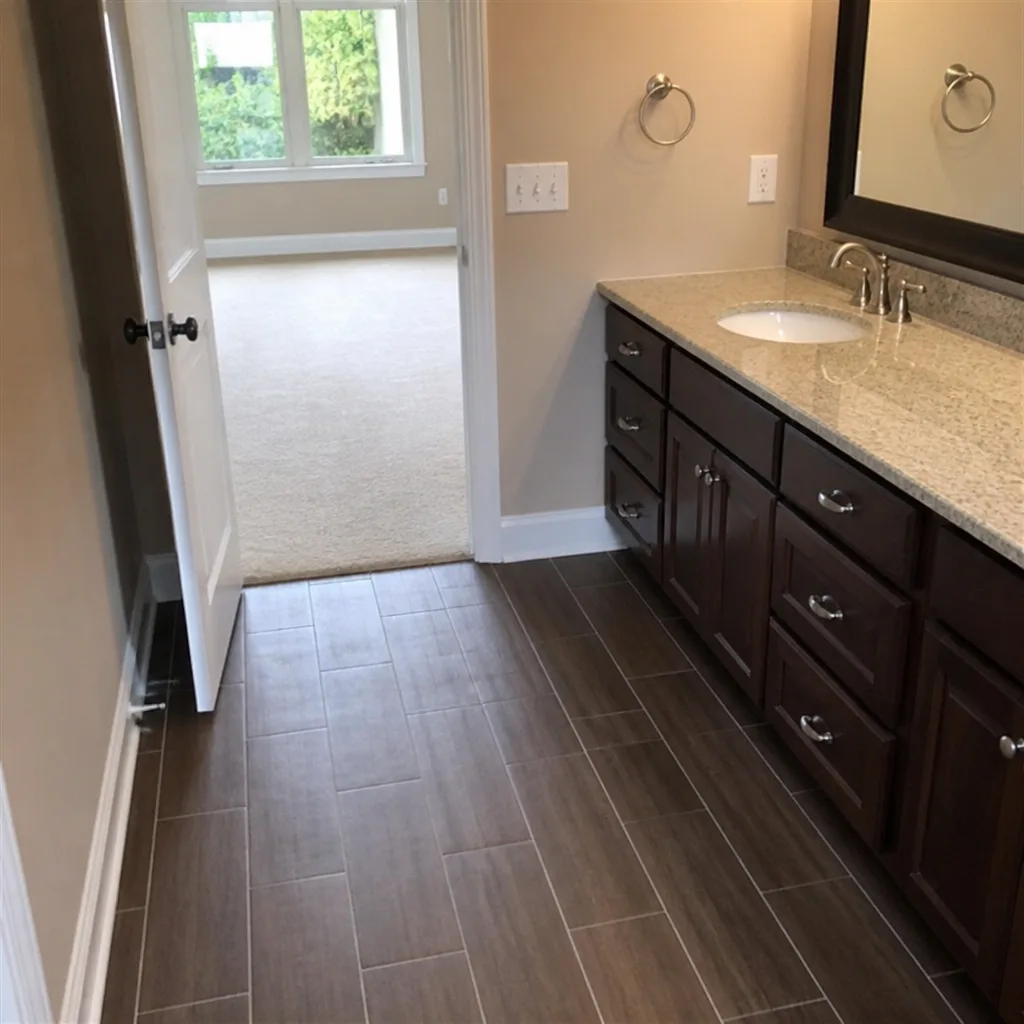
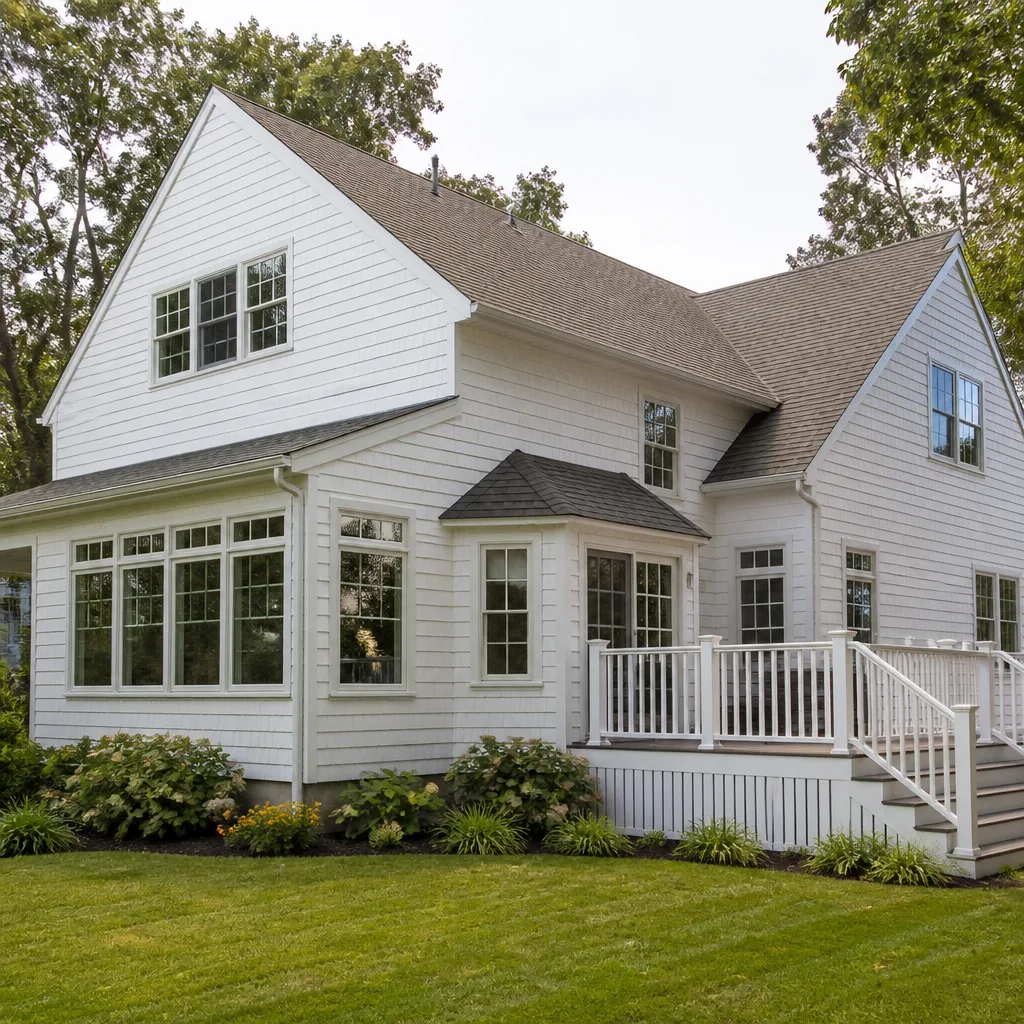
 Before
 After
After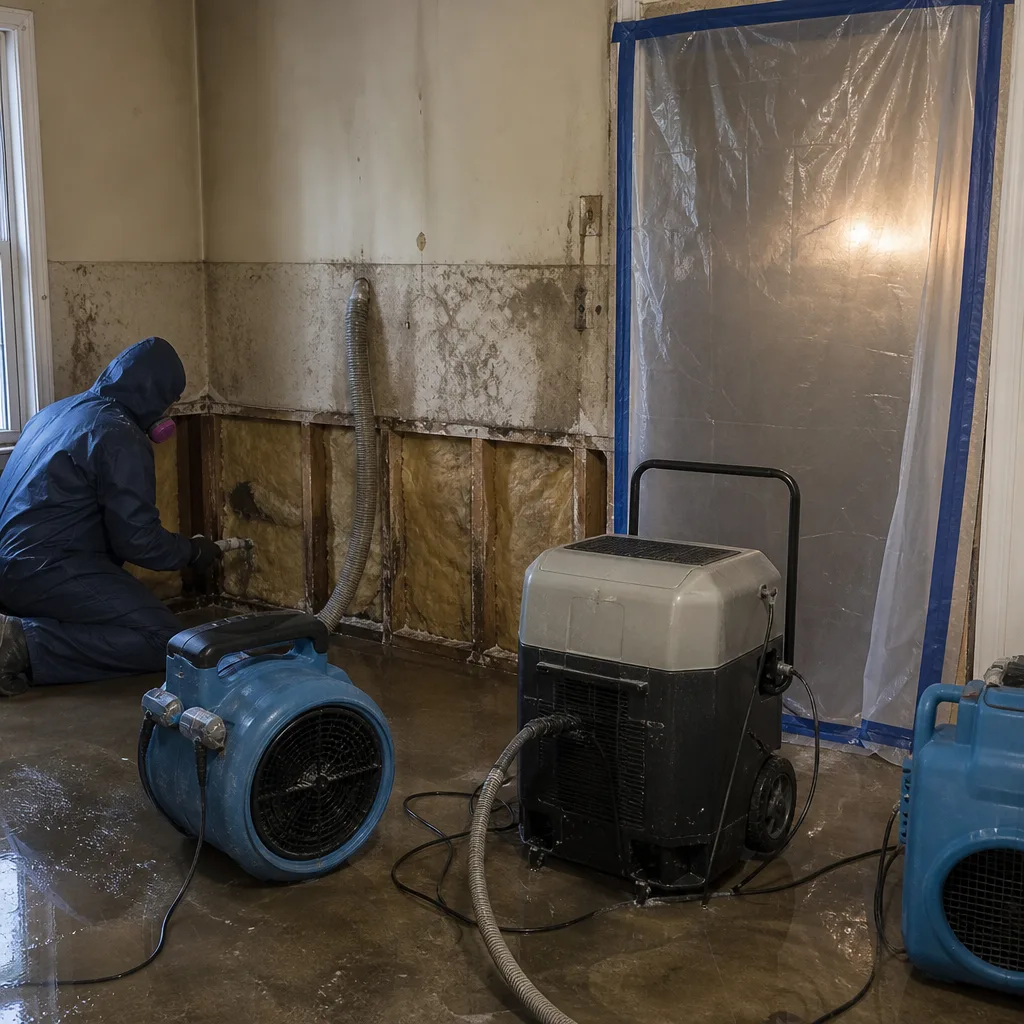 Before
 After
After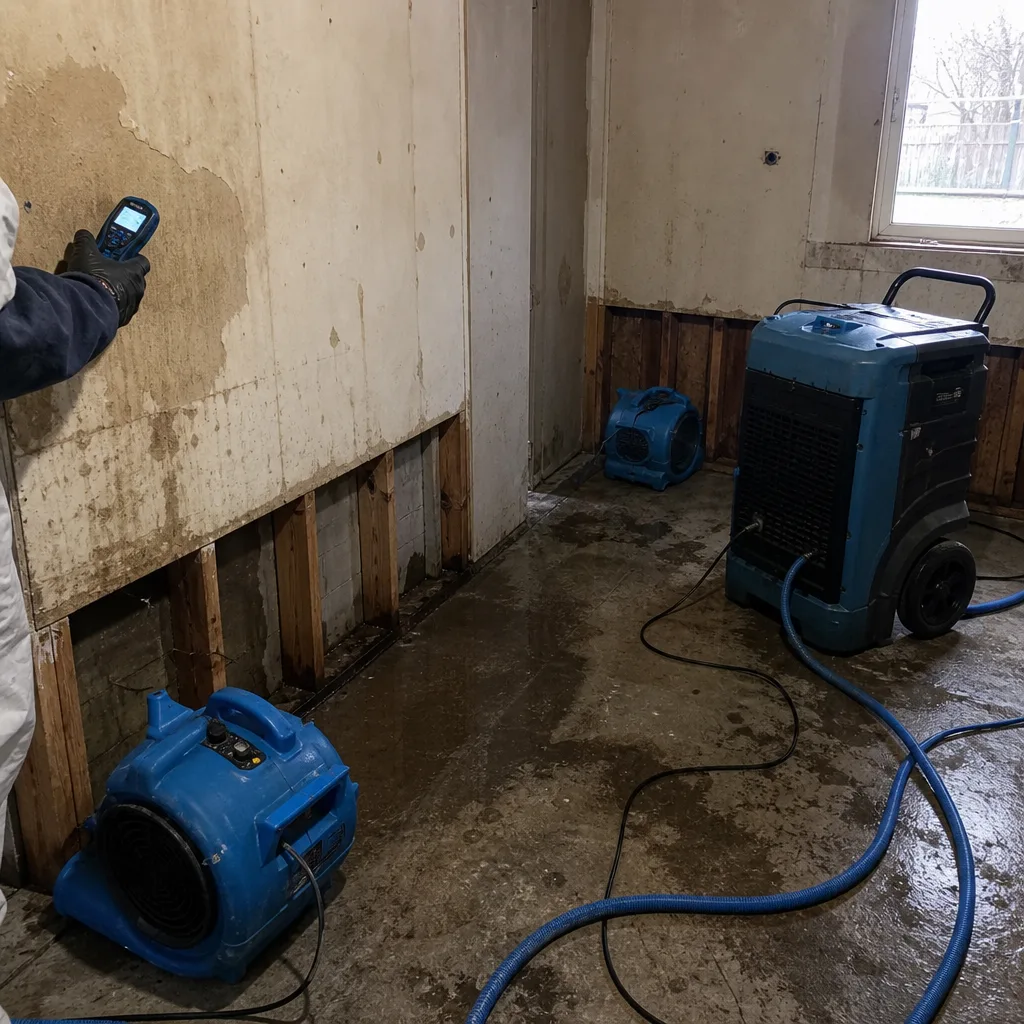 Before
 After
After24/7 Emergency Mold Remediation in Englewood
When you find mold in your Englewood home, every hour of delay lets the colony expand its territory. Call (845) 875-4326 and a live person will answer, 24 hours a day, 7 days a week - no voicemail, no callback queue. Our crews are dispatched throughout Bergen County and can be on-site in Englewood within 45 minutes of your call. We provide a free visual inspection to assess the visible growth and moisture source, then deliver a written scope and price before any work begins. The first hour matters because mold releases spores actively once disturbed; proper containment started immediately protects the rest of your home from cross-contamination.
Understanding Mold Remediation Severity in Englewood Properties
Mold damage in Englewood falls into three severity tiers, and the wrong classification costs homeowners thousands in repeat work. Level 1 covers isolated surface growth on non-porous materials - tile, sealed concrete, or modern drywall - typically under 10 square feet with no HVAC involvement. Level 2 involves porous materials like the original plaster and lath found throughout Englewood’s pre-1950 housing stock, or growth between 10 and 100 square feet where containment and negative air pressure become mandatory. Level 3 means extensive colonization behind walls, in HVAC systems, or across multiple rooms - common in Englewood’s balloon-frame homes where water wicks vertically through stud bays for weeks before showing at the surface.
We classify using IICRC S520 standards, not guesswork. A Tudor on a low-lying block near Flat Rock Brook with a slab basement and original plaster walls is almost never Level 1, even when the visible mold patch looks small. The cavity behind that plaster - the space between lath and balloon-frame studs - routinely harbors hidden colonization that surface readings miss. Our Mold Remediation teams use thermal imaging and moisture mapping to find the full extent before writing the scope.
Why Englewood Property Owners Choose DryMark Restoration Englewood
- 45-minute response commitment to Englewood addresses, with crews staged throughout Bergen County for true emergency dispatch.
- 24/7 live answer - a real person picks up every call, never an automated system or voicemail tree, because mold emergencies don’t wait for business hours.
- IICRC-certified crews holding WRT (Water Damage Restoration Technician), AMRT (Applied Microbial Remediation Technician), and FSRT (Fire & Smoke Restoration Technician) credentials where cross-training applies to complex losses.
- Free visual inspection with no obligation, providing documented findings you can use for any contractor comparison.
- Direct insurance billing with photo-documented estimates formatted to carrier standards, reducing adjuster pushback and payment delays.
- One team from containment through reconstruction - no handoffs between remediation and rebuild crews that lose continuity on your home’s specific conditions.
BeforeAfterOur Mold Remediation Process
1. Inspection & Assessment
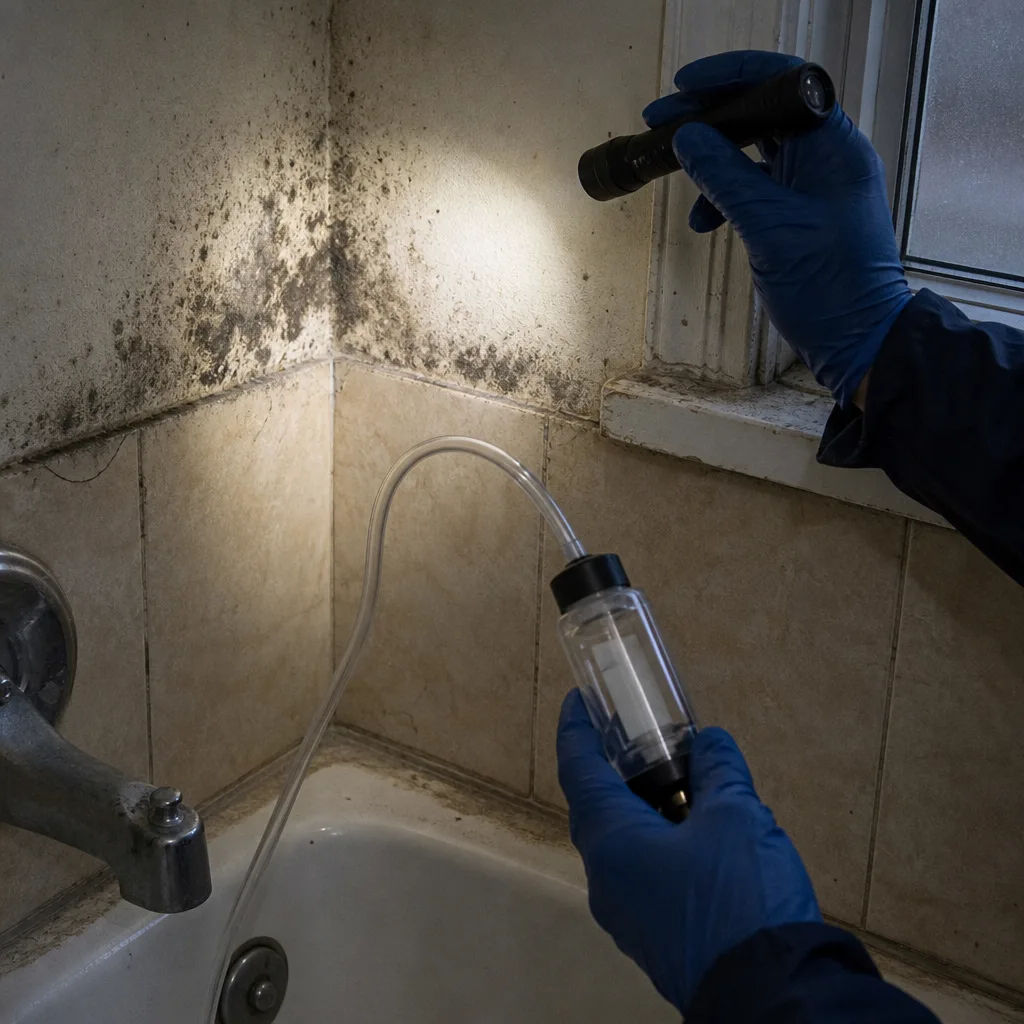
We start with moisture mapping using thermal imaging and penetrating hygrometers to locate hidden water behind Englewood’s original plaster and lath. Air samples and surface swabs identify species and concentration, establishing baseline data for clearance testing. Every reading is logged with timestamp and location.
2. Containment & Air Filtration
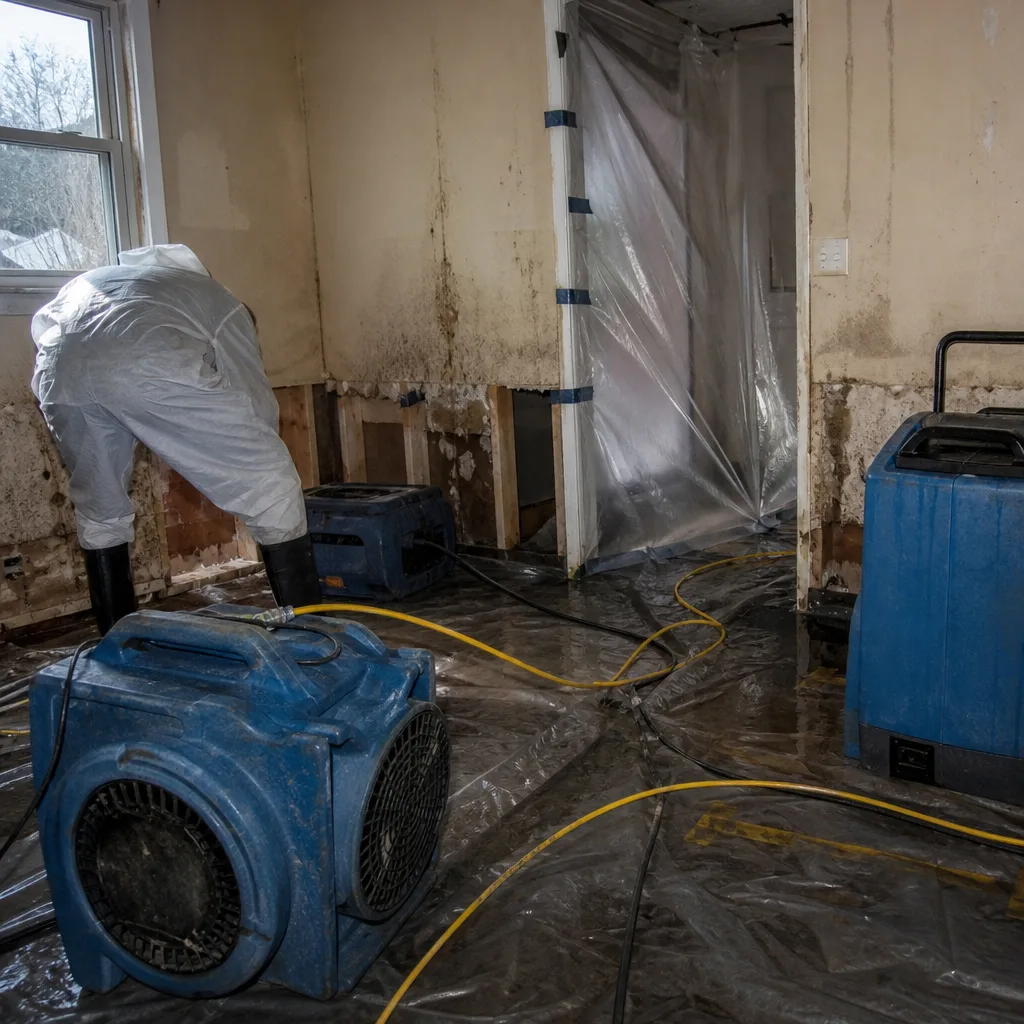
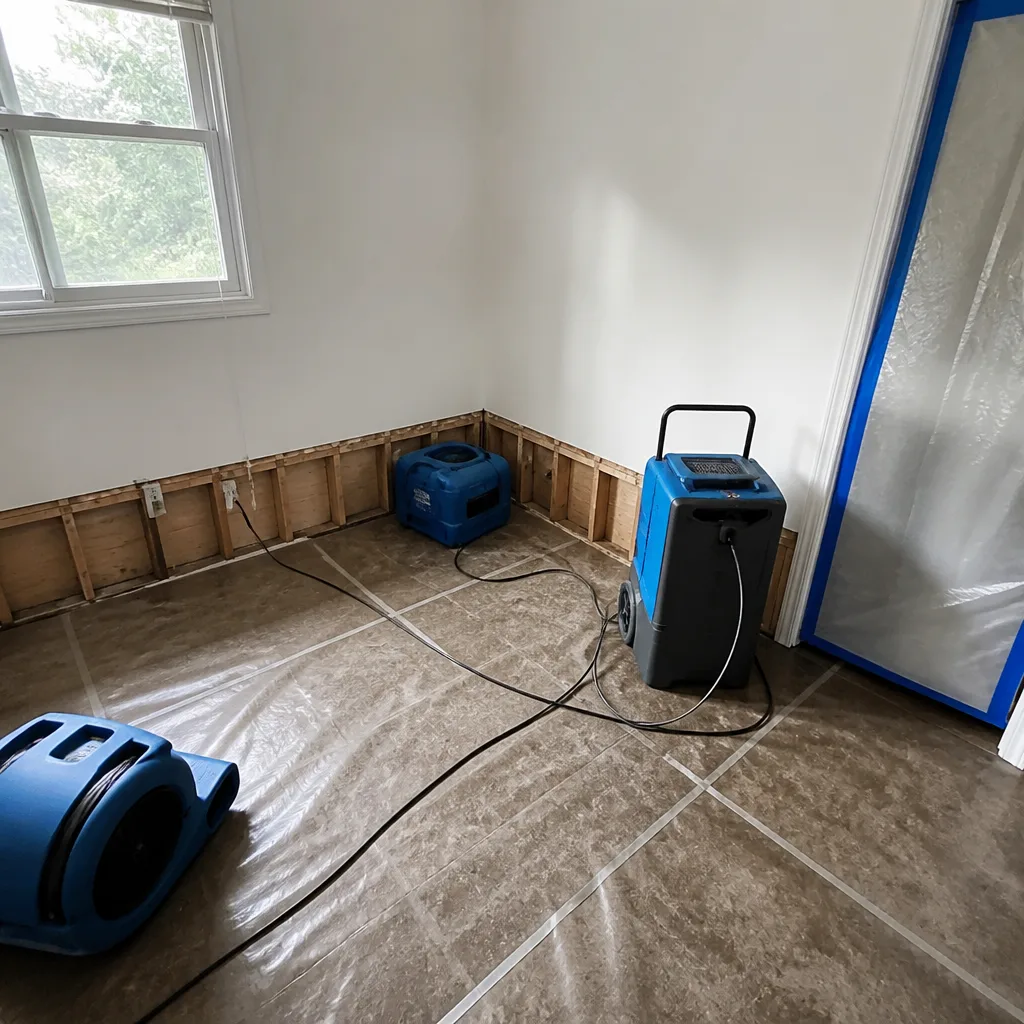
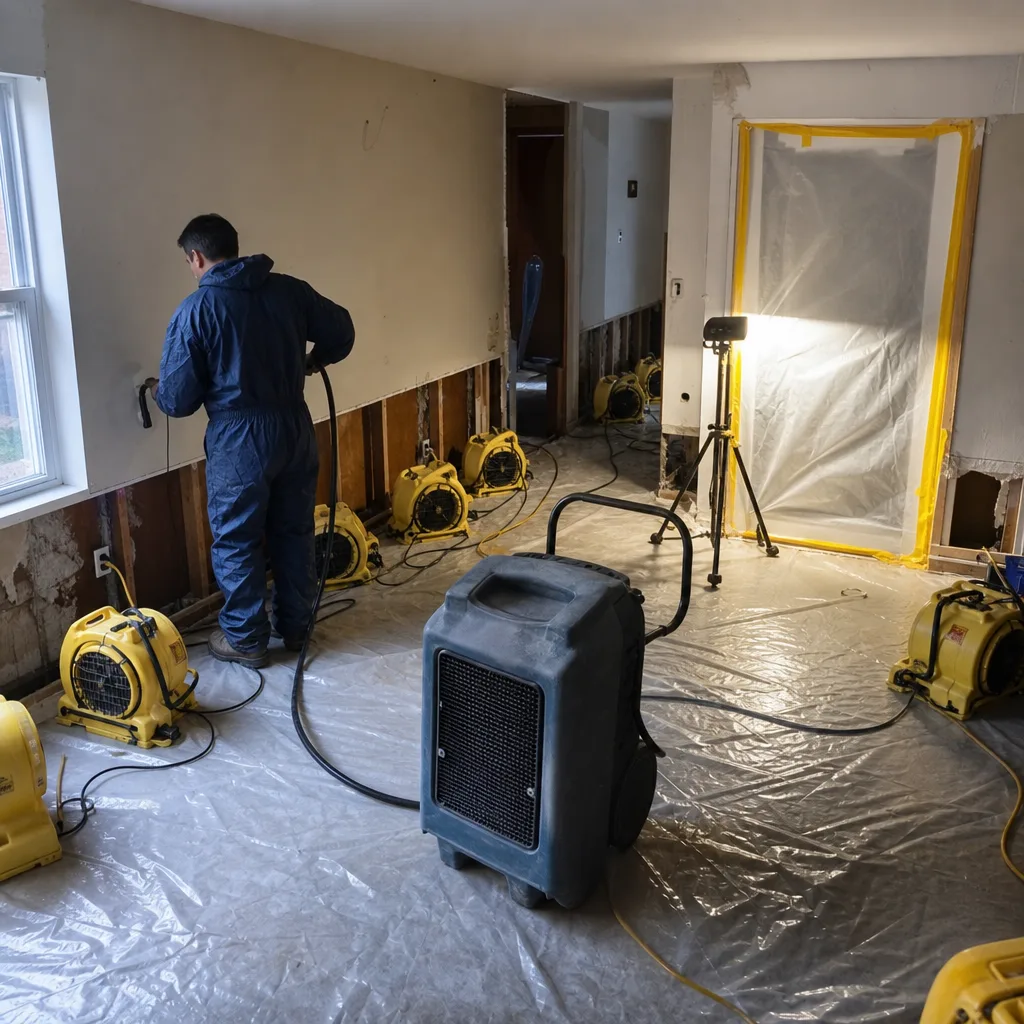
Polyethylene barriers create negative-pressure containment around the affected area. HEPA air scrubbers (Dri-Eaz and Phoenix units rated at 99.97% efficiency at 0.3 microns) run continuously to capture airborne spores before they migrate to clean rooms. This step is non-negotiable in Englewood’s older homes with interconnected balloon-frame cavities.
3. Drying & Dehumidification
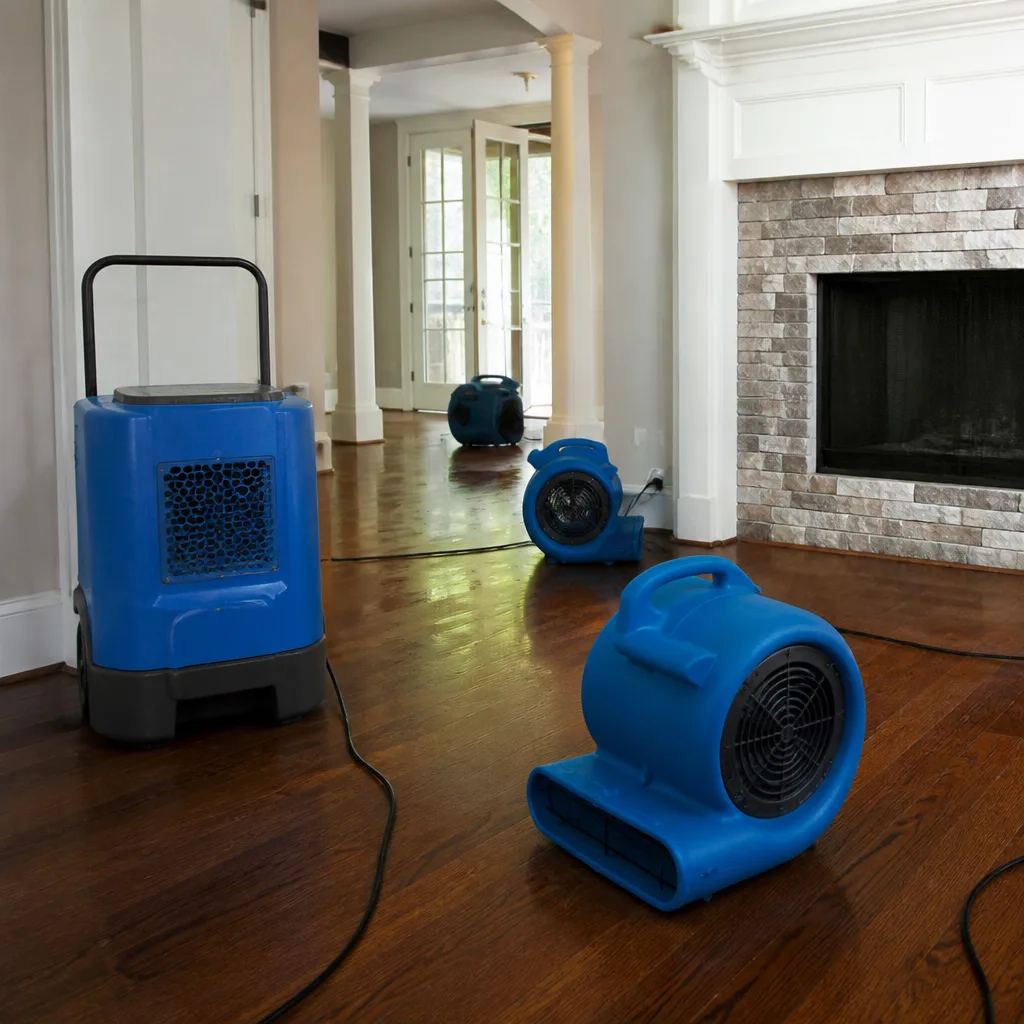
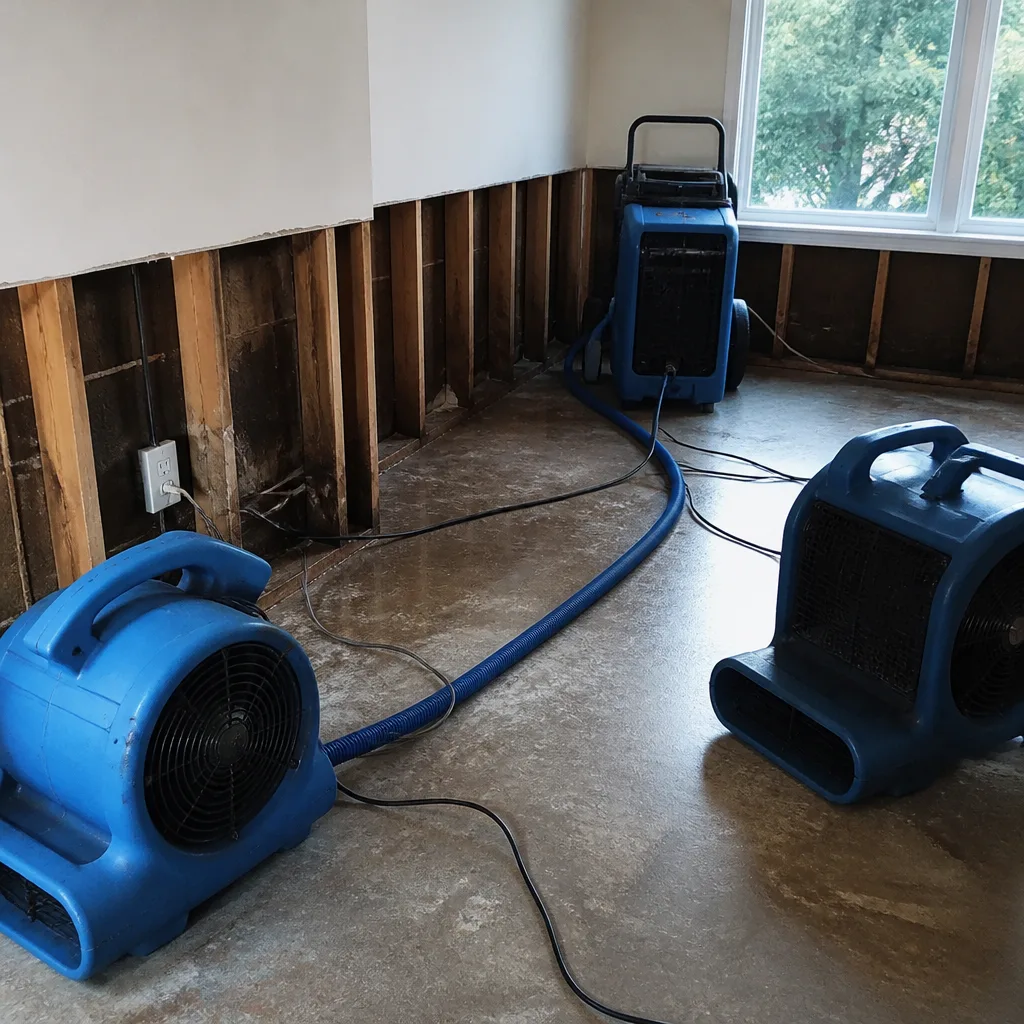
We deploy commercial dehumidifiers and air movers sized to the cubic footage of the contained space. For wall cavities behind original plaster, we use Injectidry systems that deliver directed airflow through small access points without removing period millwork. Daily psychrometric readings track grain-per-pound and vapor pressure differential until materials reach pre-loss moisture content.
4. Cleaning & Antimicrobial Treatment
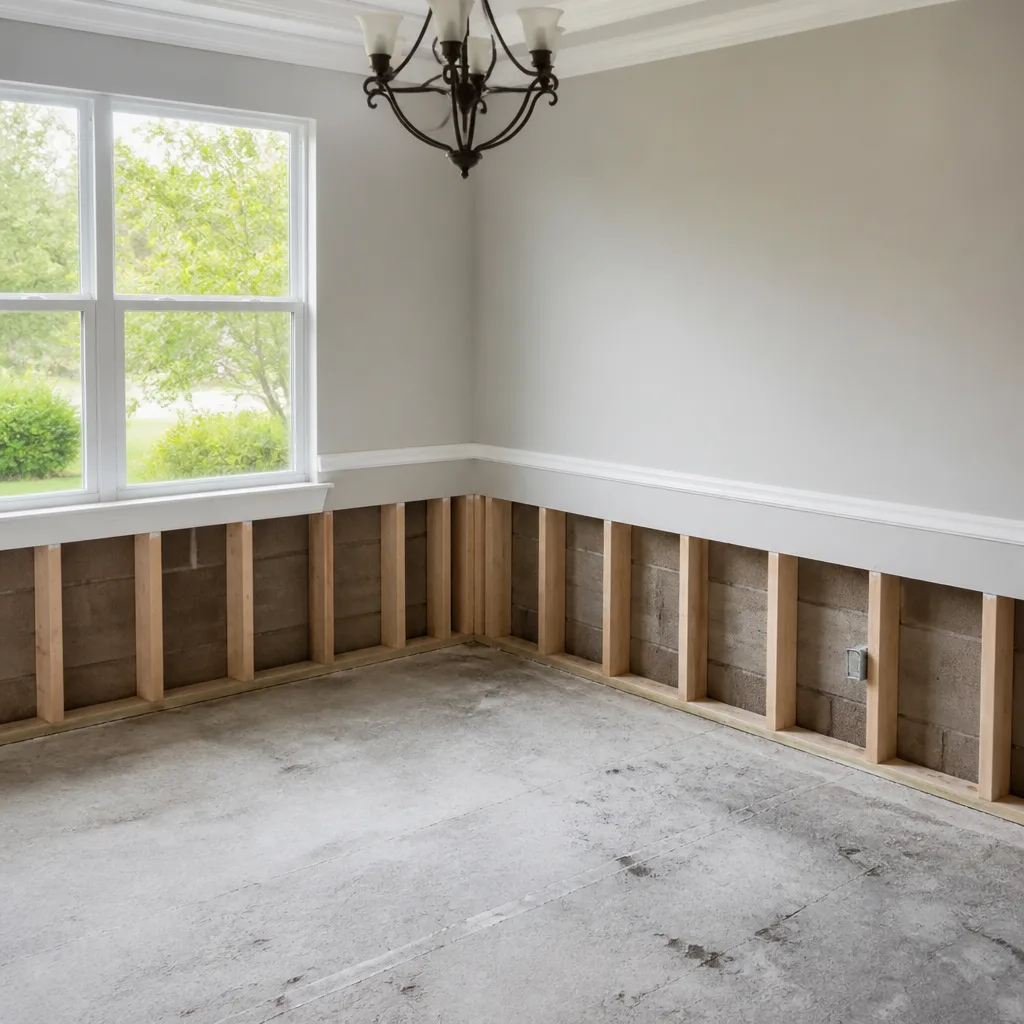
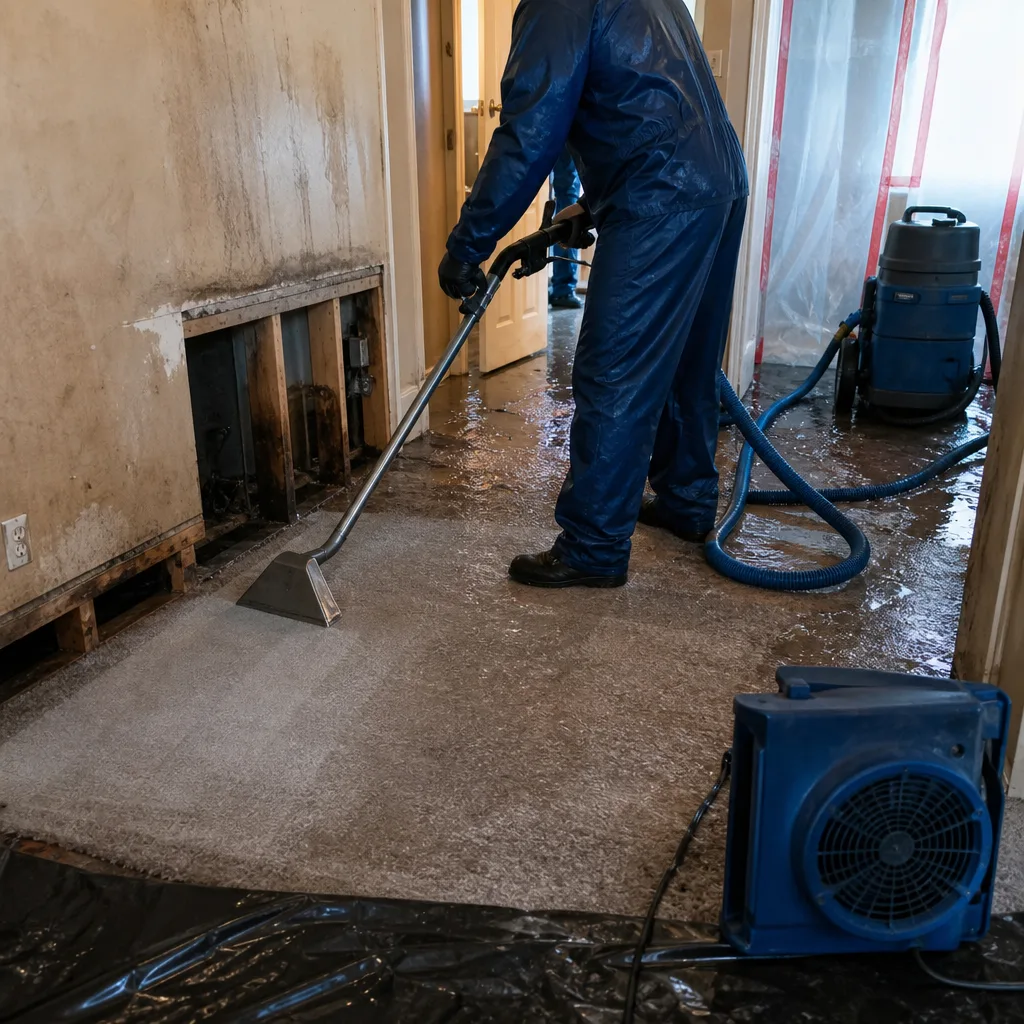
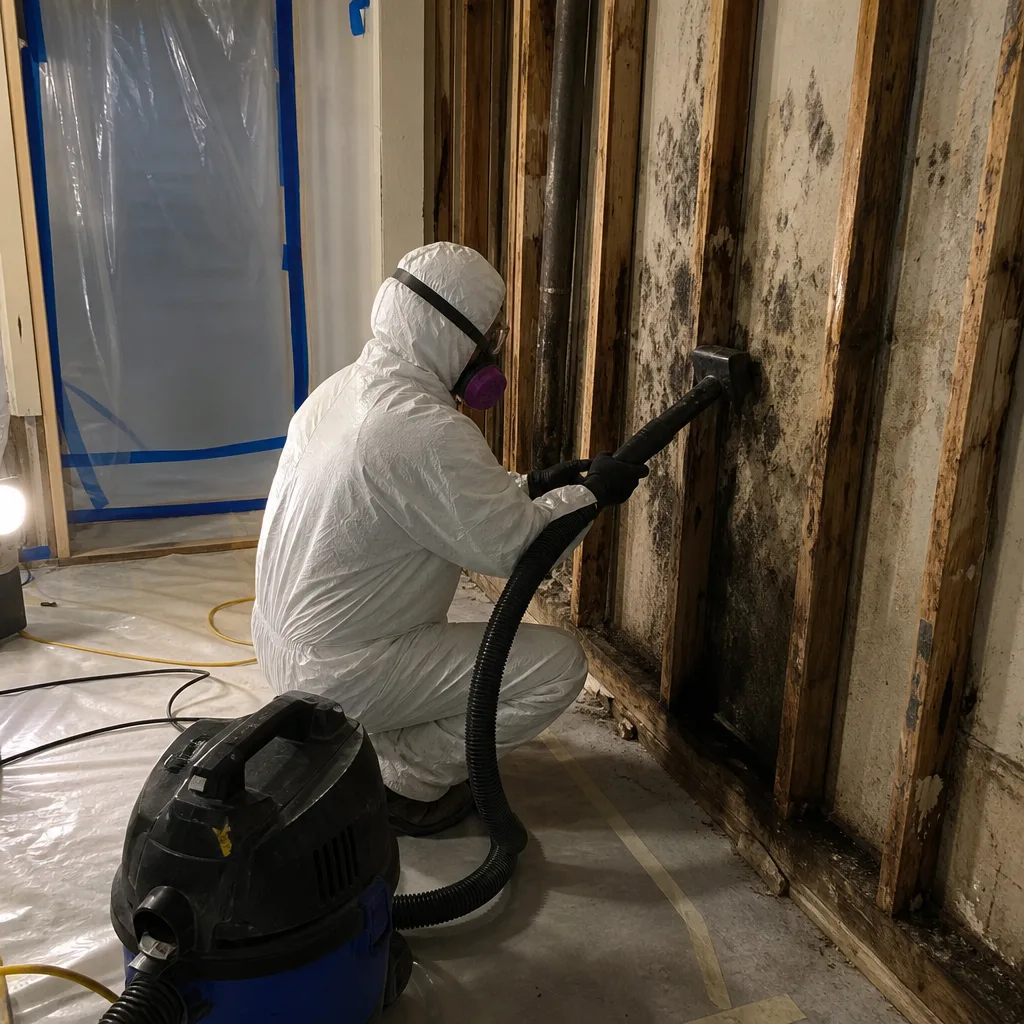
HEPA vacuuming removes spore-loaded debris, followed by EPA-registered antimicrobial application on affected surfaces. Porous materials that cannot be salvaged - water-compromised plaster, saturated insulation, deteriorated lath - are removed with controlled demolition and documented by photo for your insurance file.
5. Air Quality Restoration & Clearance Testing
Post-remediation air samples compare against our baseline data and IICRC S520 clearance criteria. We verify spore counts at or below outdoor reference levels, with third-party lab analysis available at your request. No area is released from containment until it passes documented clearance.
6. Repairs, Reconstruction & Moisture Control
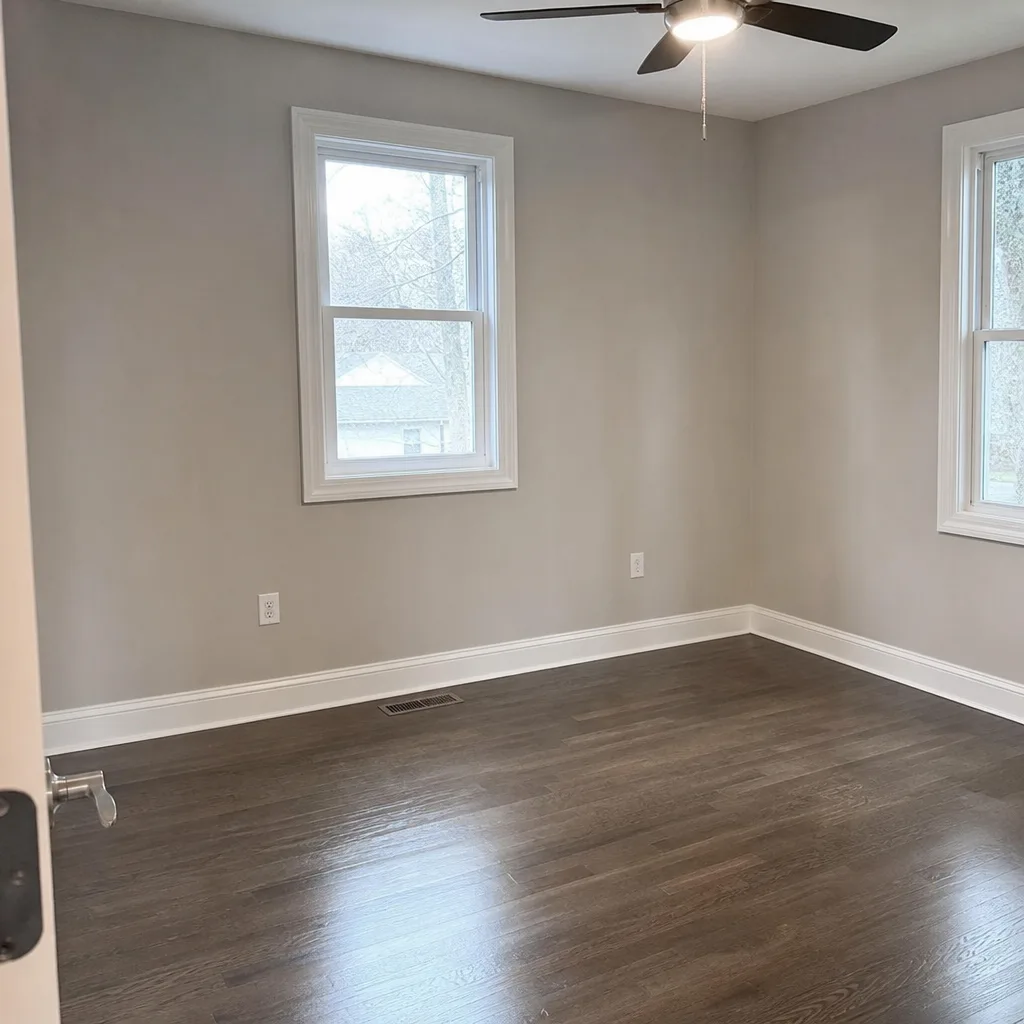
Our rebuild crew matches period finishes - plaster skim coats, custom millwork replication, historic paint colors - then addresses the moisture source. For Englewood’s Flat Rock Brook drainage zone, this often means crawl space encapsulation, sump pump installation, or interior drainage systems to break the flood-mold-repeat cycle.
Need Emergency Mold Remediation in Englewood Now?
Crews minutes away, answering live 24 hours a day. The sooner we start, the less it costs.
Working With Your Insurance Company
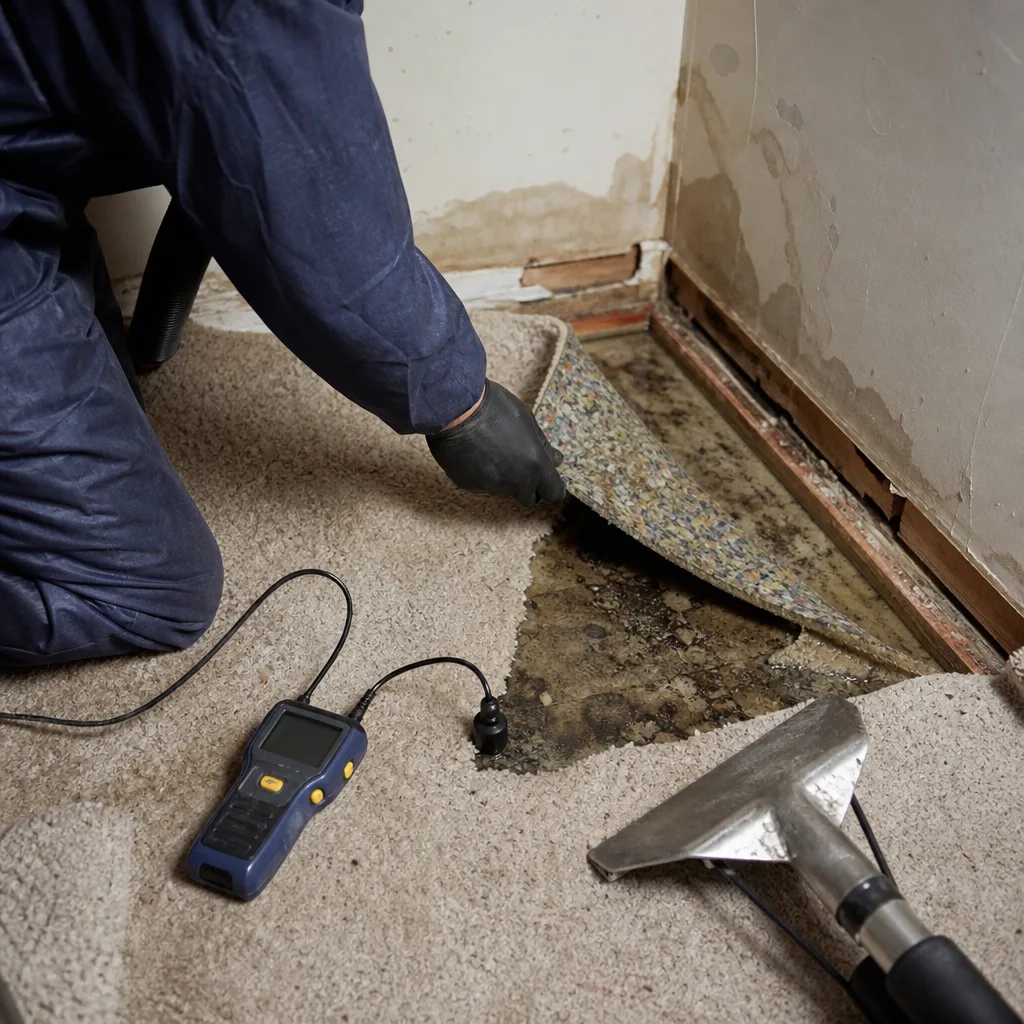
Insurance claims for mold damage succeed or fail on documentation quality, and most denials trace back to inadequate initial records. From our first hour on your Englewood property, we photograph every affected room, log moisture readings with equipment serial numbers, and maintain daily drying logs that satisfy carrier requirements. Our estimates follow industry-standard Xactimate formatting that adjusters recognize, and we coordinate directly with your carrier’s representative to resolve questions before they become disputes.
We provide a written scope and price before any work begins - Haven Standard, Clause 1 - so there are no surprise additions once the crew is inside your home. If you’ve received another contractor’s estimate, our Free Second Opinion reviews their scope at no charge.
What We Provide Your Insurer
- Thorough documentation of the loss
- Photos of all damage, room by room
- Moisture readings and drying logs
- A detailed, line-item scope of work
- Direct coordination with your carrier
Built for Englewood’s Loss Calendar
Englewood’s mold season runs year-round, but the damage patterns shift with the calendar. January through March brings freeze-thaw cycles that burst poorly insulated supply lines in balloon-frame attics, with melted water running down interior wall cavities for days before discovery. April and May see spring rains amplified by snowmelt, pushing groundwater through slab foundations in the lower-lying blocks near Flat Rock Brook. June through August humidity, combined with air conditioning that cools plaster surfaces below dew point, creates condensation on original lath in unventilated closets and behind built-ins.
September and October hurricane remnants - Irene in 2011, Ida in 2021 - deliver the catastrophic events, but it’s the November through December nor’easters that catch Englewood homeowners off guard: saturated soil from autumn rains meets winter’s first hard freeze, cracking foundation perimeters and creating new water paths into basements that were dry in October. We schedule preventive moisture assessments in late October for properties with known Flat Rock Brook exposure, because the best remediation is the one that never starts.
Mold Remediation Across Englewood’s Neighborhoods
The east side of Englewood, where streets slope down toward Flat Rock Brook, carries a distinct risk profile from the higher ground near the Palisades. In the East Hill area, pre-war Colonials on Palisade Avenue and its cross-streets sit above the drainage funnel - mold here typically traces to roof leaks, ice dams in poorly ventilated attics, or bathroom exhaust fans vented into soffits rather than outside. The remediation is straightforward but demands care with original plaster crown molding and built-in cabinetry.
Lower Englewood, the blocks between Grand Avenue and the brook, is where we see the repeat addresses. Homes on Slocum Avenue, Tenafly Road, and the cross-streets toward the brook flood from groundwater intrusion during moderate rain events, not just named storms. The same basements get wet, the same plaster wicks moisture, the same mold species return. Our Englewood crews know these properties by their drainage patterns, and we scope remediation with preventive waterproofing as the default recommendation.
The historic district around Depot Square and the former railroad corridor features Englewood’s finest Victorians, many with carriage houses converted to garages or studios. These outbuildings share the main house’s balloon-frame construction but often lack foundation waterproofing entirely, making them mold incubators that cross-contaminate stored items and HVAC connections to the main house.
West Englewood, toward the Leonia border, mixes mid-century ranches with older stock on larger lots. The ranches present simpler remediation - slab foundations, modern drywall, accessible crawl spaces - but the transition zone where older homes were renovated in the 1970s and 1980s hides the worst surprises: plaster covered with drywall, original knob-and-tube still active inside walls, and multiple generations of plumbing that complicate moisture source identification.
Specialized Mold Remediation Services We Offer in Englewood
Mold Inspection & Testing
Our Englewood inspections go beyond visual identification to locate the moisture source driving the growth. We use moisture meters, thermal imaging, and borescope cameras to inspect behind original plaster and inside balloon-frame cavities. Air and surface samples go to independent labs for species identification and concentration quantification - critical data for medical referrals when occupants report respiratory symptoms.
Mold Removal
Removal in Englewood’s historic housing stock means distinguishing salvageable materials from compromised ones. Original plaster can often be dried and treated in place; water-saturated lath behind it cannot. We document every removal decision with moisture readings and photo evidence, giving your insurance file the substantiation that prevents coverage disputes.
Black Mold Remediation
Stachybotrys chartarum and other toxigenic species require enhanced containment and PPE protocols under IICRC S520. We do not disturb visible black mold without full containment in place - the disturbance itself releases mycotoxin-laden spores. Our Englewood crews are AMRT-certified for these protocols, with documented clearance testing required before containment removal.
Air Quality Restoration
Post-remediation, we verify air quality through spore trap analysis comparing indoor samples to outdoor reference levels. For Englewood homes with forced-air systems, we inspect ductwork for cross-contamination and recommend HVAC cleaning when spore counts justify it. This service is particularly critical for the multi-zone systems common in larger East Hill properties.
Crawl Space Treatment
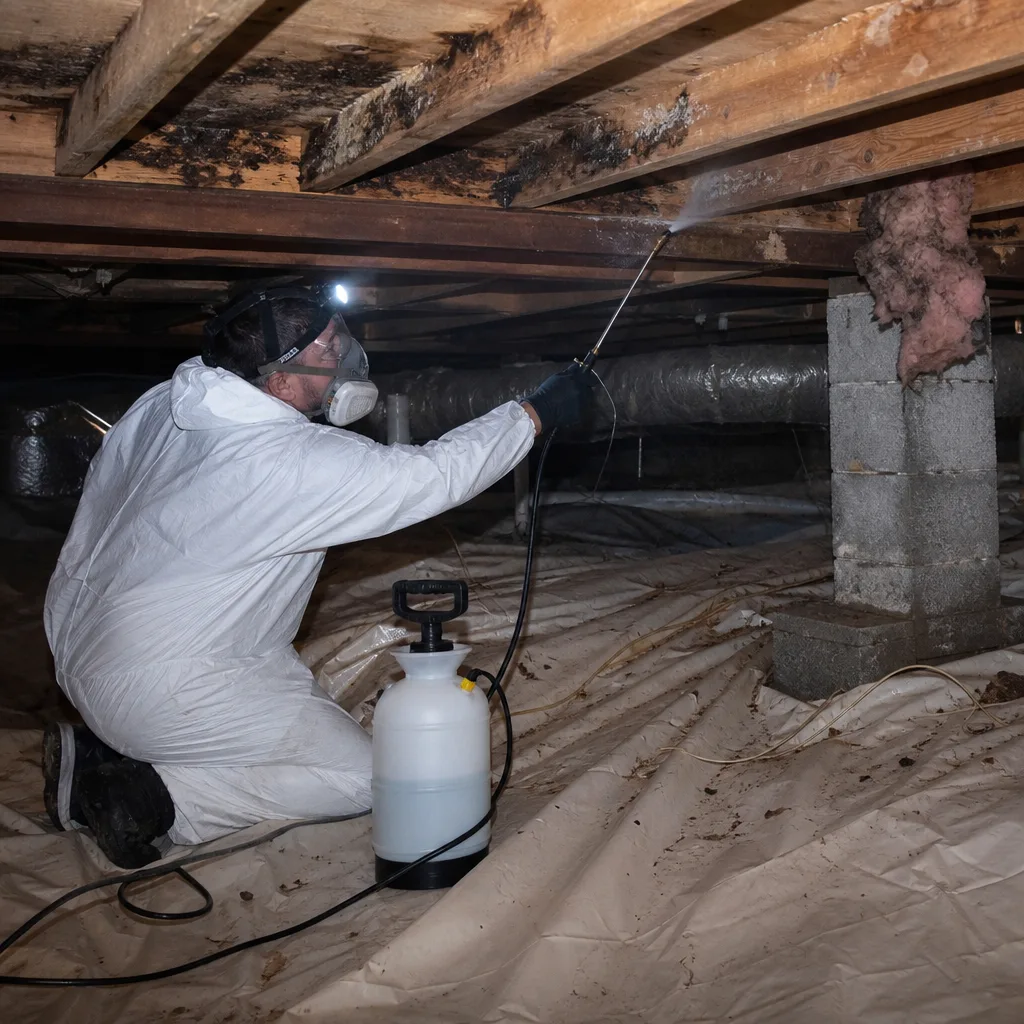
Englewood’s older homes often have dirt-floored crawl spaces with no vapor barrier, creating chronic humidity that feeds subfloor mold. We install sealed vapor barriers, dehumidification, and conditioned ventilation per RIA standards - transforming the crawl space from a moisture source into a controlled environment.
Moisture & Humidity Control
The definitive solution for Englewood’s Flat Rock Brook drainage zone is controlling the moisture that enables mold growth. We design and install interior drainage systems, sump pumps with battery backup, and whole-home dehumidification sized to your property’s cubic footage and infiltration rate. This is where remediation becomes prevention.
What happens when you call
- 1
A real person answersNo phone trees - you reach a local pro.
- 2
You get an upfront price rangeHonest numbers before anyone is dispatched.
- 3
A background-checked tech heads outLicensed & insured, dispatched right away.
- 4
You approve before work beginsNothing starts until you say go.
Mold Remediation Costs in Englewood, NJ
Honest pricing starts with honest classification. In Englewood’s market, a Level 1 surface remediation on modern materials typically runs $1,200-$2,800. Level 2 work involving original plaster and lath, with containment and air scrubbing, ranges $3,500-$7,500 depending on affected square footage and cavity access requirements. Level 3 whole-basement or multi-room remediation with HVAC involvement starts at $8,500 and can exceed $15,000 for large Colonials with extensive hidden colonization.
What moves the price: the species identified (toxigenic molds require enhanced protocols), the accessibility of affected cavities (Injectidry systems add cost but preserve millwork), and whether reconstruction is included or handled separately. Insurance typically covers mold remediation when it traces to a covered water loss - burst pipe, storm intrusion, appliance failure - but may exclude long-term maintenance-related moisture. We review your policy language and document the loss origin to support coverage arguments. Every inspection is free, and every scope is written with a firm price before work begins - Haven Standard, Clause 1.
We Also Serve Cities Near Englewood
Our crews respond throughout the immediate Bergen County area, including Englewood Cliffs (Palisades properties with distinct elevation and drainage patterns), Tenafly (similar pre-war stock with Cresskill Brook flooding concerns), Leonia (mixed housing ages with Overpeck Creek exposure), and Bogota (smaller homes with tighter lot drainage). Each municipality has its own flood history and building stock; we adjust our protocols accordingly.
Serving Englewood, NJ - Our Local Coverage Area
We’re based in the Englewood area and know this community well. Use the map below to see our service coverage - if you’re nearby, we can almost certainly help.
Englewood Mold Remediation Questions, Answered
Why does our Englewood basement keep getting mold even after a professional remediation?
The most common reason is incomplete moisture mapping that missed water trapped behind original plaster and lath, or failure to address the Flat Rock Brook drainage gradient that funnels groundwater into low-lying basements during moderate rain.
On Englewood’s sloping streets, a basement can read dry at the surface while the balloon-frame cavity behind it holds relative humidity above 60% - the threshold for mold regrowth. We use penetrating hygrometers and thermal imaging to find this hidden moisture, then scope preventive waterproofing, not just cleanup. Call (845) 875-4326 for an inspection that identifies the true source.
How fast does mold grow in an Englewood home after a basement flood?
Mold colonization begins 24 to 48 hours after water intrusion on organic materials, and Englewood’s original plaster and lath provide ideal substrate.
In a slab basement with groundwater seepage, the wicking action through plaster can spread moisture vertically into stud bays within hours. By day three, visible growth may appear; by day seven, hidden colonization behind walls is established. Our 45-minute response commitment exists because the first 24 hours determine whether remediation stays Level 2 or escalates to Level 3. Call (845) 875-4326 for immediate dispatch.
Does mold remediation on an older Englewood Tudor with original plaster mean tearing out the walls?
Not necessarily - original plaster can often be dried and treated in place if the lath behind it is intact and moisture is removed quickly.
We use Injectidry wall-cavity systems that deliver directed airflow through small access points, preserving period millwork and ornate plaster detailing. The decision depends on moisture readings: plaster above 17% moisture content or lath showing deterioration means controlled removal is the only code-compliant path. Every removal decision is documented with photo evidence and moisture logs. Call (845) 875-4326 for a free assessment of your specific walls.
What does an Englewood mold inspection actually include?
A complete inspection includes visual assessment, moisture mapping with thermal imaging and penetrating meters, air and surface sampling for lab analysis, and identification of the moisture source driving the growth.
In Englewood’s pre-WWII housing, we specifically inspect balloon-frame stud bays, crawl spaces, and attic spaces for hidden water paths. You receive a written report with species identification, concentration data, affected square footage, and a line-item scope with firm pricing - Haven Standard, Clause 1. Call (845) 875-4326 to schedule; inspections are free with no obligation.
Can you match the finishes on our pre-war Englewood home after remediation?
Yes - our reconstruction crew specializes in period-appropriate finishes for Englewood’s historic housing stock.
We source matching plaster mixes for skim coats, replicate custom millwork profiles, and match paint colors to existing trim. This capability is built into our process because Englewood’s high-value properties demand it; a patch of modern drywall in a Tudor living room is not an acceptable outcome. Photo documentation of original conditions before any demolition ensures accurate replication. Call (845) 875-4326 to discuss your specific finishes.
How do I know if my Englewood home needs mold remediation or just cleaning?
Professional remediation is required when mold covers more than 10 square feet, involves HVAC systems, or grows on porous materials like plaster, drywall, or insulation.
Surface cleaning with household products is appropriate only for small, isolated patches on non-porous materials like tile or glass, and only when the moisture source is definitively resolved. In Englewood’s older homes, what looks like a small surface patch almost always signals larger hidden growth. We provide free visual inspections to make this determination with documented evidence, not guesswork. Call (845) 875-4326.
Will insurance cover mold remediation in Englewood?
Insurance typically covers mold remediation when it results from a sudden, accidental water loss covered by your policy - burst pipes, storm damage, appliance failures.
Long-term moisture issues from poor drainage or deferred maintenance are usually excluded. We document the loss origin with moisture readings, photo timelines, and material analysis to support coverage arguments. Our estimates follow Xactimate standards that adjusters recognize, and we bill carriers directly when coverage is confirmed. Bring us your policy and any prior estimates for our Free Second Opinion. Call (845) 875-4326.
What should I do in the first 30 minutes after discovering mold in my Englewood home?
Do not disturb the visible mold - disturbance releases spores and can spread contamination to clean areas.
Turn off HVAC systems if the mold is near vents or returns. Note the location, approximate size, and any water source you can identify. Then call (845) 875-4326 for our 45-minute emergency response. We will assess containment needs, identify the moisture source, and provide a written scope before any work begins. Speed matters, but uncontrolled disturbance matters more.
On a Tudor off Slocum Avenue near the Flat Rock Brook watershed, we found category 2 water wicking up through plaster from a basement slab that had been wet for weeks. Our tech did moisture mapping on the original plaster and balloon-frame stud bays, set up containment with a Dri-Eaz dehumidifier and XPOWER air movers, and ran an Injectidry wall-cavity system to dry behind the aged lath without pulling the period millwork. The drying logs showed the wall assembly back to pre-loss condition, and the homeowner opted for crawl space encapsulation to stop the next cycle.
Englewood’s slope-driven drainage toward Flat Rock Brook makes basement mold risk a recurring, address-level pattern on the low-lying blocks off the brook - the same pre-WWII Colonials and Tudors are re-invaded after moderate rain events, not just major storms. That’s why we scope mold remediation here around the specific property’s drainage gradient, not just the visible growth. Crews serving Englewood are coordinated from our New York City office, with local response times that match the urgency of active mold colonization.
Written by Alicia Brennan, Owner at Back to Dry Restoration, serving Englewood since 2011.
Mold Remediation in Nearby Areas